

Something unexpected happened to me with the passing of years, something I didn’t recognize when it began. But now that I know it, now that I have experienced it, I have come to depend on it. I don’t have a word for it. I’m not even sure if there is a word for it. But there is a feeling.
There have been a few places where I’ve lived and explored that have stayed with me. I find myself returning to those places. Every summer, when the mountaintops reach a critical mass of solar energy and the mountains burst with huckleberries, I’m there.
I’m not just after piles of huckleberries. I’m revisiting my spot. I’m excited to see the overgrown logging road and the hillside full of berries among the tall trees. I look forward to hiking the trail that comes around the backside and over the top to a place that reminds me of walking through the Alaskan tundra.
It’s exciting to see that the huckleberries have come back well and that I’m able to fill my Nalgene bottle with them. My wife patiently listens to me tell the same stories every year, stories tied to that place and that valley.
In that same valley, in the fall, I know where I will find Chanterelles. I know which parts of the road hold snow late into the spring. I know where the elk will be, and where the moose will eat the tops off the bushes to make it through the long winter.
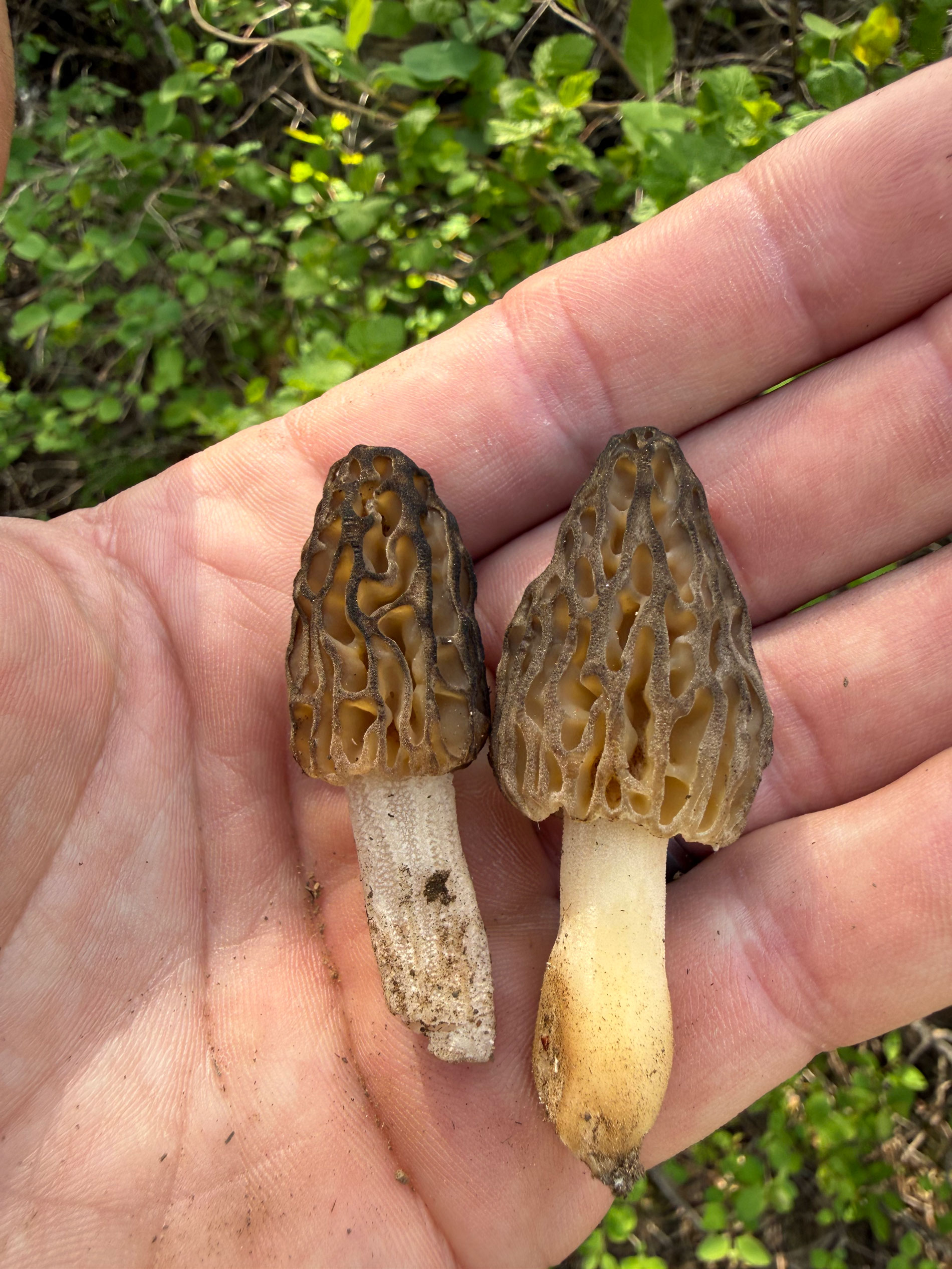
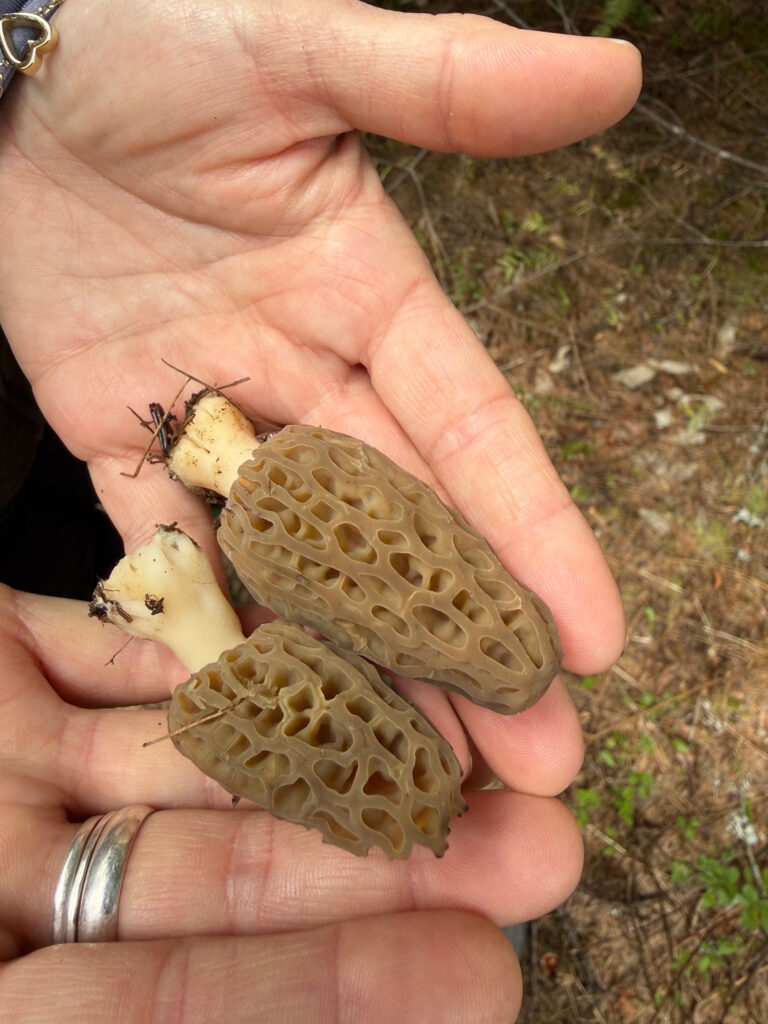
Then in the spring, I know where I will find morels. I know where they grow on the edge of the overgrown logging road, and up which section of creek I can find trillium flowers and Morels growing in small sun patches through the thick moss carpeting the forest floor.
I am drawn to these places to see the passing of the seasons.
If I’m being honest, I’m not even a huge fan of morels. I usually pick enough to sauté with a good steak for dinner, but I have begun leaving them behind as well. I’m almost more excited to know they are growing in the same places they have been for the last decade.
I know, however, that lots of people get “real serious” about their morels, and also that many people have never spent a Sunday afternoon walking in the woods with eyes peeled for that familiar form. For those people, I will tell you what I know about where and when to find them.
Pretty much nothing!
Not actually, but I do know that just when you think you know about morels, you’ll be proven wrong.
I got real serious about morels one year.
Early in the spring I had done very well discovering areas that were producing lots of morels. I called several restaurants and was making plans to supply them with edible plants from our mountains. I found a spot in the North Cascades that had more morels than I had ever seen and filled my backpack in 20 minutes.
I was on a roll. I thought I knew something about morels.
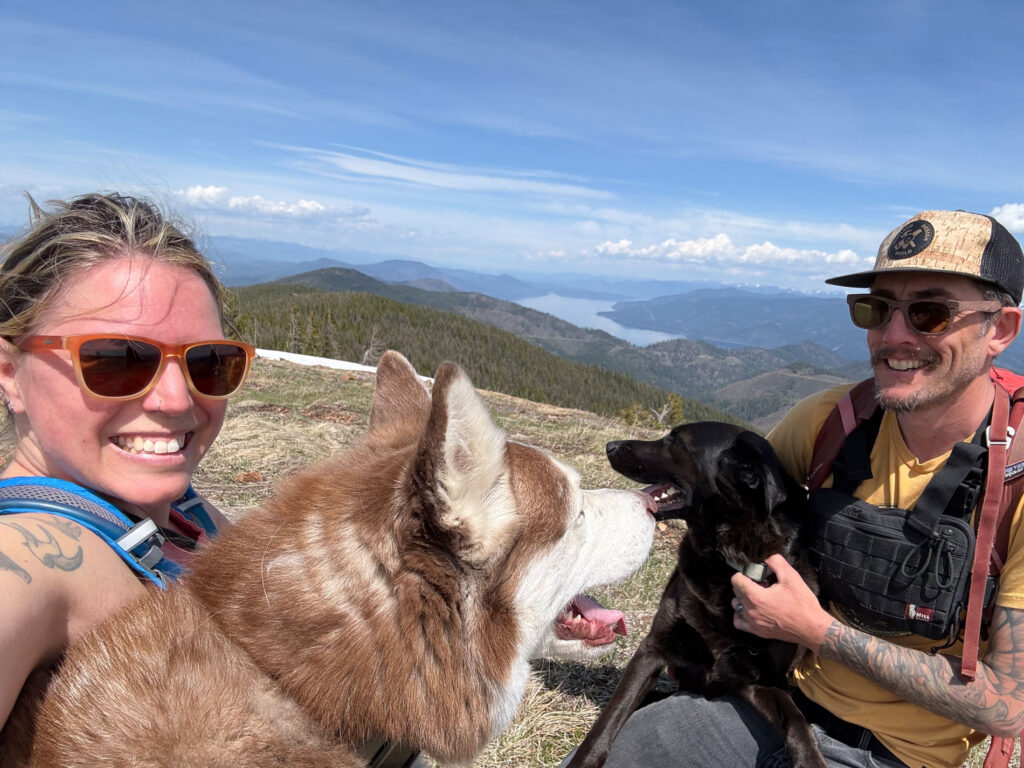
Jason and Lindsey Wilmoth enjoy the view of Lake Pend Oreille from Chilco Peak with two tired pups. Spring has arrived in the lowlands — and with it, morels — but up high, snow still lingers and the first flowers of spring, like grass widows and trilliums, are just beginning to bloom.
Then I found the biggest patch I will probably ever see in the bark dust in front of a chain restaurant in town.
My daughter sat down at the window booth and looked outside to see that the bark dust was covered in morels. I wasn’t confident about picking them because I wasn’t sure what chemicals had been sprayed in the landscaping, but when the waitress noticed what we were looking at, it was decided that we would go pick them for her while we waited for our food. She couldn’t believe her luck.
That day I learned that they can pretty much be anywhere. Parks. Backyards. The bark dust in front of a restaurant. A patch of grass growing through old asphalt.
What to look for
There are some signs to look for, though, some commonsense things that can help you locate the sometimes-elusive mushroom and some typical areas where you can expect to find them.
I was told a long time ago that when the lilacs in town start blooming, it’s time to go look for morels. This has always proven true. The soil needs to reach the right temperature, and spring rain often brings them out. If you see trilliums and trout lilies, you are in the right place. If you see Calypso orchids, you are definitely in the right spot, and if it’s not the right spot today, it might be tomorrow.
Morels like disturbed areas. Wildfire areas are the most obvious. Many times, I have found them growing upside down in burned-out pockets where there was once a tree. Along logging roads. Along game trails.
Since they need both sun and moisture, they will usually be on south-facing slopes first, often at the edge of a recently logged area where the ground suddenly gets solar warmth at the right time.
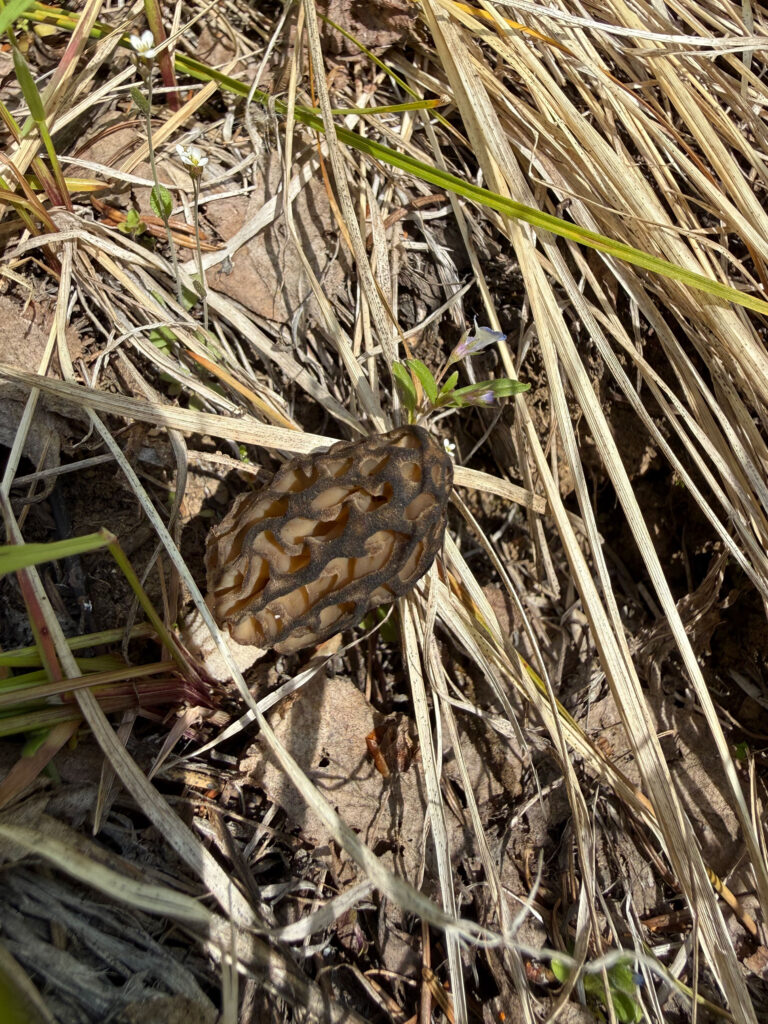
A morel pops out of the south-facing slope next to a logging road at my secret spot. This nondescript area has always produced morels, though I’ve found very few others nearby.
And then, when you think you know where they will be, be prepared to be wrong.
Let’s also talk about not eating mushrooms you aren’t familiar with. At the same time morels are coming forth, others like spring boletes, corals, and false morels are pushing out of the soil. False morels don’t look a whole lot like actual morels, but I have seen morels that looked an awful lot like false morels.
Corals and boletes are easily confused with morels by beginners. I know some people eat corals. A very good friend scrambles them with his eggs. I’ve also heard they can cause intestinal distress in some people. I’ve never wanted to find out for myself.
We recently ventured into the mountains on a trail that gives easy spring access to the alpine. On our way down after an afternoon playing in the snowfields and sunny meadows, we stopped by an area that has produced a small handful of morels for me every year.
For at least a decade I have walked down a quarter mile of logging road that should have morels growing alongside it, an area that checks all the boxes. But I only ever find them in one 20-foot section of bank next to the road. I have explored the hundreds of acres this logging road leads to and only once found a solitary morel anywhere aside from that road bank.
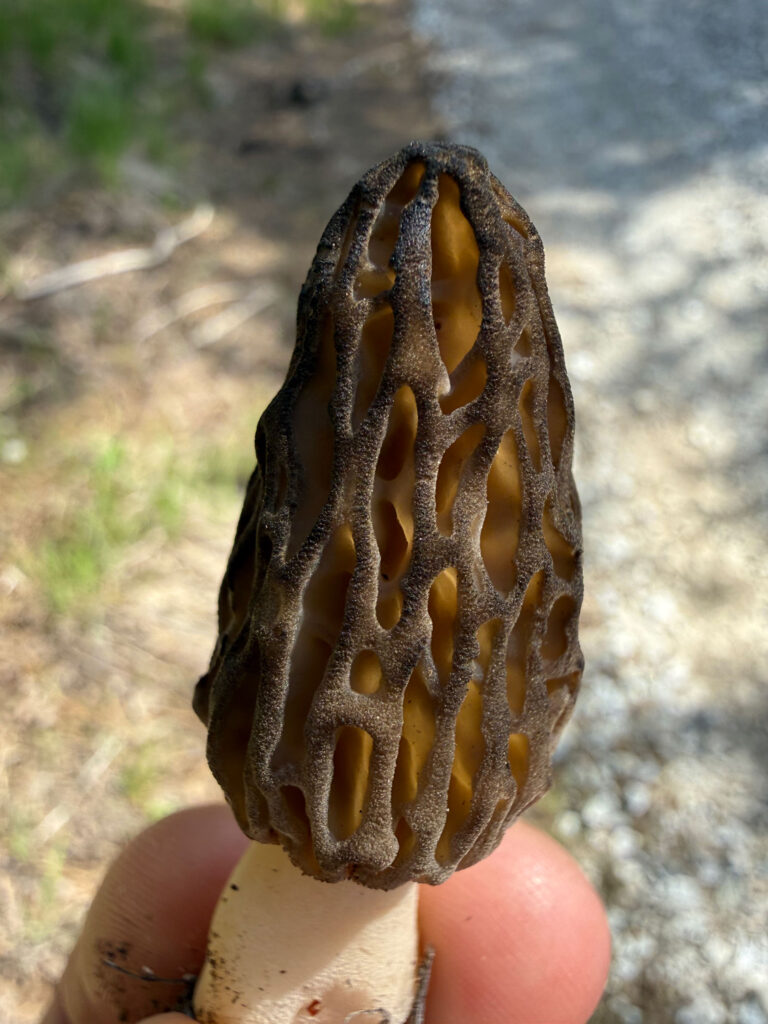
On this trip I was happy to see a handful of morels sprouting from among the low grasses. I knew I would be in the area a couple days later, so I left them to grow a little longer.
When I went back three days later, someone had beaten me there.
Topophilia is a Greek word meaning “love of place,” sometimes used to describe emotional attachment to a landscape or environment shaped by lived experience. I think this is probably the word that best describes the reason I keep returning to the same spots to hunt morels.
Part of me believes that spring won’t be able to progress into summer if I don’t experience that moment when our mountains come alive with wildflowers and spring mushrooms. Luckily, I did. N
As seen in the 2026 Summer Fall edition
By: Jason Wilmoth