

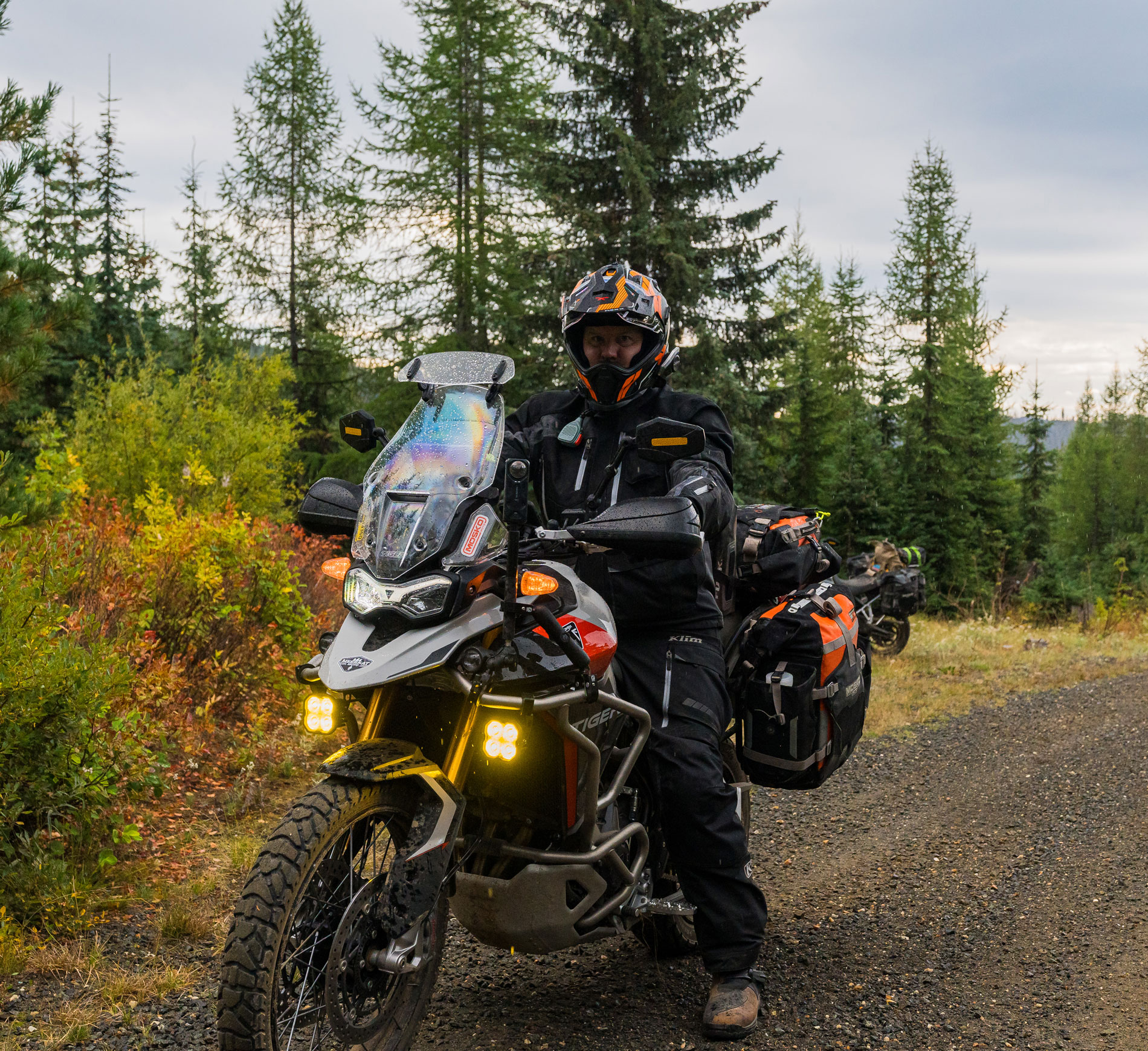
Jeff Durocher rolled into my driveway on a warm Friday afternoon in September aboard his Triumph Tiger 900. Mine was already loaded with camping gear and pointed toward the mountains.
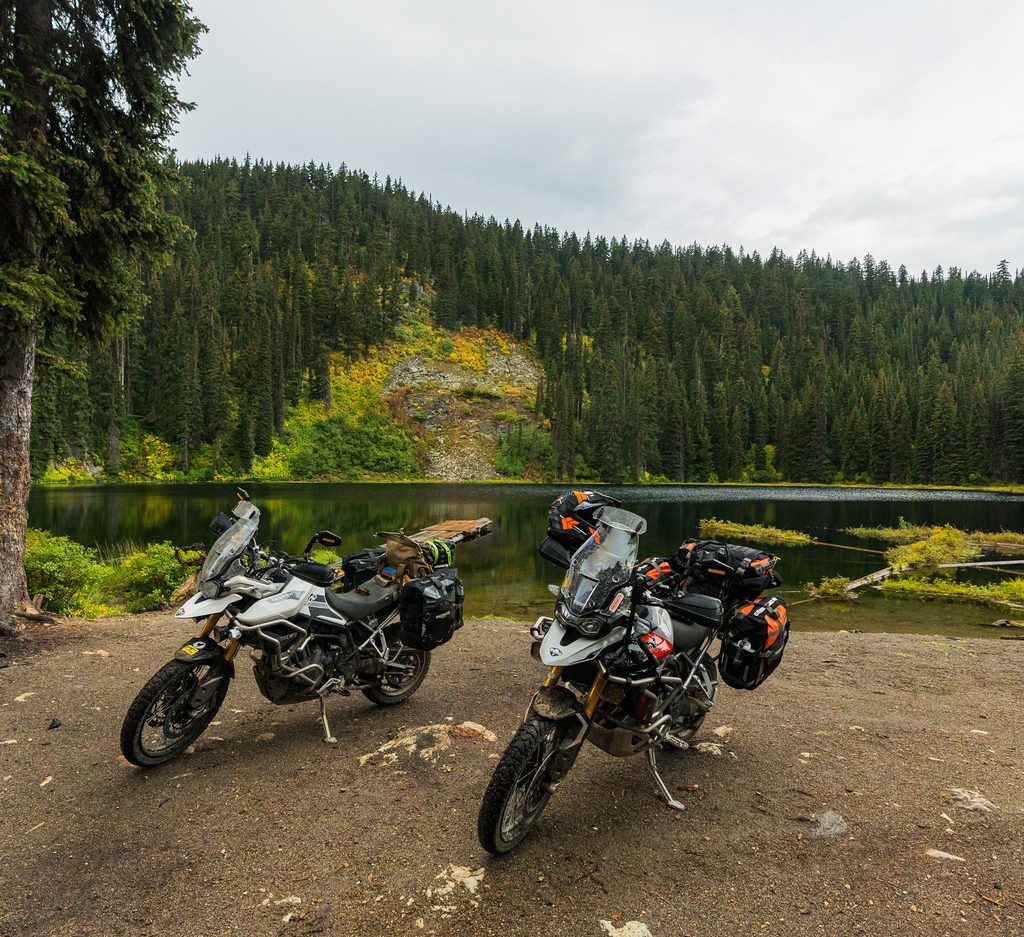
Within minutes we were headed east on I-90 toward Fourth of July Pass, chasing a weekend that would ultimately include more than 300 miles of dirt roads, two nights of camping, brick-oven pizza in Avery, an injured ankle, torrential rain and some of the best motorcycle riding I’ve experienced in years.
As we climbed toward the pass, I couldn’t help but think about how long it had taken me to get there.
Motorcycles have been part of my life since childhood. On a cold, rainy day sometime around 1993, shortly after I learned to ride a bicycle without training wheels, my dad sat me on a 1979 Honda Z50 minibike and sent me down the street in front of our house. That moment lit a fire inside me and sparked a lifetime of adventures that helped fundamentally transform how I see and interact with the outside world.
My deep admiration for the outdoors was, without question, built from the seat of a dirt bike while following and racing my dad around the mountains. That passion, competitiveness and drive to see new places and do hard things significantly influenced my drive to try and excel at other sports like kayaking, climbing and canyoning. Long before I cared about motorcycles themselves, I cared about where they could take me.
Since my late teens or early 20s, I wanted a street bike — or so I thought. In hindsight, it was probably wise that I was too busy blowing my money on other sports to afford what many affectionately refer to as crotch rockets. But fast-forward to my mid-to-late 20s and I learned what adventure bikes were. After watching motorcycles race the famous annual Dakar Rally, known for being the world’s toughest motor race, and riding my uncle’s Honda Africa Twin, I was officially obsessed. A motorcycle that combined my favorite aspects of off-road riding while also being legal on the road — sign me up!
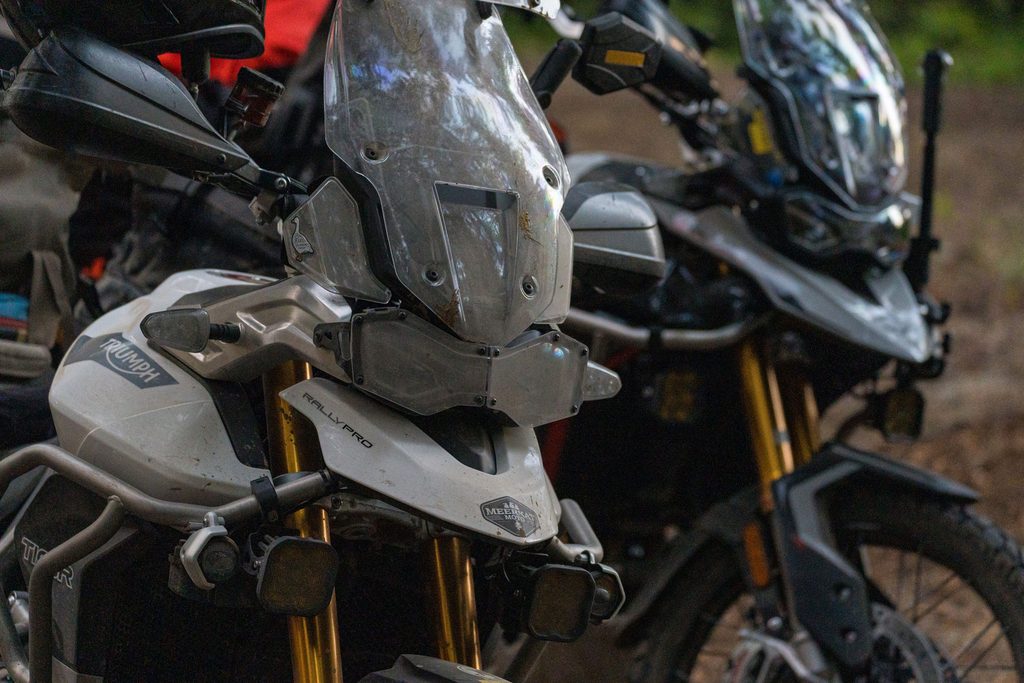
Fast-forward another three-quarters of a decade, and I finally had the opportunity to buy a true adventure bike. Between my buddy Jeff urging me for several years to buy one, my undying obsession with motorcycles and the ever-increasing cost of fuel for my truck, the stars finally aligned. I bought a 2022 Triumph Tiger 900 Rally Pro with exceptionally low miles, in nearly new condition. It is the ultimate off-road, all-around two-wheeled weapon from our English friends across the pond: a 900cc, 100-horsepower motorcycle that essentially combines a sport bike with a dirt bike.
Almost immediately after buying the bike in late July of 2025, I began riding it daily to and from work and off-road on the weekends. I missed fewer than 20 days of riding between the end of July 2025 and May 2026. The lack of an actual winter allowed me to ride nearly every day and put valuable on-road miles under my belt. When I first got the Tiger off-road, I couldn’t stop joking about how it behaved just like a big dirt bike. It was incredibly responsive, nimble and powerful off pavement and I couldn’t get enough of it. Being able to ride from home to the trail, rally dirt for hours, then ride back home is incredibly valuable.
While one of the core reasons for buying the bike was to cut monthly fuel costs while commuting, I couldn’t help but be excited about diving into the roots of the BDR and the western states’ Backcountry Discovery Routes. From my perspective, what could be better than backpacking with a motorcycle, covering real miles, carrying your own shelter and food, and still being able to disappear down a rough road just to see where it goes.
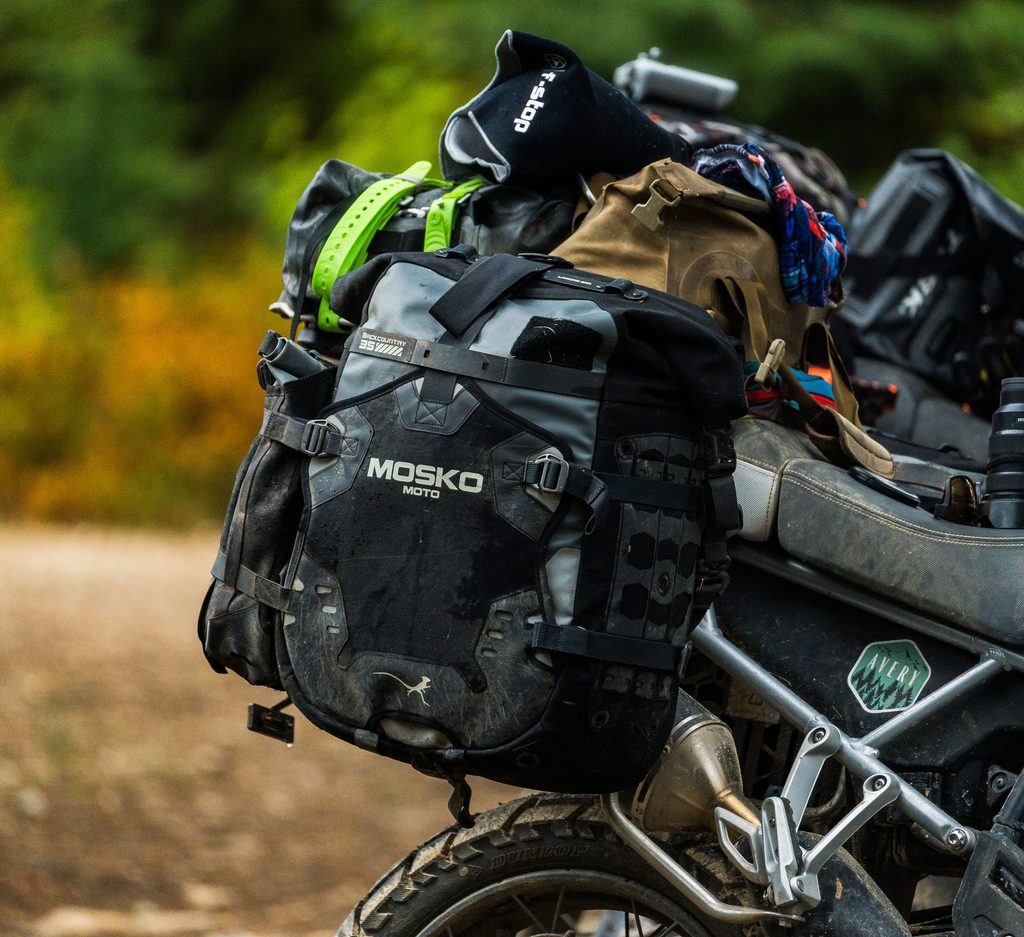
With a ton of help from Jeff, I was able to narrow down and acquire the bike-mounted luggage, gear and accessories that would make motorcycle camping off-road possible without turning the bike into a top-heavy yard sale.
Into the St. Joe Backcountry
Setting out on our motorcycle adventure, Jeff and I rode an incredibly fun and flowy road south to Killarney Lake and intended to ride up and over another pass to Latour Creek and the St. Joe Divide. Unfortunately, many of the old public roads have now been blocked by private land or decommissioned. Since it was getting late, and we would be riding up the St. Joe River during what I refer to as “Deer Suicide Hour,” we decided to make haste and ride the highway instead of wasting more time hunting for a potentially nonexistent dirt road. Neither one of us wanted to hit a deer on our bikes, so we made the best time we could to St. Maries and then up to Avery.
We rolled into Avery just after 8 p.m. and found TFP’s still serving food. We ordered our customary brick-oven pizzas with a beer and chatted with the owners about our planned route. Over dinner we looked over maps and discussed the next day’s route into the deeper reaches of the St. Joe Mountains.
Later that evening we found ourselves camping at Marble Creek Interpretive Center with the campground entirely to ourselves. The river provided a soundtrack as we set up camp and crawled into our tents.
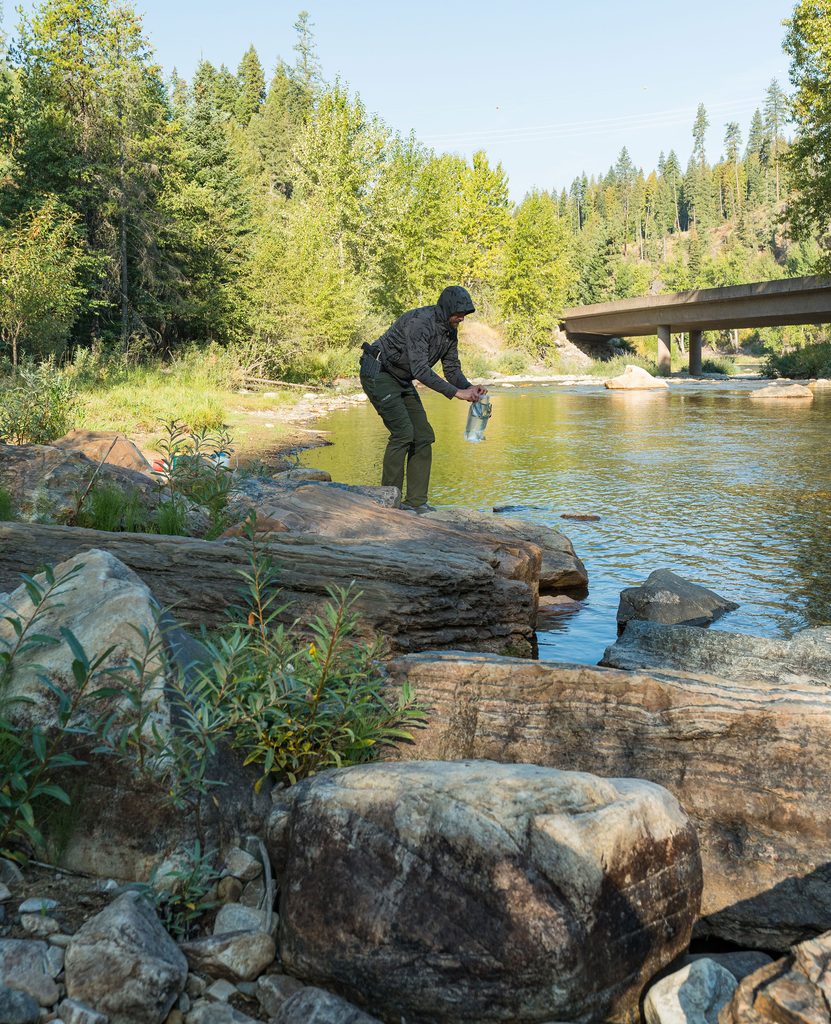
We got a slow start the next morning, reading up on the history of Marble Creek and the region in the Interpretive Center at the campground. The logging history is absolutely fascinating in that area. Jeff and I sat around enjoying the early morning light, filtered water and filled our Nalgenes for the day, then ate breakfast. We broke camp and got the bikes packed as the morning sun began to heat up and beat down on us. Around then, we decided to detour back to Avery for snacks before heading south for the next 150 or so miles of riding we had planned. Once back in Avery after another fun ride up the meandering highway, we decided to grab lunch at TFP’s. The place is just that good.
After lunch, we headed back downstream to Marble Creek and began a delightful and dusty ride south toward a tiny blue cabin about 60 miles south of Avery. Along the way we were treated to beautiful blue skies, warm riding and epic scenery. The entire time we chatted through our helmet intercoms about everything from riding skills to family, campsite options for that night, and all the hundreds of trees we had cut out of the road in previous years.
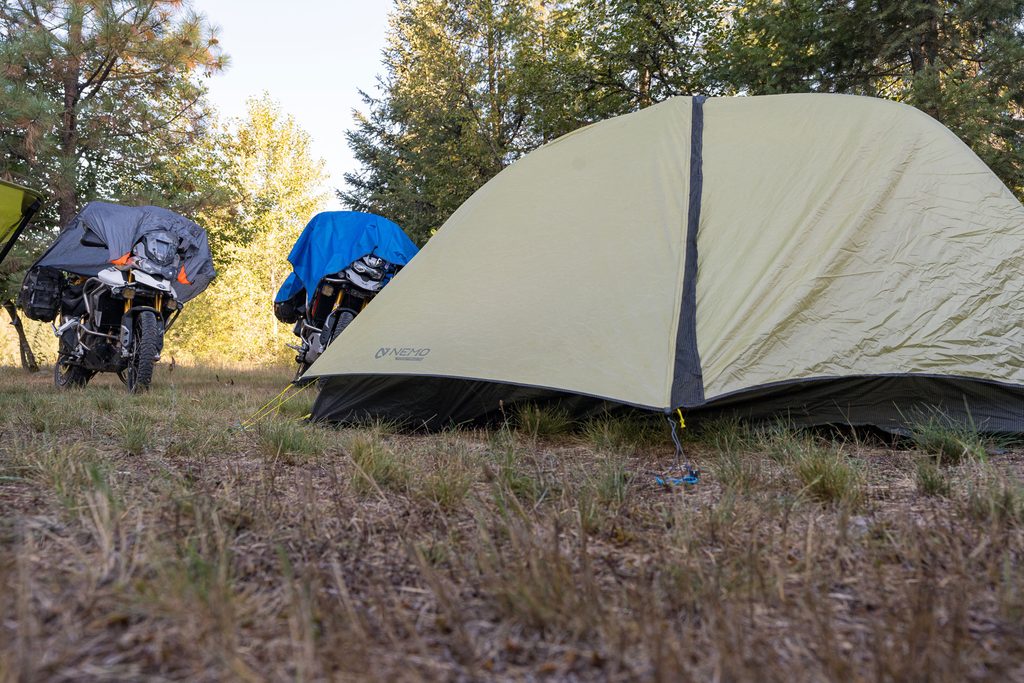
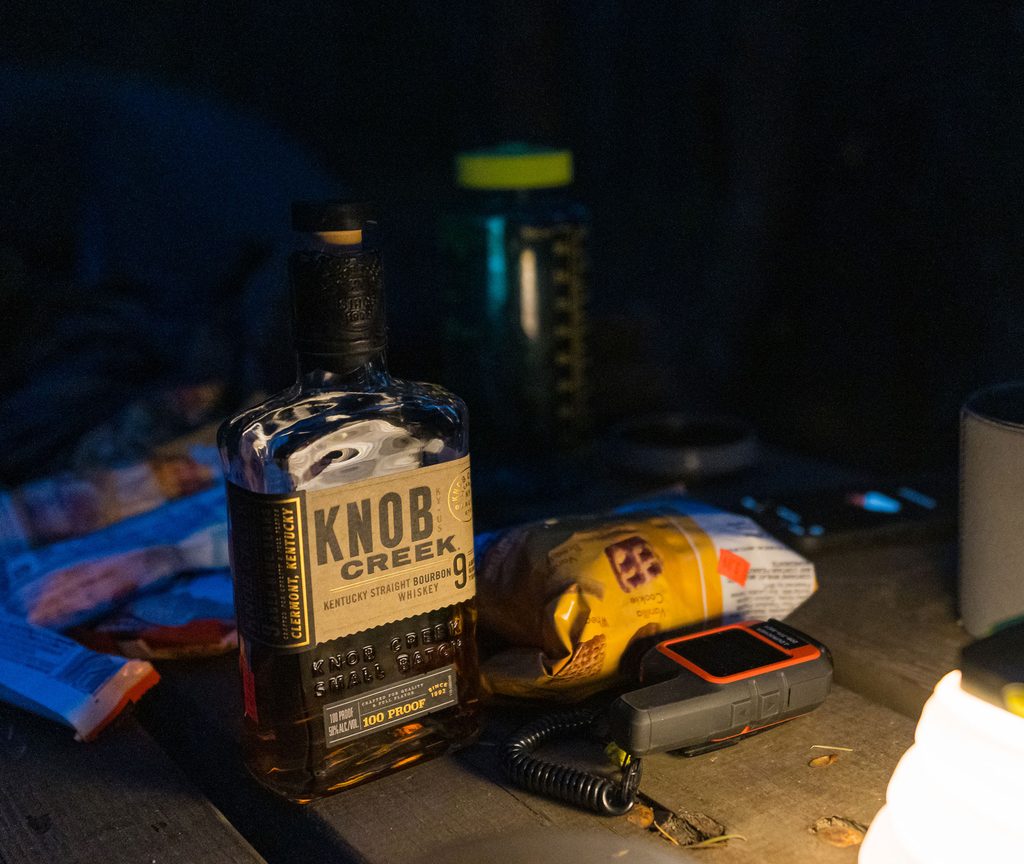
By the time we reached camp that evening we were exhausted. The site was an old outfitter camp complete with a table, fire pit and makeshift outhouse. It was also where I finally had time to appreciate the consequences of a relatively high-speed fall I had taken earlier in the day. My ankle had swollen considerably and was displaying an impressive collection of colors. Fortunately, a generous pour of Knob Creek whiskey provided enough relief to keep the trip moving forward
Rain, Mud and Hero Dirt
Sometime during the night, the weather changed and we awoke to the smell of rain. As the first drops fell, we hurried through breakfast and packed camp. I was stoked for the moisture and the impending hero dirt and lack of dust we were about to be treated to. We hopped back on our bikes and headed north and east. We had at least another 150 miles of dirt to ride before reaching the highway home. By the time we reached Middle Sister Lookout we were riding through 40-degree temperatures and driving rain.
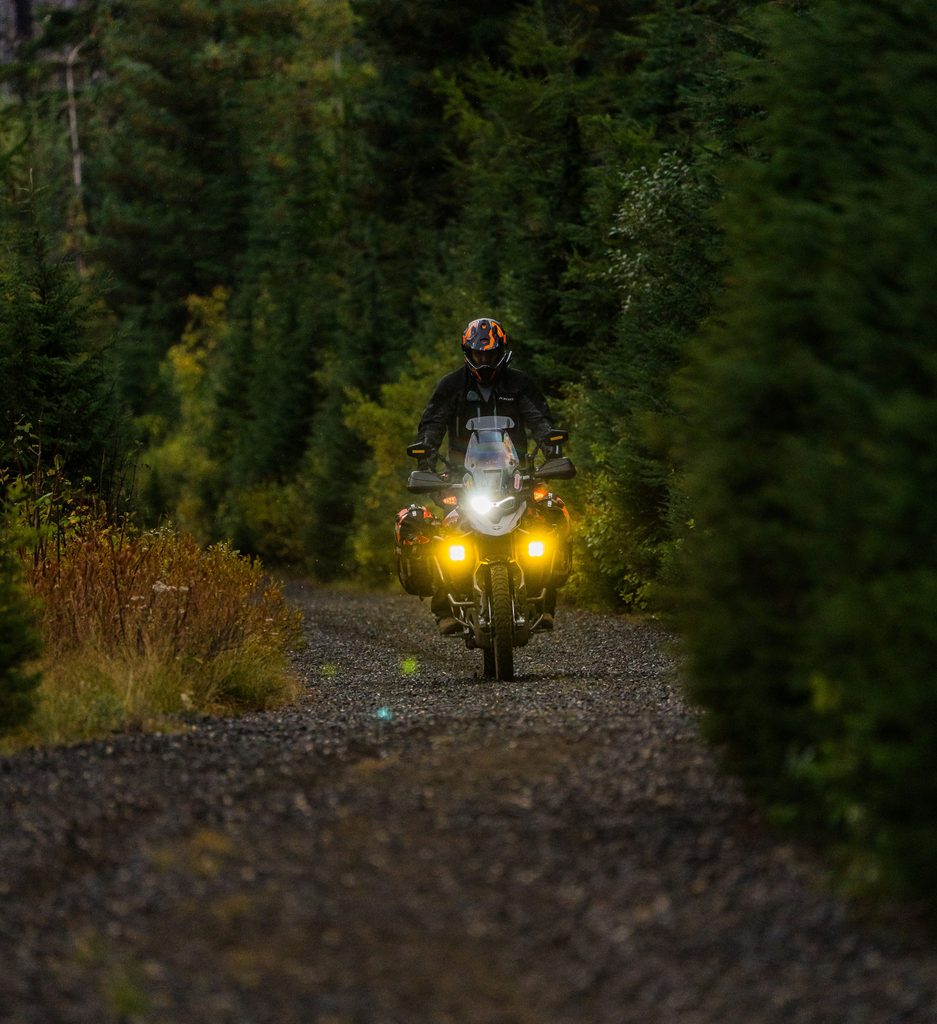
The contrast from the warm weather of the previous two days was remarkable, but it also transformed the landscape. The mist rising from the valleys after each passing squall, the stops to add layers when it got too cold, the incredible traction and riding new terrain with one of my best friends was going to be almost impossible to beat.
Hours later, cold and thoroughly soaked, we diverted once again to Avery for food and warmth before continuing toward Taft under another round of heavy rain.
Eventually the clouds broke. The final ride home was fast, dry, and uneventful, but it gave me plenty of time to think.
Thirty years after that first ride on a little Honda minibike, I’m still chasing the same feeling. The motorcycles have changed. The distances have grown longer. The campsites are farther from home.
But the adventure remains exactly the same.N
As seen in the 2026 Summer Fall edition
By: Chris Celentano