

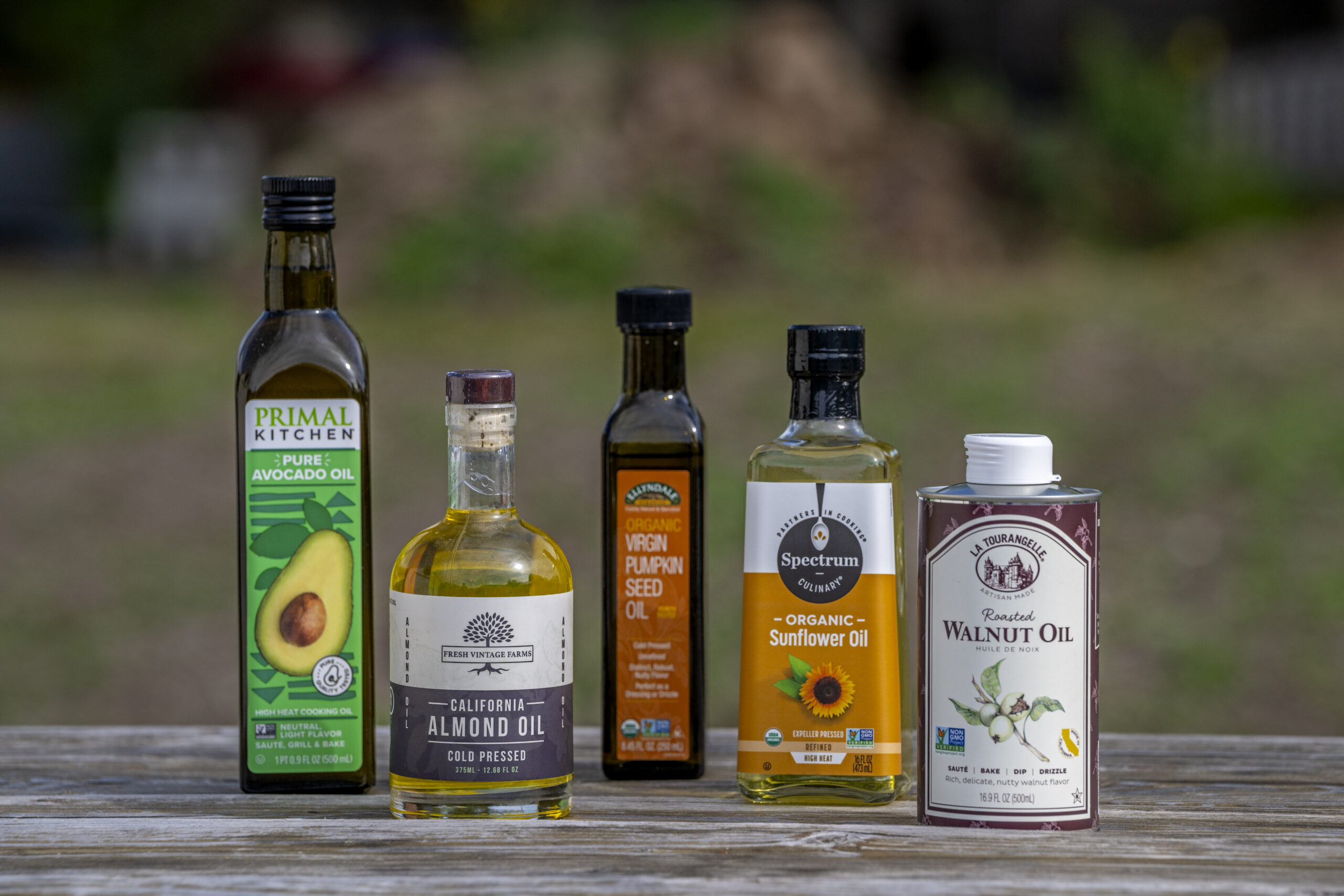
There’s a wide range of fats and oils available on the market today for cooking, supplementing your diet, skincare, wood treatments and more. Plant-based seed oils, like canola, corn, soybean, grapeseed and sunflower have recently come to the forefront as food health concerns and first came on the market in the late 1900s as cooking alternatives to hydrogenated oils, like vegetable oil. They quickly became common cooking oils alongside olive oil, and the high smoke point of some made them popular as frying oils.
Seed oils are often criticized as being high in omega-6 fats, which, in unbalanced forms can promote inflammation, but alongside omega-3s, they are also essential fatty acids not produced by the body. Additionally, as unsaturated fats, seeds oils can increase the risk of cardiovascular disease, but one of their greatest health down sides is that they are typically highly processed and refined, and then often consumed in highly processed foods. However, incorporating extra-virgin, freshly-pressed seed oils into a diet balanced with other healthy fats, such as omega-3, monounsaturated and polyunsaturated, can help lower LDL cholesterol, support brain function, promote cell growth and benefit overall health.
Did you know that you can grow and press your own healthy seed oils right from your garden? In the Inland Northwest, our growing season is noticeably shorter than other southern parts of the United States. Still, there are a few things we can grow here that produce seeds suitable for oil-pressing. The top four that come to mind are pumpkin, walnut, sunflower and poppy.
Pumpkin seeds
Pumpkins thrive in this climate and are easy to grow. There are many local farms as well that open up pumpkin patches to the public for picking every fall season, and free pumpkin seeds are prolific at pumpkin carving events. Pumpkin seed oil has a smoke point of 320F (160C), usable for cold to low heat dishes.
Walnuts
Although they’re native to the central and eastern areas of the U.S., black walnut trees are often used in landscaping in the Inland Northwest. The husks of these walnuts are poisonous to animals, can be toxic to humans and are very difficult to remove. This may be why black walnut extract and walnut oil is so expensive to buy! But with a little time and intention, you can harvest (or forage!) those precious nuts and press your own rich, flavorful oil. Walnut oil has a smoke point of 225F (107C), usable only for cold dishes.
Sunflower and poppy seeds
Even though our summers are shorter than a lot of growing seasons, they are brimming with sunny days. Sunflowers and poppies turn their pretty faces towards the sun and grow big and strong in its warmth. With a smoke point of 450F (232C), Sunflower oil is suitable for high heat cooking and frying, and wonderful for baking. Poppy seeds yield 45-50% oil that is high in vitamin E and tastes delicious. With a low smoke point around 300F (150C), this oil is best for dressings, low heat or even as a nutritional supplement.
Extracting oil from seeds does require an oilseed press. Home presses can range from manual set ups for $70-$80 to electric extractors for $400. How much you invest in a press can depend on what you’re able to grow, what product you have access to and how comprehensive you want your DIY pressed oils program to be. For a comprehensive, thoughtful exploration of this topic, check out Bevin Cohen’s book, The Complete Guide to Seed & Nut Oils. N
As seen in the 2025 Summer/Fall edition
By: S. Michal Bennett