

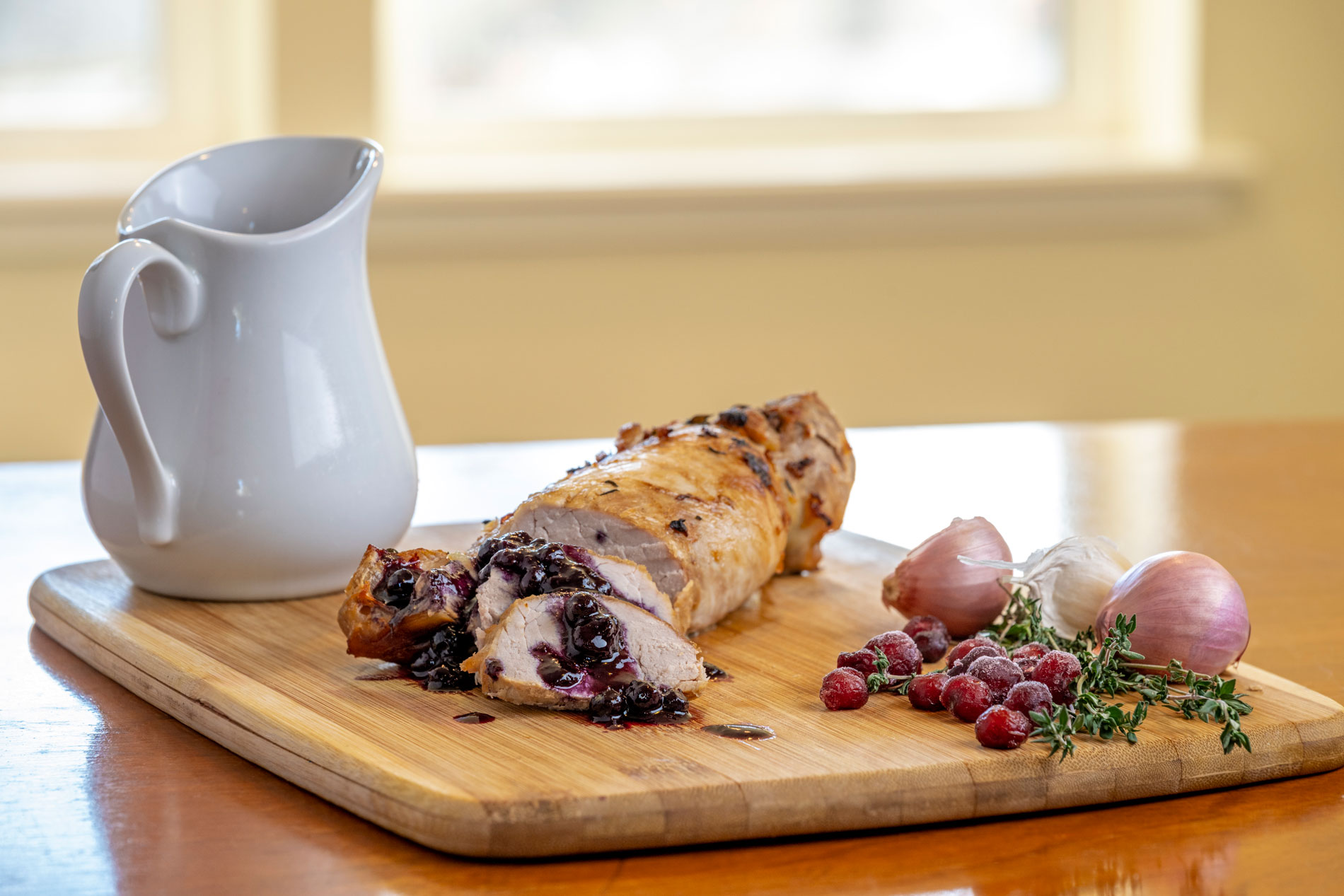
I don’t recall having known about huckleberries before moving to Idaho almost 20 years ago. People are kind of obsessive here over huckleberries and huckleberry products. In fact, any good tourist-enticing place in the Inland Northwest pretty consistently offers some sort of food or drink item that contains huckleberries. Huckleberry lemonade, ice cream, jam, sauce, dessert, pastry, taffy, beer, wine, soap and so much more.
In researching this little purple berry, I discovered there are also two berries, two different genera, named “huckleberry” in the U.S., both native to the Americas. Eastern huckleberries, genus Gaylussacia, has a thick skin, 10 hardy seeds, are either black or blue and grow a single berry from the base of leaves on new shoots. Western huckleberries, genus Vaccinium (same genus as blueberries), have a thinner skin, soft seeds, can range in color from black to red, and grow in small clusters, similar to blueberries. It is the Western huckleberry, and the Vaccinium globulare variety that is most prolific in the high mountains of Montana and Idaho, that we in the Northwest crave and hunt for every summer. This is what I will refer to as “huckleberry” forthwith.
The official state fruit of Idaho since 2000, the huckleberry has also been a staple of life for Northwest and Rocky Mountain Native American tribes for thousands of years. In 1806, Lewis and Clark wrote about tribes extensively using dried huckleberries in their foods. Captain Meriwether Lewis wrote about eating “dried cakes of berries” and cooking them into a breakfast pudding with flour. Northwest tribes would pick huckleberries using salmon backbones or wooden “combs” and sun dry or smoke them so they kept longer. The Sawtooth Berry Fields in Washington’s Gifford Pinchot National Forest is a protected cultural site of the Yakama Nation where Native American peoples have harvested berries for thousands of years.
Story continues after a quick message from our sponsor below

Although Oregon is home to a unique berry breeding program, a collaboration between Oregon State University and USDA’s Agricultural Research Service, domestic or commercial cultivation of huckleberries remains elusive. These wild little berries thrive at high elevations, in acidic soil (often burn areas), cold winters, short growing seasons and high humidity from rain and mountain fog at certain times of growth. Huckleberry season is typically a few weeks during August and September, and foraging can turn into a long, semi-productive day since huckleberries aren’t nearly as prolific per cluster as blueberries. For information and regulations around harvesting and using huckleberries in the Panhandle National Forest and Inland Northwest, search “huckleberries” at www.fs.usda.gov.
Huckleberries are nutrient powerhouses, packed with calcium, vitamin A, vitamin C, potassium and antioxidants, particularly anthocyanin and resveratrol, a powerful cancer-fighting antioxidant. They have a similar, more concentrated flavor compared to blueberries, but are also more tart. They freeze and dry very well. To freeze, spread out the rinsed and dried berries on a baking sheet in the freezer, freeze solid, and then seal in a bag or container. To dry, lay out in a single layer on lined trays in a dehydrator, dry for 8-12 hours at a medium low setting (around 135-140°F) until shriveled and chewy, like dried cranberries or raisins. You can also dry in the oven on the lowest setting.
The culinary uses of huckleberries range from sweet to savory to spicy. They can be a swap in most recipes for other berries, like blueberries and blackberries. Tart sweet sauces pair nicely with fish, pork, and poultry as well as grilled fruit (peaches!), desserts and lemonade. Try one savory and one sweet with my recipes: Native American Inspired Huckleberry Honey Cake and Roasted Pork Loin with Huckleberry Thyme Sauce.N
As seen in the 2026 Winter/Spring Edition
By: S. Michal Bennett
Photography By: Joel Riner