

Connecting with Local Farms
Whether you grow your own vegetable garden or not, the Inland Northwest is full of farms, farm stands and farmers’ markets where you can shop local produce, meat, eggs, dairy and more, straight from the producer. Farmers market season typically runs May through October, and we certainly have some wonderful Washington and Idaho markets with something for everyone! But the Idaho Panhandle is filled with quality small farms and ranches, and farmers’ markets are just one way to shop local farms. The question is, how do we find those farms and bring their goodness to our tables?
In 2020, four Idaho farm owners established the Panhandle Farm Corridor (a 501(c) non-profit) with the mission of promoting farm stands in their communities and increasing sales channel options for farmers in North Idaho. After the initial start and the onset of the realities of farm commitments, the board ended up with just three members: Emily Black, coordinator; Lisa Pointer, treasurer; and Betty Mobbs, secretary. Five years in, they now have a board of five farmers, all volunteers, and one community volunteer.
The Panhandle Farm Corridor is a collection of farms, ranches and farm stands throughout Shoshone, Kootenai, Bonners and Boundary counties with a vision to encourage and welcome customers to come out to the farms to purchase products, meet the farmers and learn about how each product is grown or raised. Its website (www.panhandlefarmcorridor.com), offers a downloadable guide to 27 farms and ranches throughout the Panhandle and includes an interactive map with farm details and links to each farm’s site or social media. The site is a billboard for members, re-sharing information while creating an outlet for farmers to reach communities and customers.
The “sourdough” artisan goods farm stand has also become a trend on social media, but Farm Corridor members’ farm stand can look like anything from a rural u-pick farm with a tent or a suburban porch with fridge to an actual store-like structure that you walk into on a farm’s property. Regardless of what they look like, every registered member of the Farm Corridor grows or raises what they sell at their farm stand, even if they also diversify with value-added products made from what they grow or raise as well as other farm-crafted products. “We’re really promoting the farm aspect,” says Black. “To be a Corridor member, you have to grow or raise the products you sell, whether vegetable or animal, and your farm stand has to be on your property.”
Story continues after a quick message from our sponsor below

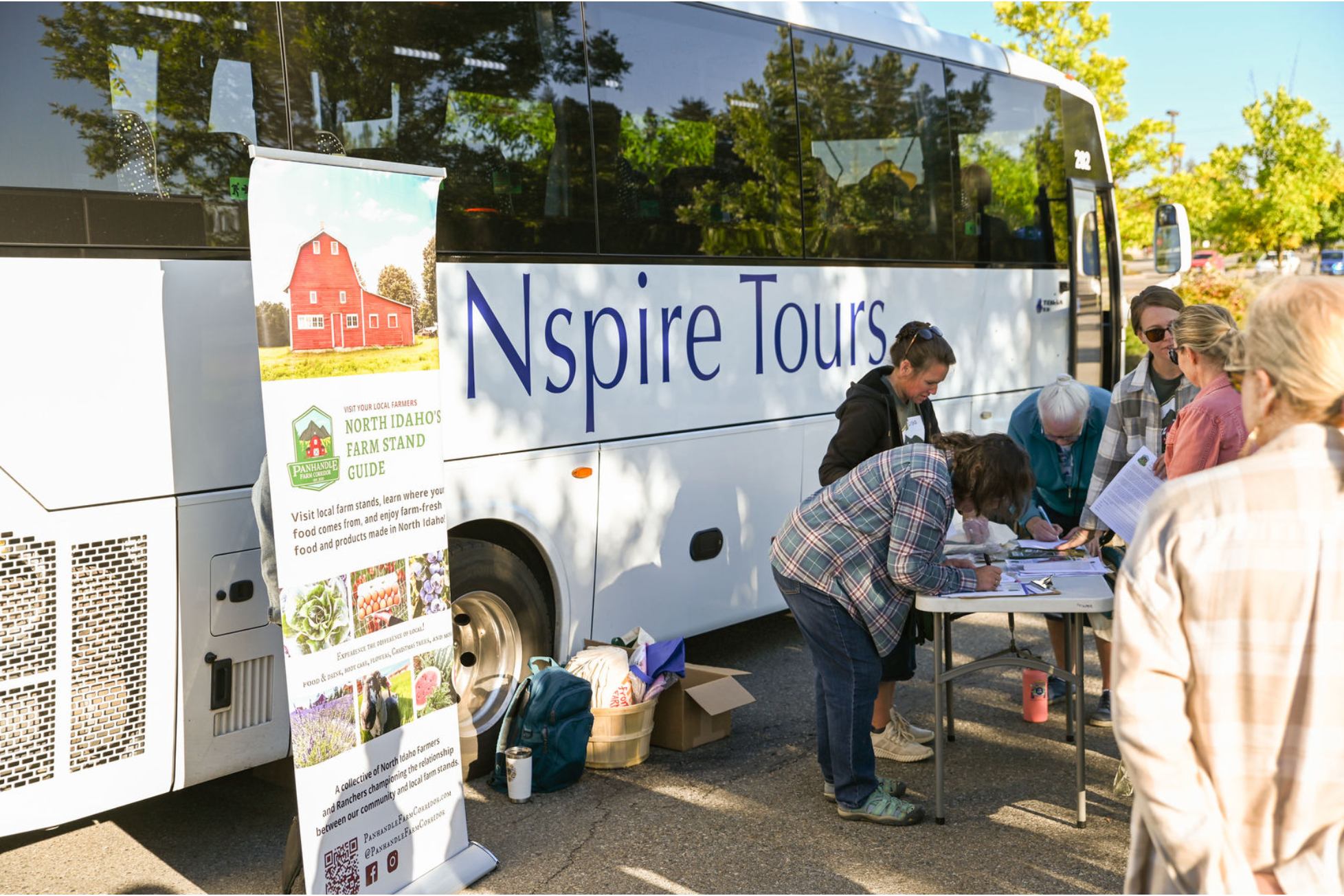
However, looking at a map and making a plan to find the farm stands on that map on any given day may seem a little intimidating for a customer, especially when we are used to shopping grocery store shelves or harvesting food in our own gardens. The Corridor map also extends from Shoshone County on the southern end all the way to the Canadian border. That’s a lot of ground to choose from on a Saturday. In 2024, the Panhandle Farm Corridor received an Idaho State Department of Agriculture (ISDA) grant that made it possible to host a series of farm tours – two in 2024 and two in 2025. Each tour went to three to four farms within an area or county on the farm stand guide. In 2024, customers went to farms in the Bonner’s Ferry area and in Kootenai County. In 2025, the farm tour filled both buses with visits to farms in Bonner County (Sandpoint and Clark Fork) and additional farms in Kootenai County. Each tour included a farm-to-table lunch and brought the community out to the land to discover the stories of these farmers, how they’ve grown their businesses, what they have to offer, and how the community can partake in what they have to give.
“Our farm tours are an introduction to your farmer,” Black explains. “There can be uncertainty about driving onto a farm’s property to shop, so the tours are the icebreaker to get them there, show them where the farm stands are, allow the farmer to tell their story, and to create opportunity for them to buy from the farmer and establish a trust and relationship.” The tours were such a success and have created so much community involvement in supporting local farms and investing in local, healthy foods and goods that the board is hoping to continue offering them in 2026 with new and current sponsorships.
With all these resources to shop locally grown, raised, and crafted foods and goods, I feel less pressure to grow ALL my own food. Discover the wealth of farm stands for yourself through the Corridor’s website and social media (@panhandlefarmcorridor). And, if you’re interested in sponsorship or applying to become a member, applications and contact information are on their site. Eat. Shop. Local. N
As seen in the 2026 Winter/Spring Edition
By: S. Michal Bennett
Photography By: Joel Riner