

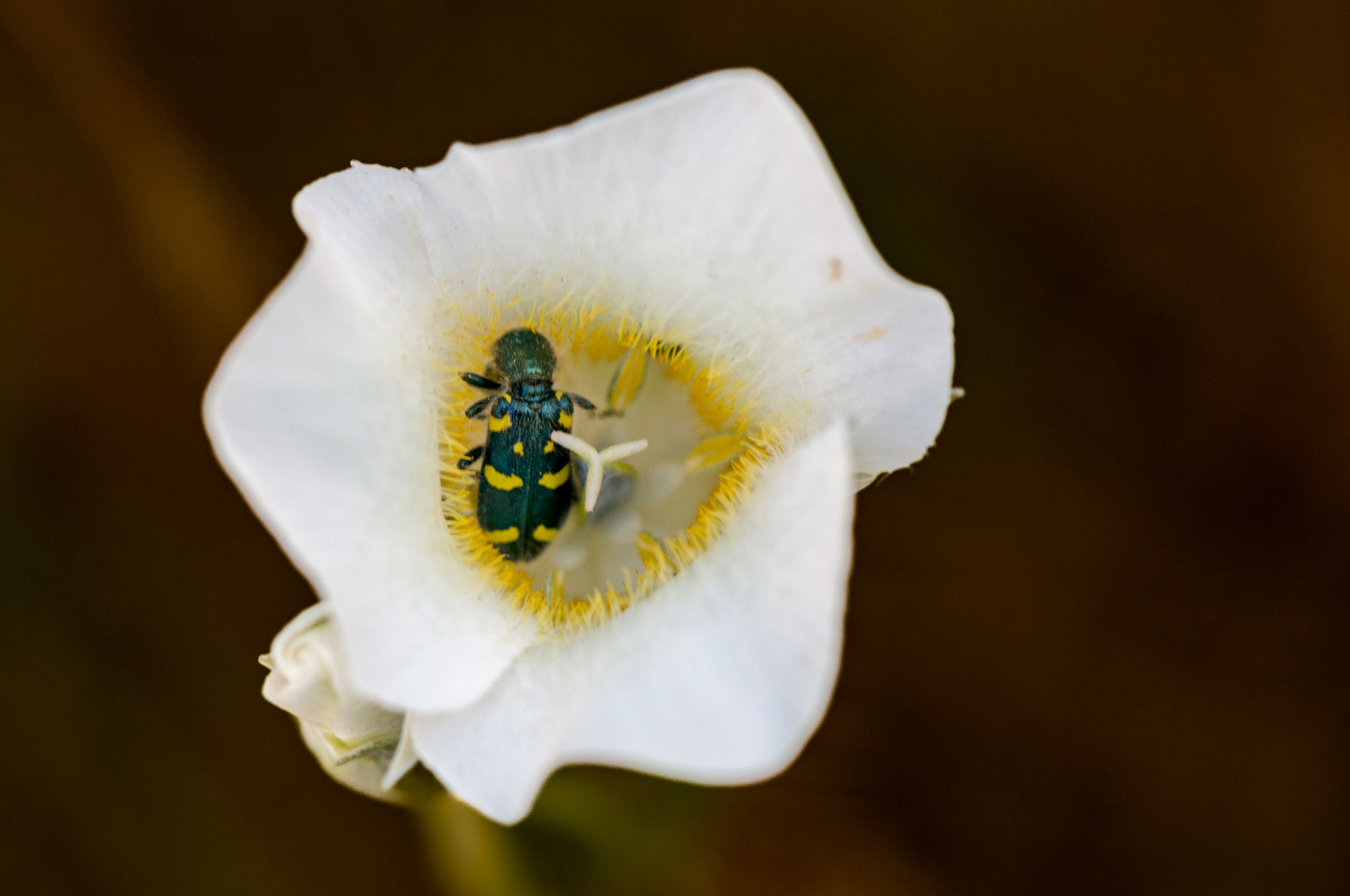
Close Menu
    Nspire Magazine – Pacific Northwest Living
    Subscribe to Nspire Magazine
    • Adventure
      1. Hiking
        • Oregon
        • Montana
        • Washington
        • Idaho
      2. Travel
      Featured
      March 17, 20250

      Grizzly

      Recent
      March 14, 20260

      Tamanawas Falls

      March 13, 20260

      Hiking in Switzerland

      March 3, 20260

      Living the River Life

    • Food
      1. Dining Guide (curbside)
      2. Recipes
      3. Ingredients
      Featured
      March 19, 20250

      Cocoa Rubbed Steaks with Bacon Brussels Sprouts

      Recent
      March 13, 20260

      Apple Cider Whiskey Warmer

      March 10, 20260

      The Great Western Huckleberry

      March 10, 20260

      Pork Loin with Huckleberry

    • Home
      1. Builders Guide
      2. Organic Gardening
      3. Real Estate
      Featured
      March 20, 20250

      Modern Meets Rustic in this Stunning Black Rock Home

      Recent
      March 13, 20260

      Special Touches for ‘Forever Home’

      March 10, 20260

      Garden to Table

      March 3, 20260

      Charming Greenstone Farmhouse

    • Lifestyle
      1. Arts
      2. Conservation
      3. Fitness
      4. Nspired
      Featured
      March 20, 20250

      Weighing In

      Recent
      March 13, 20260

      Wildfire and our forests

      March 12, 20260

      This Old House Adam Schluter

      March 10, 20260

      North Idaho Women

    • Expert Tips
    • Gear
    • Events
      • Calendar of Events
      • Nspire Wedding
    • Subscribe
    • Group Tours
      • Charter Bus
    0 Shopping Cart
    Nspire Magazine – Pacific Northwest Living
    0 Shopping Cart
    Think bees are pests? These insects have an important job.

    Who’s Pollinating Your Gardens?

    0
    By Nspire Magazine on March 16, 2023 Home

    Did you know there are around 4,000 species of native bees in North America in addition to honeybees? There are bumblebees, Mason bees, leafcutter bees, squash bees, mining bees…to name a few. Of those, over 600 pollinate the Inland Northwest and often do it better than a honeybee. But bees aren’t the only creatures that provide pollination. Butterflies, wasps, beetles, bats, flies, moths, hummingbirds and even bats and small mammals pollinate flowering and fruiting plants everywhere. The whispering wind is also a pollinator! And, with a little effort, gardeners can hand pollinate their own garden plants.

    » The Priority of Pollination

    First, let’s define pollination. The transfer of pollen to a stigma, ovule, flower or plant to allow fertilization. A fertilized flower then transforms into a fruit that bears seeds that will grow new plants that flower.

    You can identify a pollinating plant by the presence of pollen in conjunction with a flower. Pollinators transfer pollen from flower to flower as well as shake it into the ovule or stigma within the flower. And then, some plants – peanuts, peas, orchids – supplement pollination by self-pollinating. Their flowers fold back on themselves at night, knocking pollen into the heart of the flower. 

    Over 180,000 varied plant species and around 1,200 food crops require pollination to reproduce. These include berries, vegetables, gourds, melons, coffee, herbs, nuts, chocolate, conifer trees and much more. This means that one out of every three bites of your food is dependent on pollination to show up on your plate. That’s a lot of food! Pollen and plant nectar are also food for bees and beetles, providing nutrient and protein. Look closely at a fluttering bee during the height of summer and you’ll see their back legs encased in bright yellow pollen leg warmers!

    Managing native bees is vital to sustaining populations.

    » The Bees

    With all the information over the past decade about saving the bees most of us are pretty familiar with what a honeybee looks like. But have you ever seen an orange-belted bumblebee? Or followed a mason bee back to its burrowed nest? Or watched a leafcutter bee harvest greenery for its eggs? Some bees are even green or their stripes appear eerily similar to a wasp’s. With 4,000… and one… to observe, it might be difficult to differentiate some bees from flies, pests or other flying insects. 

    » Bee ID Common Characteristics

    • Mostly short, thick bodies covered in hair (some exceptions)

    • Six legs and three body parts: head, thorax, abdomen 

    • Three segments in the thorax, each with three pairs of legs

    • Tiny waist and rounded abdomen tip (wasps have a pointed lower abdomen)

    • Branched hairs somewhere on their body

    • Two pairs of wings

    • Only females have stingers

    Bees are amazing creatures. Take one of each variety of bee in North America and put them all together and they’ll weigh about one pound. A honeybee hive houses around 50,000 bees on average, and a queen bee can lay 800,000 eggs during her lifespan. Bees are fast, flying up to 15 miles per hour! They communicate through movement, often compared to dancing, and they are industriously neat in their cleaning, constructing and ensuring the future of their species.

    Honeybees live within a collective hive with thousands of worker bees supporting one queen, building a wax hexagonal structure, harvesting pollen and nectar, and facilitating the production of honey. Honey is chock full of amino acids, vitamins and minerals and is gentler on blood sugar levels than regular sugar. Beekeepers are common in the U.S. and are often referred to as honey farmers or apiarists. This method of bee management has the possibility of harming wild honeybee populations and encroaching on their pollination territories. But honey is a bankable commodity on the world market. In recent years, more awareness and care has been brought to the industry to build a more sustainable future.


    [adrotategroup=“1”]


    One way we can promote sustainability and current pollinator health is to encourage and manage native bees. Mason bees are the most known North American native bee and get their name from the “masonry” work they do as they build small tube-shaped holes to lay their eggs and section off with mud. These amazing insects are more effective pollinators than honeybees but are solitary instead of hive dwellers. They also have a shorter lifespan: they emerge early in the spring, and then the female queen works alone for about 10 weeks to build tubes, find a mate, lay her eggs and then die. You can keep mason bees as well! They are gentle and don’t have stingers. 

    There are so many fascinating bees to discover, but I’m only going to talk about one other one here: the bumblebee. These fat, hairy banded bees are probably my favorite. For a number of years, I’ve witnessed a growing population of orange-belted bumblebees in my garden and seeing their little butts wiggling in the center of a rhododendron bloom just makes me smile. Bumblebees also live only for a season and build colony nests of 70-2,000 bees close to the ground. That little tail wiggle? Well, that’s their vibrating “buzz buzz” that shakes the pollen and makes them incredible and efficient pollinators. Although females have stingers, they are much more laid back than honeybees, so you most likely won’t be stung by one. They are hardy, tenacious and gentle, and they love flowers, all flowers, any flowers.
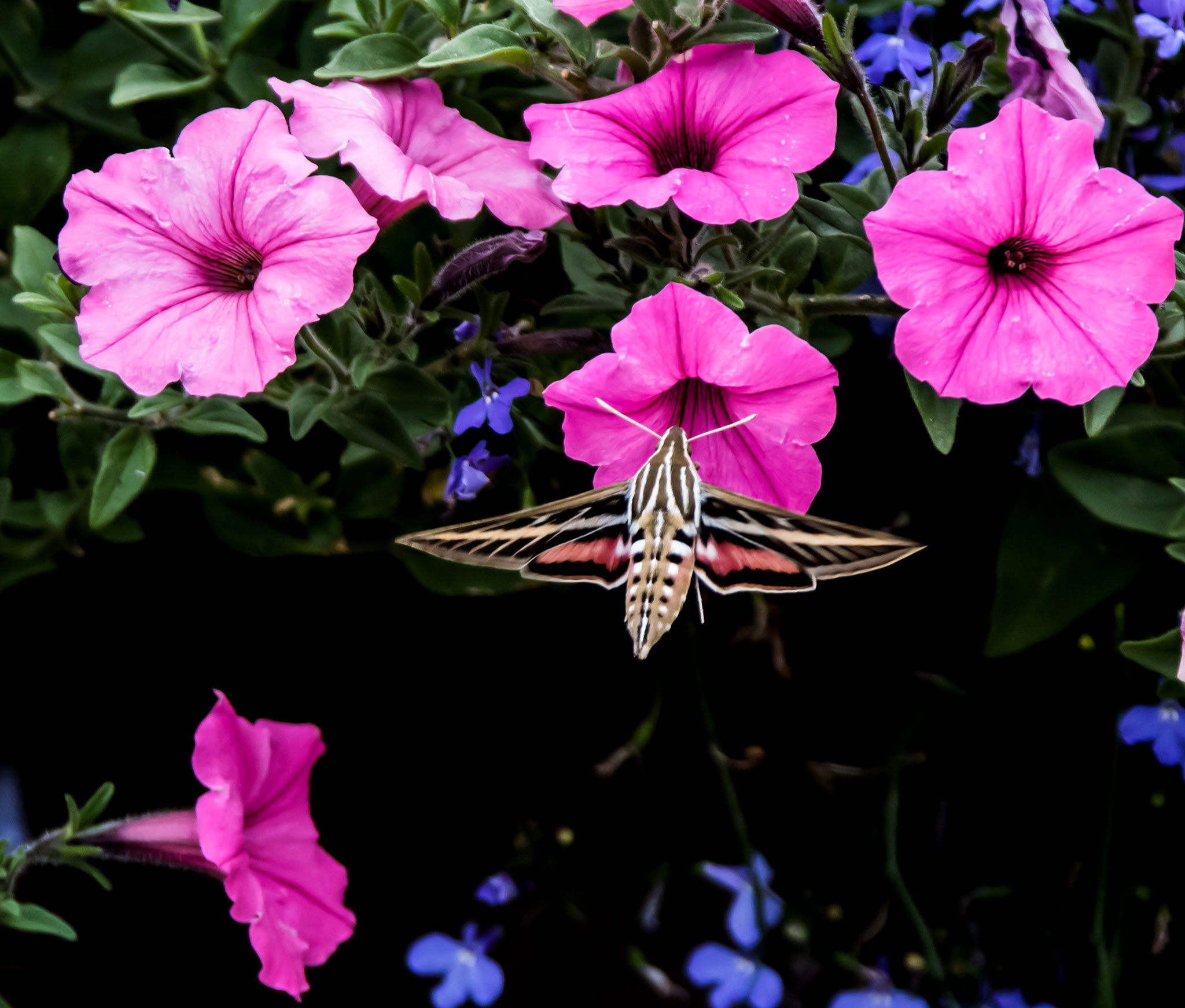
    Butterflies and moths follow bees in their pollinating abilities.

    » Non-Bee Insect Pollinators

    Butterflies and moths are the most prolific pollinators after bees. Although there are 20,000 species of butterflies in the world, only 750 pollinate in North America. Some butterflies, like the Idaho Monarch, migrate to warmer climates when it gets cold. Others hibernate in leaves while some die off in the harsh weather. They favor wildflower pollen and taste with all six of their feet. They have a life cycle of caterpillar, cocoon, butterfly, eggs and can reach as high as 11,000 feet into the air. Their wings are made up of a transparent protein layer covered in scales that reflect light in different colors, making them brilliantly diverse and vivid in their plumage. Butterflies can be raised in captivity but releasing them into the wild can cause great harm to wild populations. 

    While some of the 75,000 wasp species are bee predators and extremely aggressive towards humans, many wasps are still pollinators. Other insects that we consider pests, like flies, midges, mosquitos and beetles also play roles in this important task. So, the next time you go on a mission to kill as many “pests” as possible, remember they have a good side as well in the ecology of our world.
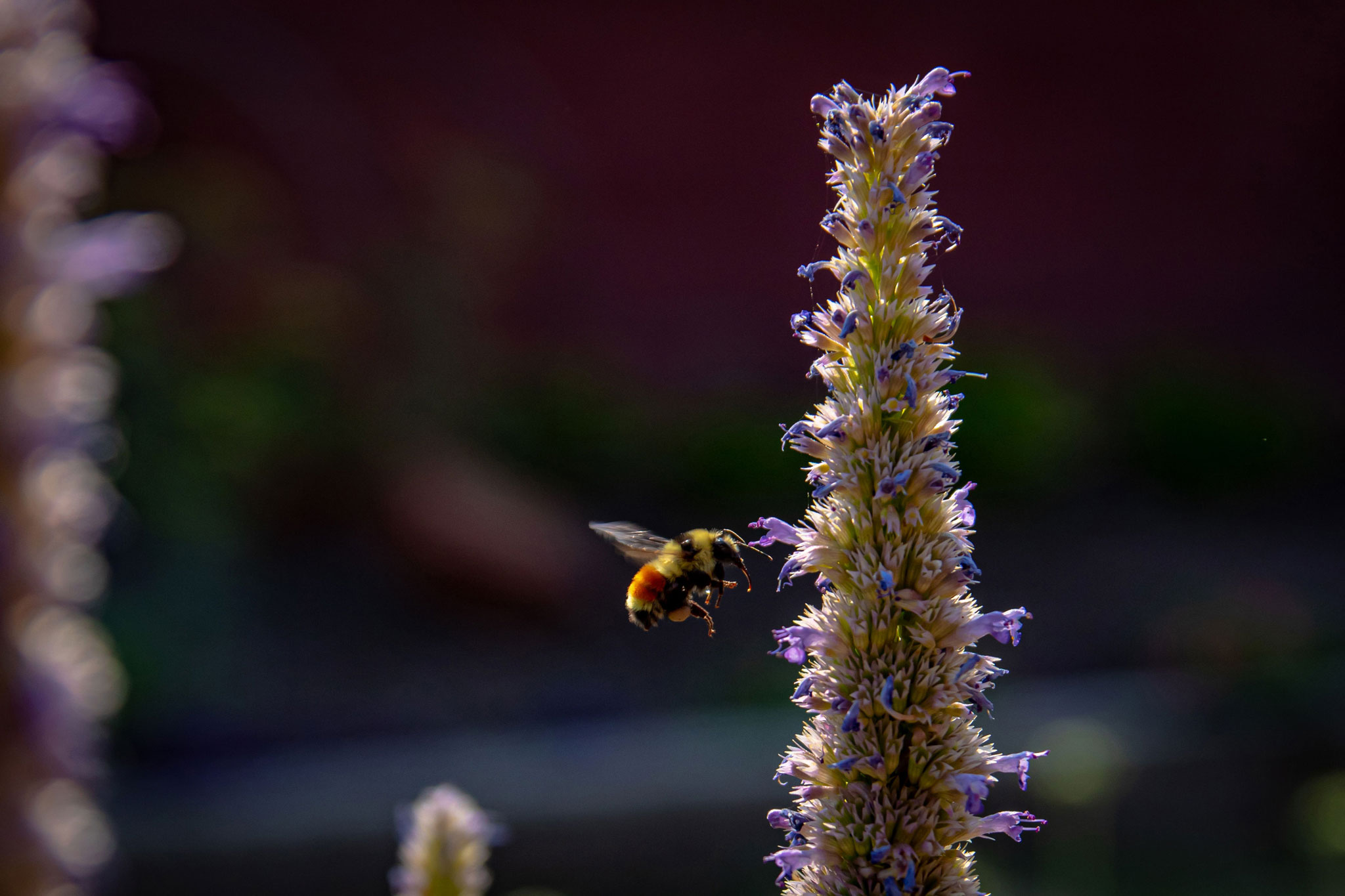
    There are 4,000 species of native bees in North amereica.

    » Other Pollinators

    Birds, particularly hummingbirds, are key wildflower pollinators in our world. They transfer pollen on their bills as they flutter from flower to flower feeding on the sweet nectar. In tropical regions, they are important for the propagation of food crops like bananas, papayas and nutmeg. 

    Bats have a creepy reputation, but when they feed on the nectar night-blooming flowers, they end up transporting pollen on their furry faces and bodies. In one night, they can pollinate 30 flowers and are responsible for a lot of cross-pollination. Their preferred flowers? Agave, cocoa, bananas, mangoes, guavas, eucalyptus – around 528 plant species. Their contribution to the production of food is substantial.

    Other small animals, like lemurs, chipmunks, squirrels, mice and lizards, are also important to the pollination cycle. About 85 plant species in the world provide sweet, sweet nectar for rodents, lizards and other small vertebrate pollinators. They carry the pollen on their fur and help create new life as they sustain their own. 

    » Pollinator Gardening

    As a gardener, the pollination and eventual fruiting of your fruits and vegetables is of utmost importance. There are a wealth of plants, designs and structures that you can apply in your garden that will attract a range of pollinators and create a healthy ecological habitat. N

    By S. Michal Bennett
    Photography By Joel Riner

    As Featured In: Home + Garden 2023

    Share. Facebook Twitter Pinterest LinkedIn Tumblr Email

    Related Posts

    Special Touches for ‘Forever Home’

    Garden to Table

    Charming Greenstone Farmhouse

    Leave A Reply Cancel Reply

    Follow Us
    Facebook
    Instagram
    Pinterest
    Twitter
    YouTube
    Subscribe to Our Newsletter

    Spokane Indians

    Join the Nspire Magazine Adventures Group

    Pacific Northwest Events
    Popular Articles
    April 25, 202212

    Journey into Darkness – North Idaho’s Secret Cave

    May 2, 20165

    Cristopher Lucas

    September 19, 20204

    Chef Steve’s Pasta

    Subscribe to Nspire Magazine
    Nspire Magazine Office

    P: (208) 930-0114

    4020 N Huetter Rd
    Coeur d'Alene, ID 83814
    Office Hours: M-F, 8-5pm

    • Nspire News
    • Back Issues
    • Advertise With Us
    • Submissions
    • Meet the Team
    • Log In
    View Us On Instagram
    Special Touches for 'Forever Home'
.
"Because the homeowners love to cook, they requested a spacious kitchen. It features light-colored cabinets with granite countertops plus toe-kick lighting. It is also easy to access the butler’s pantry that includes darker, ebony-toned cabinets as well as an illuminated storage area to show off an impressive liquor and stemware collection."
.
Builder: @rosenbergerconstruction 
.
By: Joe Butler
.
Photography by: @joelrinerphotography
    •
    Follow
    Special Touches for 'Forever Home' . "Because the homeowners love to cook, they requested a spacious kitchen. It features light-colored cabinets with granite countertops plus toe-kick lighting. It is also easy to access the butler’s pantry that includes darker, ebony-toned cabinets as well as an illuminated storage area to show off an impressive liquor and stemware collection." . Builder: @rosenbergerconstruction . By: Joe Butler . Photography by: @joelrinerphotography
    3 days ago
    View on Instagram |
    1/9
    A Hidden Gem-In North Central Washington
.
"Similar to Coeur d’Alene Lake, Lake Chelan has approximately 110 miles of shoreline. It is roughly 50 miles long and, on average, over a mile wide. Interestingly, it is the third-deepest natural lake in the country behind Lake Tahoe and Crater Lake. In fact, the lake reaches a depth of 400 feet below sea level!"
.
By: Denise Lundy
    •
    Follow
    A Hidden Gem-In North Central Washington . "Similar to Coeur d’Alene Lake, Lake Chelan has approximately 110 miles of shoreline. It is roughly 50 miles long and, on average, over a mile wide. Interestingly, it is the third-deepest natural lake in the country behind Lake Tahoe and Crater Lake. In fact, the lake reaches a depth of 400 feet below sea level!" . By: Denise Lundy
    4 days ago
    View on Instagram |
    2/9
    Pork Loin with Huckleberry Thyme Sauce
.
1 pork loin
5 sprigs fresh thyme
2 garlic cloves, minced
1 medium shallot, peeled and chopped
2 tbsp extra virgin olive oil
1/4 cup + 1 tsp sea salt
.
By: @michalthewriter
Photography By: @joelrinerphotography
    •
    Follow
    Pork Loin with Huckleberry Thyme Sauce . 1 pork loin 5 sprigs fresh thyme 2 garlic cloves, minced 1 medium shallot, peeled and chopped 2 tbsp extra virgin olive oil 1/4 cup + 1 tsp sea salt . By: @michalthewriter Photography By: @joelrinerphotography
    2 weeks ago
    View on Instagram |
    3/9
    Lewis River Trail #31
.
"This area is remote, a bit of a trek to get to but still is a popular destination. Once you are there you’ll see why it offers up so many beautiful scenes to take in."
.
Photography by: @joelrinerphotography
    •
    Follow
    Lewis River Trail #31 . "This area is remote, a bit of a trek to get to but still is a popular destination. Once you are there you’ll see why it offers up so many beautiful scenes to take in." . Photography by: @joelrinerphotography
    3 weeks ago
    View on Instagram |
    4/9
    The Whistler Trail
.
"One of the first things to attract attention is a large arched window on the iconic stairwell projection, adjacent to the front door. It’s wrapped in stained shake and is designed to catch the eye and draw it upward. The entryway includes stone and wood pillars and a sitting area on the front porch. The landscaping also complements the natural tones."
.
Builder: Anthem Homes
.
By: Joe Butler
.
Photography by: @joelrinerphotography
    •
    Follow
    The Whistler Trail . "One of the first things to attract attention is a large arched window on the iconic stairwell projection, adjacent to the front door. It’s wrapped in stained shake and is designed to catch the eye and draw it upward. The entryway includes stone and wood pillars and a sitting area on the front porch. The landscaping also complements the natural tones." . Builder: Anthem Homes . By: Joe Butler . Photography by: @joelrinerphotography
    3 weeks ago
    View on Instagram |
    5/9
    Hiking in Switzerland
.
"The clouds parted on my last day in Urnäsch, and I was able to ride the Säntis cableway to 2,502 meters atop the mountain Säntis, where the views span six countries and reach Lake Constance (Bodensee)."
.
By: Denise Lundy
    •
    Follow
    Hiking in Switzerland . "The clouds parted on my last day in Urnäsch, and I was able to ride the Säntis cableway to 2,502 meters atop the mountain Säntis, where the views span six countries and reach Lake Constance (Bodensee)." . By: Denise Lundy
    3 weeks ago
    View on Instagram |
    6/9
    Apple Cider Whiskey Warmer
.
2 oz bourbon
1 oz Athol Orchards Apple Cider syrup
1 oz brewed Pu-erh black tea
Dash of orange bitters
1 cinnamon stick
1 dried or fresh orange wheel
.
By: @michalthewriter 
Photography by: @joelrinerphotography
    •
    Follow
    Apple Cider Whiskey Warmer . 2 oz bourbon 1 oz Athol Orchards Apple Cider syrup 1 oz brewed Pu-erh black tea Dash of orange bitters 1 cinnamon stick 1 dried or fresh orange wheel . By: @michalthewriter Photography by: @joelrinerphotography
    2 months ago
    View on Instagram |
    7/9
    Lewis River Trail #31
.
Where to celebrate after:
Around the campfire.
.
Photography by: @joelrinerphotography
    •
    Follow
    Lewis River Trail #31 . Where to celebrate after: Around the campfire. . Photography by: @joelrinerphotography
    2 months ago
    View on Instagram |
    8/9
    Charming Greenstone Farmhouse
.
"The home was featured in North Idaho Building Contractors Association’s Parade of Homes in 2024, where it received Hemlock awards for best kitchen, best interior, and best curb appeal."
.
Builder: @greenstone_homes 
.
By: Joe Butler
.
Photography by: @joelrinerphotography
    •
    Follow
    Charming Greenstone Farmhouse . "The home was featured in North Idaho Building Contractors Association’s Parade of Homes in 2024, where it received Hemlock awards for best kitchen, best interior, and best curb appeal." . Builder: @greenstone_homes . By: Joe Butler . Photography by: @joelrinerphotography
    2 months ago
    View on Instagram |
    9/9
    Copyright © 2025 Nspire Magazine.

    Type above and press Enter to search. Press Esc to cancel.