
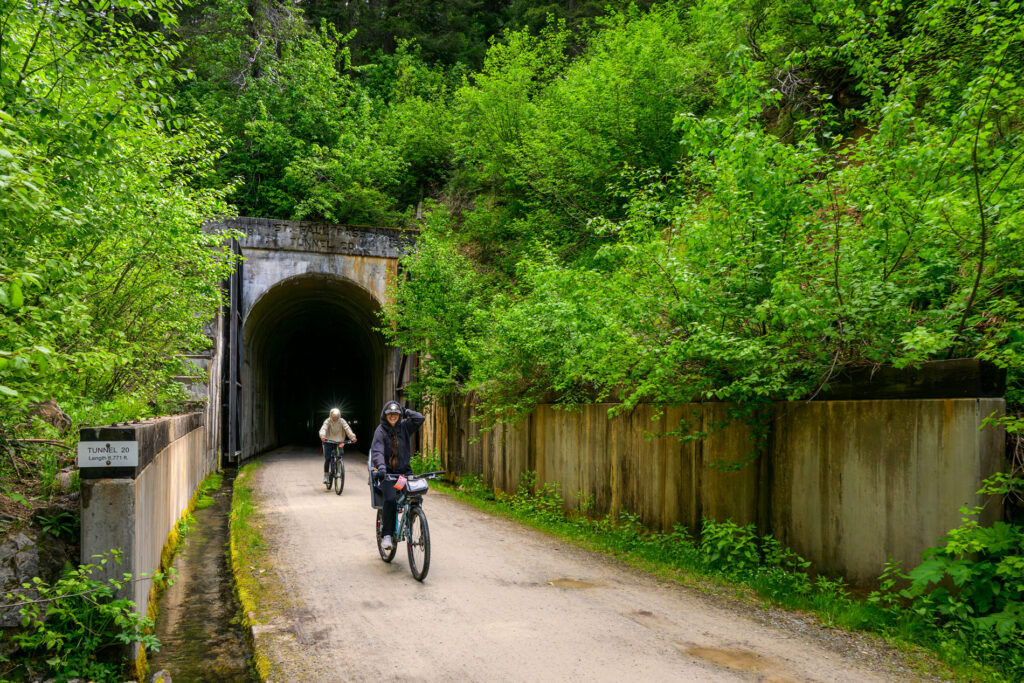
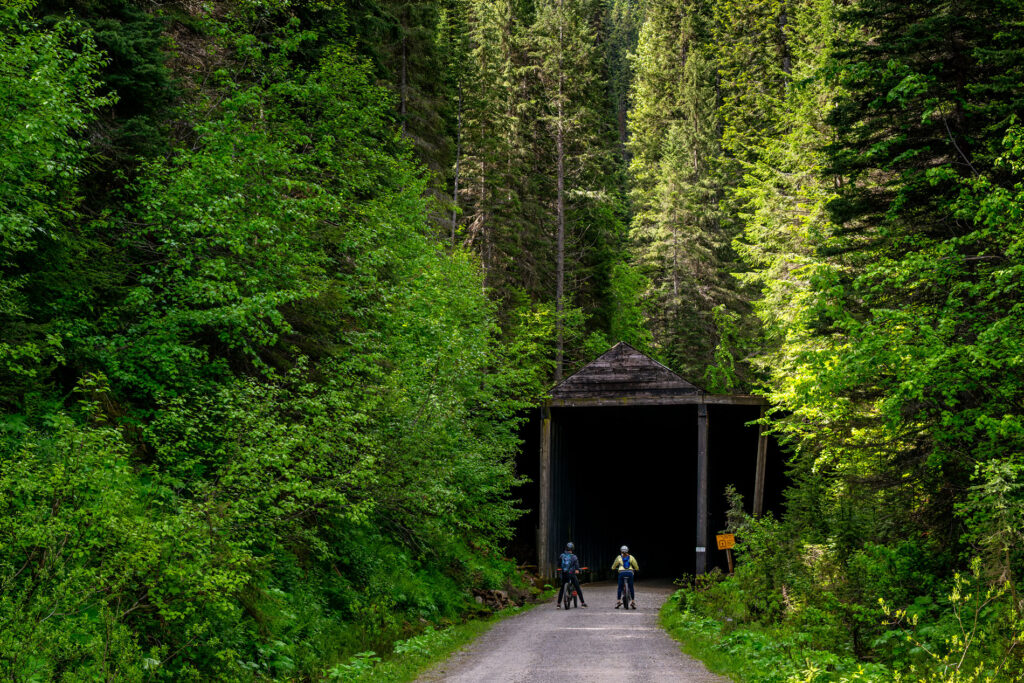
About five minutes into my ride on the Route of the Hiawatha, I’m in the middle of a cold, dark, wet, dripping and long railroad tunnel somewhere between Montana and Idaho.
The Taft Tunnel is “only” 1.6 miles long, but when you’re pedaling through it with nothing but a tiny headlamp, it feels like it’s been going on forever. I’m dodging puddles, trying not to drift too close to the edges, and wondering if I’ve suddenly become more adventurous than I ever intended.
Thoughts like: “When will this end?” “Where is everyone else?” “If I just flop over in the corner, how long will it take someone to find me? Or will I just become part of the scenery and maybe a tragic warning to others on a future interpretive sign?”
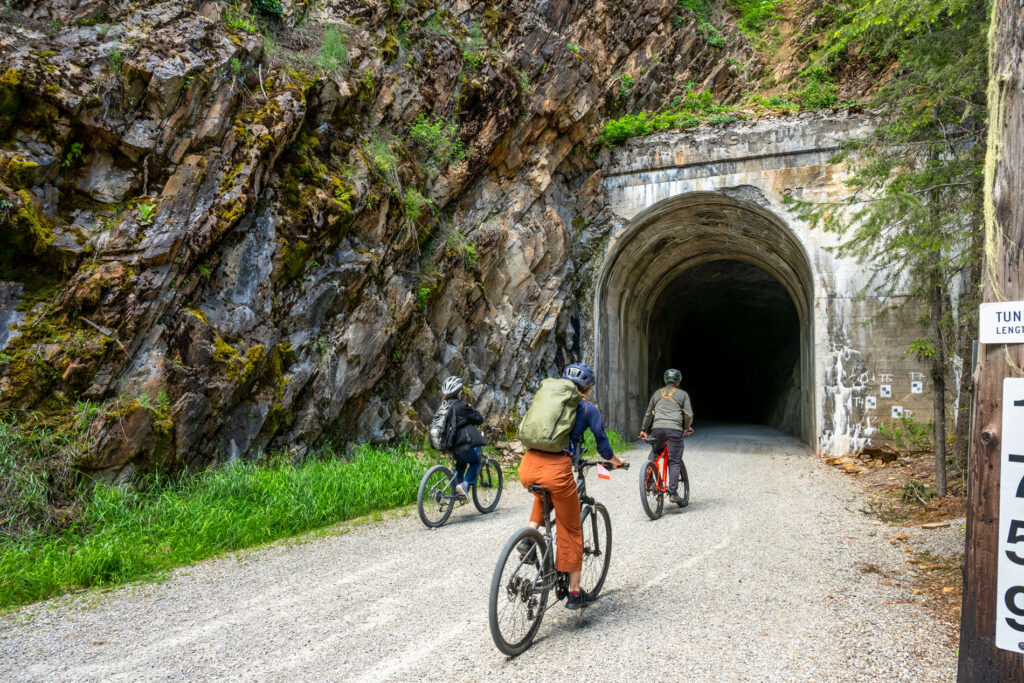
Fortunately, as they say, the literal light at the end of the tunnel gets bigger and closer. Soon I’m swerving into sunlight and instantly start warming up. There’s a cheery waterfall just outside, other cyclists, and trail volunteers who are happy to answer questions and make sure no one goes missing. There are amazing aromas in the air – pine trees, flowers and a smidge of creosote. There’s also absolute silence.
That part wasn’t too bad after all. Only nine more tunnels to go. At least it’s all downhill from here.
That first tunnel is just the beginning of the Route of the Hiawatha, a former Milwaukee Railroad line that crossed Montana and Idaho more than a century ago. The tracks and the trains are long gone, but since 1998 the railway has become one of North Idaho’s most popular recreation destinations.
From mid-May through mid-September, thousands of riders of all ages descend the 15-mile trail at their own pace. Since it was originally built for trains, the grade is smooth and gradual. There’s even a shuttle at the bottom to take riders back to the top, although more ambitious cyclists often skip it and pedal back uphill.
Now, here’s me: an enthusiast of writing, reading, movies, local history, road trips and, sometimes, collecting spoons. Adventure is not and never has been my middle name (it’s Andrew, thanks for asking).
That’s not to say I haven’t experienced the wonder of nature – it just didn’t take. I grew up in a family that went camping nearly every weekend because my dad wanted to get us out of town and away from the TV. Over the years, I’ve even edited an outdoor recreation magazine and served as Outdoors Editor for a regional newspaper. I’ve learned how to make huntin’, fishin’ and general recreatin’ sound enjoyable and easily accessible.
The irony is I still secretly prefer hotel buffets to undercooked, gritty hot dogs; the après part of skiing to navigating moguls; and museums or roadside attractions instead of extended hikes into the middle of nowhere.
Which is probably why the Route of the Hiawatha surprised me.
Getting There
Getting started is easy. Take Interstate 90 east from Coeur d’Alene to Lookout Pass, just a stone’s throw from the Montana state line. Known in the winter for having the deepest snowpack and one of the longest ski seasons in the region, Lookout spends the warmer months serving as the check-in point for the Route of the Hiawatha.
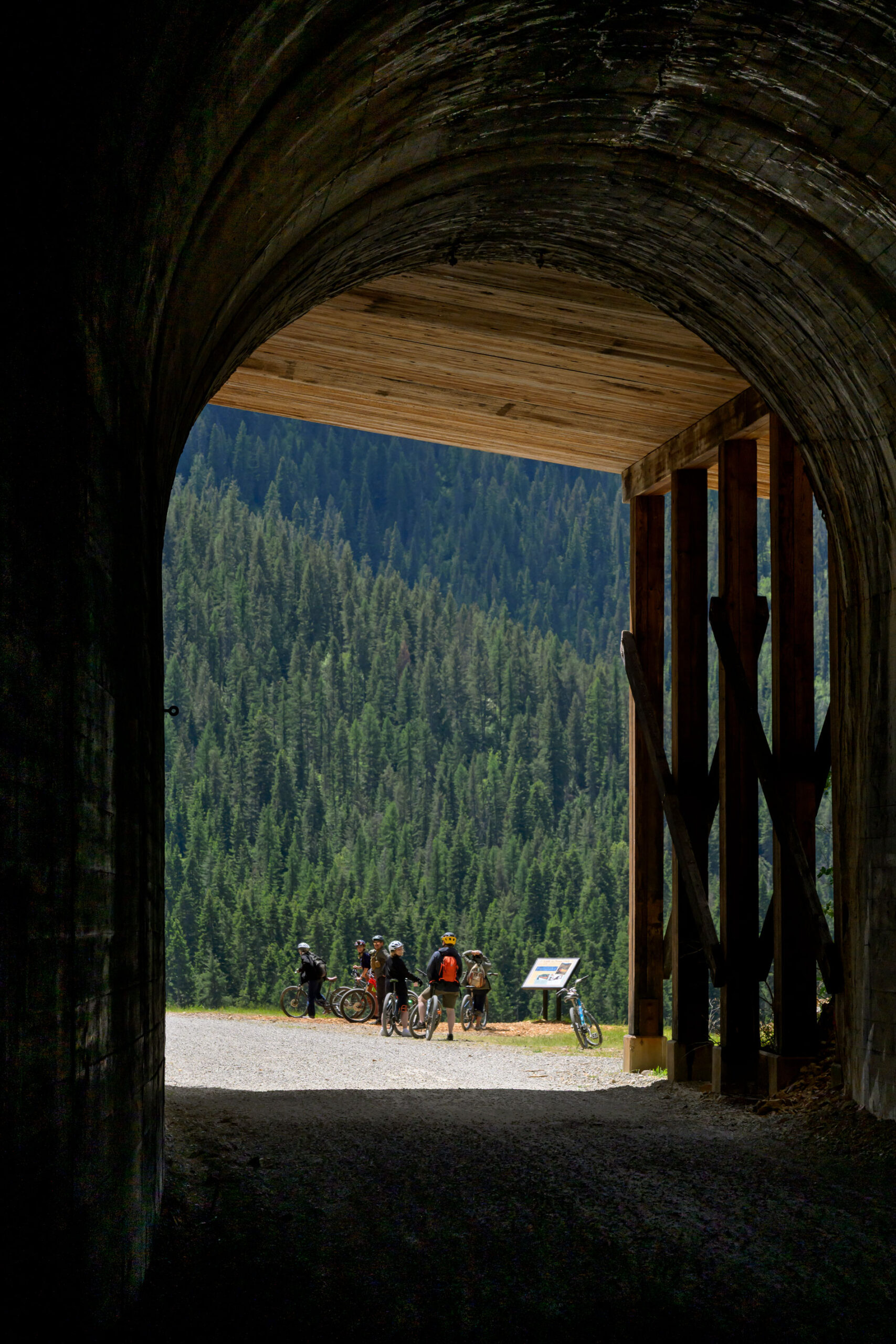
You can buy tickets, rent a bike, helmet and headlamp, grab a few supplies and, for a small fee, have your bike shuttled five miles east to the East Portal, where the ride officially begins.
There, you’ll check in, pick up your bike if you rented one, browse a few souvenirs, learn a little trail history and make one last bathroom stop before heading out. After a short safety talk and a quick inspection to make sure your bike works and your headlamp is on, you’re off – straight into the chilly darkness of the Taft Tunnel.
Yes, it’s cold. How cold? According to one of the volunteers, it’s always exactly 42 degrees. It’s also damp, and sometimes there’s even fog.
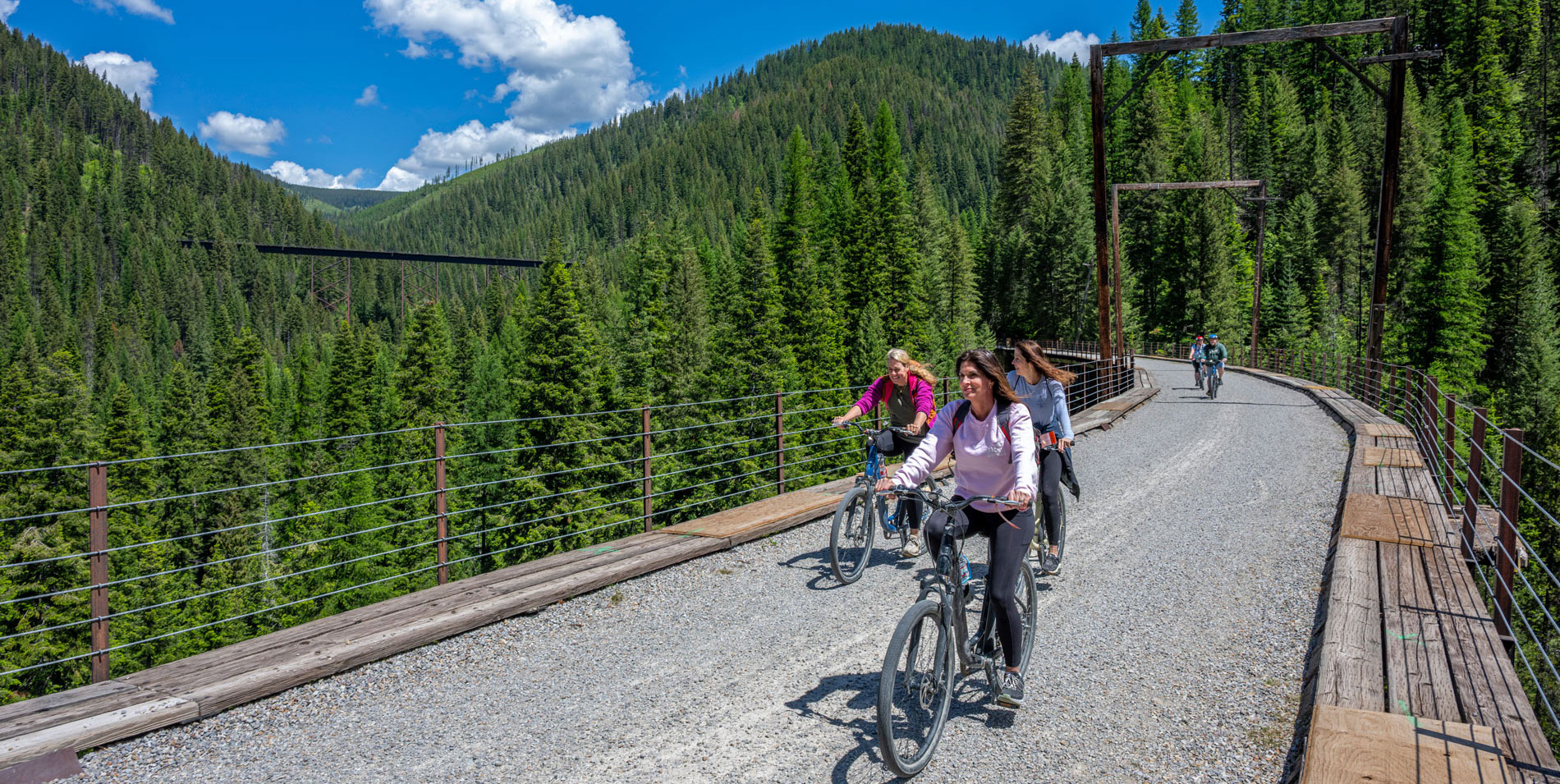
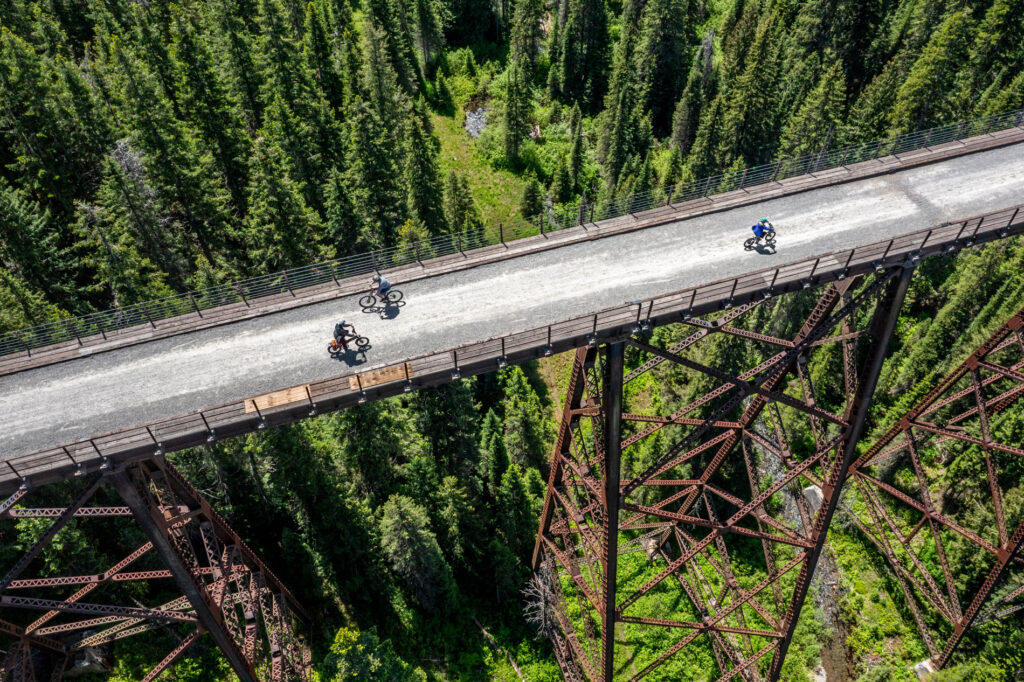
Once you emerge into the sunshine, the trail really starts to show off. Over the next 15 miles you’ll ride through 10 tunnels and cross seven trestles soaring more than 100 feet above the forest floor, with sweeping views of the Bitterroot Mountains. The trestles are also handy reference points for saying, “There’s where we’re going,” and a few minutes later, “That’s where we were.”
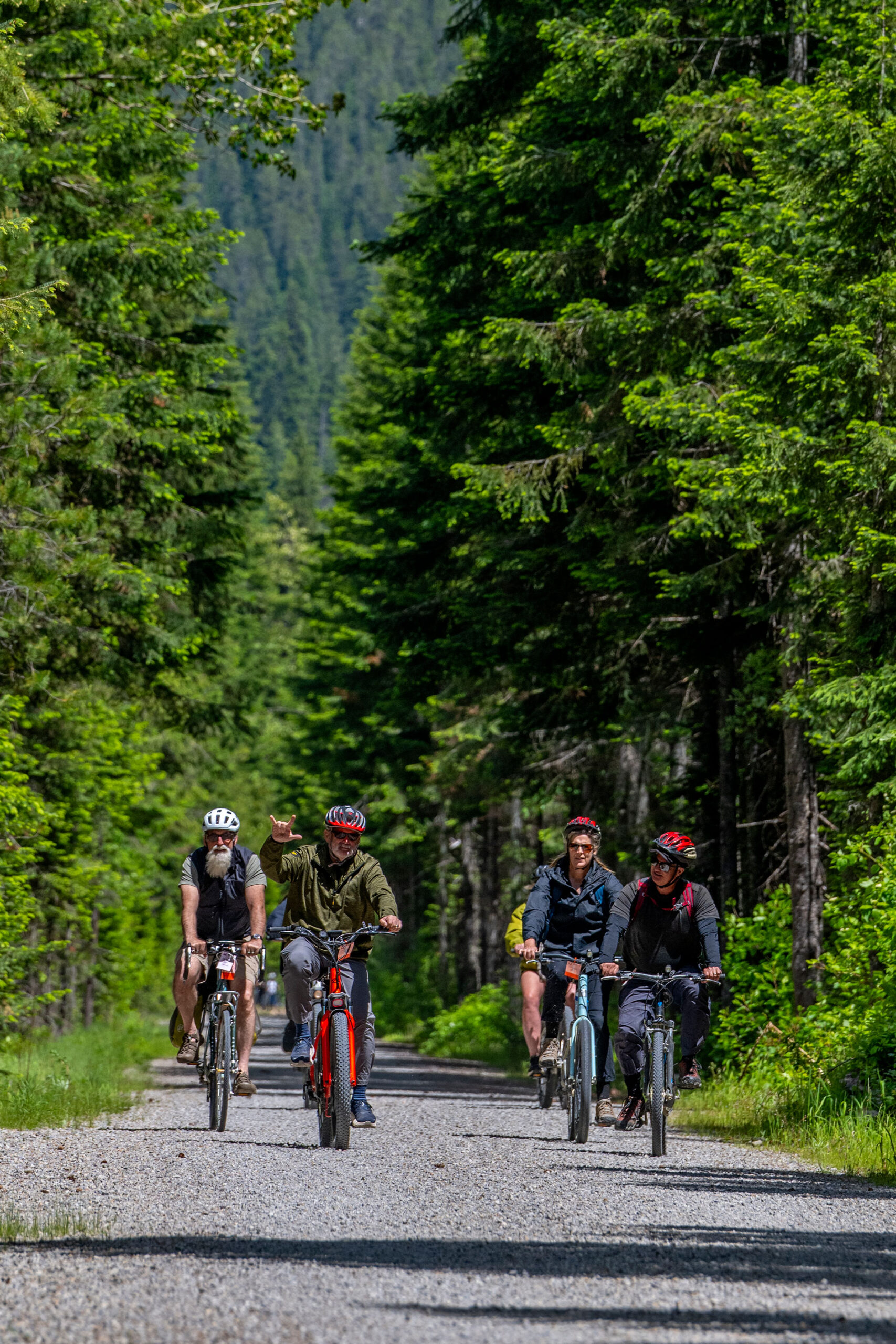
The trail is remarkably accessible. Kids as young as 4 have ridden it – along with younger siblings in bike trailers – and so have 50-something writers like me who truthfully hadn’t been on a bike since perhaps the Clinton administration.
As long as you catch the last shuttle of the day, there’s no need to rush. Pull over whenever you want. Catch your breath. Take pictures. Sit in the sun or the shade and enjoy the quiet. I spotted a few chipmunks and one particularly zippy rabbit, although I was told deer are common. The mandatory safety talk also reminds riders to be aware of bears, which, I was informed, can still go faster than you – bike or no bike.
More Than Just a Bike Ride
Although I grudgingly enjoyed the physical part of the adventure, I found myself appreciating the history just as much. Think of the Route of the Hiawatha as a 15-mile outdoor museum, complete with tunnels, trestles and dozens of interpretive signs that tell the story of the railroad and the people who built it.
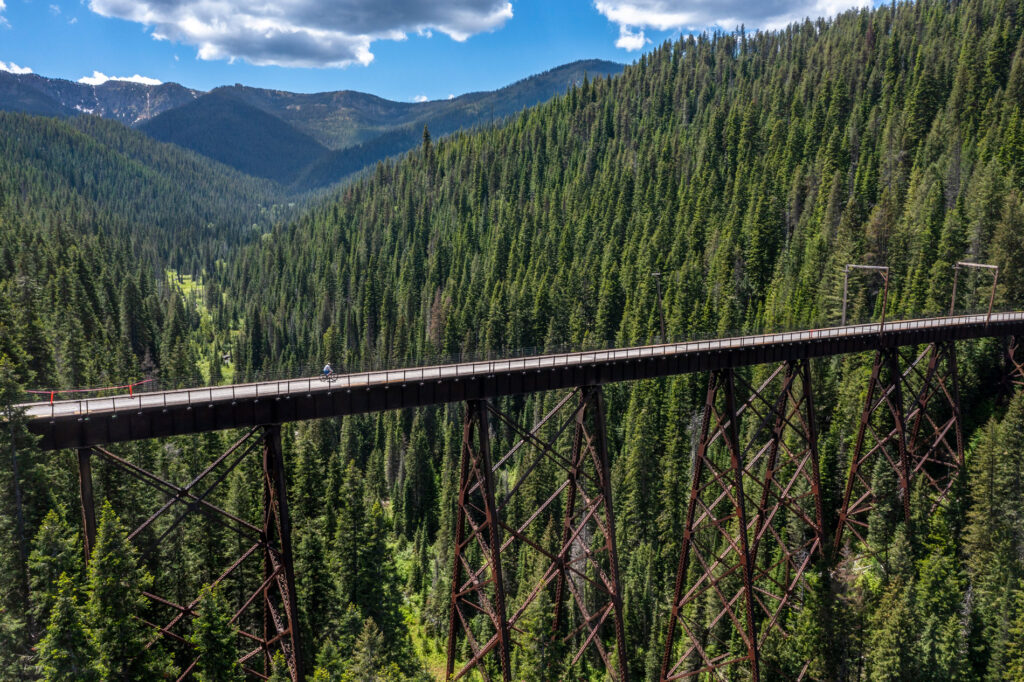
It’s easy to forget what it took to create this route more than a century ago. Building this stretch of the Milwaukee Railroad turned out to be the slowest and most expensive part of the entire line. For more than three years, crews – many of them immigrants – cut timber, blasted through solid rock and built a route sturdy enough to carry passenger and freight trains through the Bitterroot Mountains.
Along the way, temporary towns sprang up to house the workers. They weren’t exactly sleepy little mountain villages, either. They had bars, brothels, general stores and thousands of residents. One of them, Taft, Mont. grew to more than 7,000 people between 1907 and 1909 and was reportedly known as “the wickedest city in America.”
Today, little remains of those bustling communities beyond a few foundations and historical markers. Some gradually faded away after the railroad was completed. Others disappeared in the Big Burn of 1910, the massive wildfire that scorched more than three million acres across Idaho, Montana and Washington.
Living in North Idaho, I’ve heard plenty about the Big Burn over the years. It’s one thing to read about it in a book or see photos in a museum. It’s another to ride through the landscape where it happened, see the remnants of old railroad sites and imagine what this place must have looked like when steam engines were making their way through the mountains.
The history lesson doesn’t stop with the railroad. Keeping the Route of the Hiawatha open takes a surprising amount of work. The original railroad ties are regularly evaluated for safety reasons, and other fixes are always taking place. The opening of the 2026 season was nearly delayed due a sudden spring windstorm that dumped all sorts of trees on the route as well as blocked the entrances and exits to tunnels. But crews from Lookout and other volunteers spent days clearing everything away in time.
Final Thoughts
After spending a few hours on the Route of the Hiawatha, it’s easy to understand why it has become one of North Idaho’s most popular summer attractions.
It can be done in a few hours, but there’s no pressure to do so. It also has an educational component. As much as I’ve learned about the Big Burn living in the region for years, it’s more vivid when you can walk through burned timbers or see foundations of former cities or railroad offices. One fun challenge is seeing how many of those historical signs you can find. (Hint: There’s one almost exactly halfway through the Taft Tunnel. You’ll probably miss it unless you’re looking for it.)
If one trip isn’t enough, there are reasons to come back. Several side trails branch off the main route, offering a chance to explore even more of the old railroad corridor. This year, Lookout Pass is also offering moonlight rides, giving cyclists the chance to experience the trail at sunset and under the summer night sky.
Plus, I learned that each experience is always different – the weather may change, the scenery may change, your travel partners/riding buddies may change. You may have a new bike, and maybe you’ve changed too, which is part of a good adventure.
I won’t say my outlook on life is completely different or that I’m suddenly shopping for camping gear. I still like museums, roadside attractions and hotel buffets. But the Route of the Hiawatha turned out to be exactly the kind of outdoor adventure I could appreciate.
It’s scenic without being intimidating, historical without feeling like a classroom and adventurous without requiring you to summit a mountain or sleep in a tent.
For someone whose middle name definitely isn’t Adventure, that’s saying something. N
As Featured in the 2026 Summer/Fall Edition
By: Joe Butler
Photography by: Joel Riner