

Close Menu
    Nspire Magazine – Pacific Northwest Living
    Subscribe to Nspire Magazine
    • Adventure
      1. Hiking
        • Oregon
        • Montana
        • Washington
        • Idaho
      2. Travel
      Featured
      March 17, 20250

      Grizzly

      Recent
      March 14, 20260

      Tamanawas Falls

      March 13, 20260

      Hiking in Switzerland

      March 3, 20260

      Living the River Life

    • Food
      1. Dining Guide (curbside)
      2. Recipes
      3. Ingredients
      Featured
      March 19, 20250

      Cocoa Rubbed Steaks with Bacon Brussels Sprouts

      Recent
      March 13, 20260

      Apple Cider Whiskey Warmer

      March 10, 20260

      The Great Western Huckleberry

      March 10, 20260

      Pork Loin with Huckleberry

    • Home
      1. Builders Guide
      2. Organic Gardening
      3. Real Estate
      Featured
      March 20, 20250

      Modern Meets Rustic in this Stunning Black Rock Home

      Recent
      March 13, 20260

      Special Touches for ‘Forever Home’

      March 10, 20260

      Garden to Table

      March 3, 20260

      Charming Greenstone Farmhouse

    • Lifestyle
      1. Arts
      2. Conservation
      3. Fitness
      4. Nspired
      Featured
      March 20, 20250

      Weighing In

      Recent
      March 13, 20260

      Wildfire and our forests

      March 12, 20260

      This Old House Adam Schluter

      March 10, 20260

      North Idaho Women

    • Expert Tips
    • Gear
    • Events
      • Calendar of Events
      • Nspire Wedding
    • Subscribe
    • Group Tours
      • Charter Bus
    0 Shopping Cart
    Nspire Magazine – Pacific Northwest Living
    0 Shopping Cart

    Food Waste and Loss

    0
    By Nspire Magazine on February 9, 2024 Conservation

     I recently began following a YouTube food channel called Jolly that features two British guys, usually with a guest, trying all sorts of foods all around the world. In one episode, a chef takes them to Fallow, a restaurant in London that crafts “mind-blowingly good British food” from a conservation and sustainability perspective. The menu included corn fried with chili left over from making house sriracha, mousse made from salmon trimmings, smoked cod heads that their fish supplier would have thrown away, steak from a 12-year-old retired dairy cow, and a tart made from whey that is typically discarded after making cheese. The flavors seemed incredible, and the time, intention and passion that went into making delicious things with minimal waste (“conscious gastronomy”) were truly poignant. (fallowrestaurant.com)

    >> The Problem

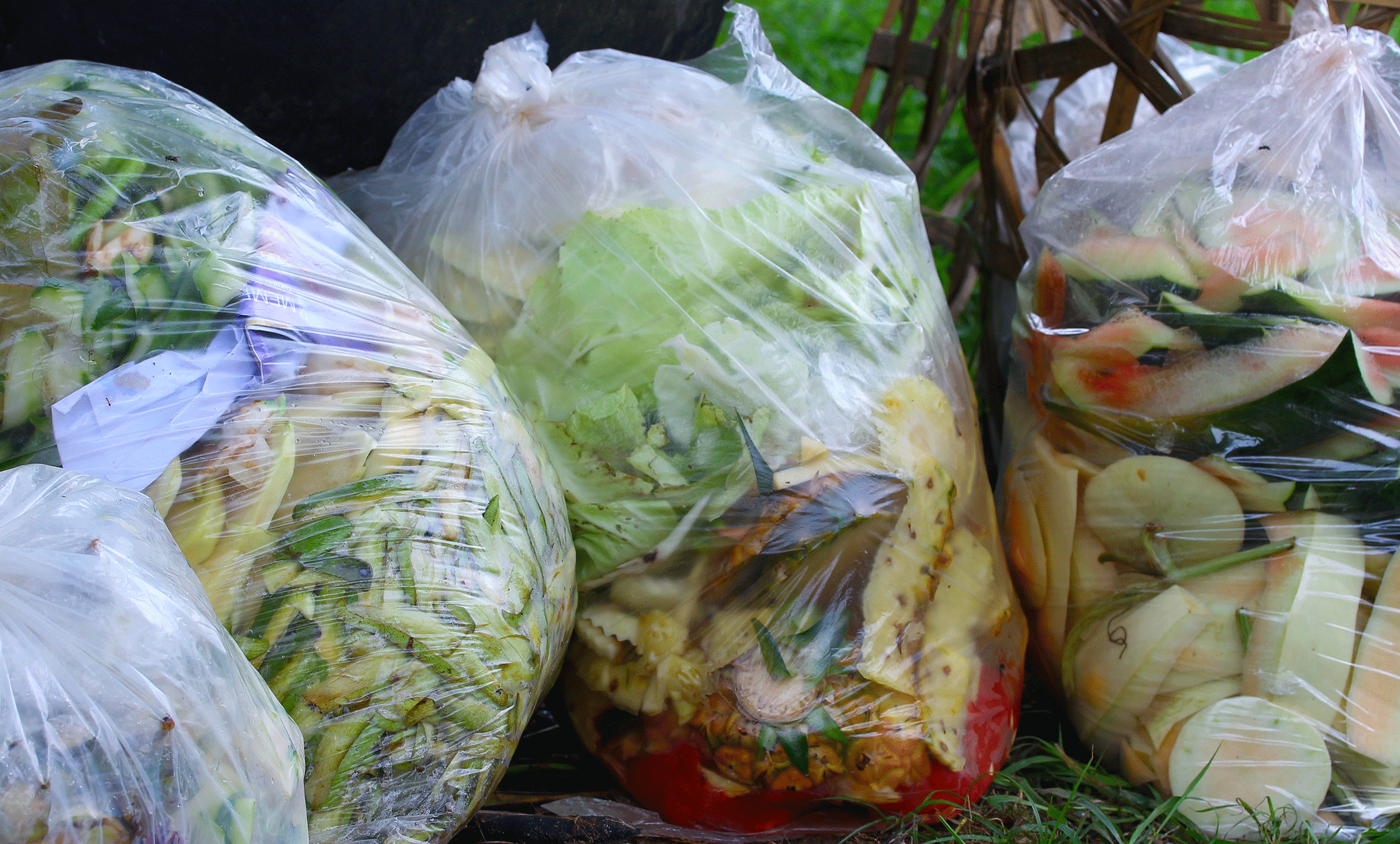
    Food loss and waste are significant and highly solvable environmental problems today. In the United States, about 40% of our food goes to waste – that’s around 150 billion pounds of food, every year. Globally, 1/3 of food produced, about $1 trillion, is lost or wasted. The amount of food produced in the world but never eaten could feed two billion people annually. This has even been called “the dumbest problem ever,” but it is also a problem that is interdependent on many levels of the food world. From farms and restaurants to tourism, production, retail grocery and household consumption, there are varying reasons and ways this is an issue… and a solvable one. 

    Food “loss” refers to food that is perfectly edible and nutritious but doesn’t reach the consumer. Loss usually occurs at farm, processing  and production levels. In developing countries, farmers often lack secure, dry storage facilities, so foods are exposed to pests and mold. Lack of technology, access to markets and cost of labor can force farmers to leave portions of crops in the field to rot. Farmers also face unpredictable weather, problems with harvesting or processing, and over or under production due to uncontrollable natural factors. In the first world of agriculture, there is also a value put on “pretty” produce, so farmers will often leave “ugly” vegetables to rot instead of risking not being able to sell them.

    Inevitable food loss can also occur during distribution and packaging, as well as due to label confusion. In the U.S., food labels like sell by, use by, best if used by, best before, and expires on can create a lot of confusion and lead to loss as well as food surplus at grocery stores. Many of us toss out perfectly good, edible food simply because we don’t understand what these labels actually mean. This is also one of the most fixable aspects of food loss nationally, since legislation could easily standardize food labeling to indicate 1. quality (best if used by) or 2. safety (use by). 

    Food “waste” refers to consumption practices and issues that happen at food establishments, retail outlets and in the home. In the home kitchen, some food waste, like trimmings, scraps and brining liquids, is inevitable, but can sometimes be mitigated or upcycled. Other waste, like excess produce and preparation, is preventable with a little awareness and planning. At the retail level, grocery deals tempt us to buy too much or buy foods we won’t actually eat. Packs of food are bigger than we need – I’ve had issues lately with large bundles of celery when I just need two stalks for a soup – and a lot of packaging, both in shipping and retail, incorporates plastics and reduces the shelf life of perishable groceries. Additionally, most produce departments promote the idea that pretty produce is better produce while not incorporating composting or recycling programs for customers or employees.

    Dining out in the U.S. often means large portions, multiple courses, and plenty of leftovers to either send back to the kitchen or take home and toss tomorrow. As portion sizes have grown, so has dining food waste. But both of those dilemmas are just as much the consumer’s fault as the kitchen’s. Demand and services often go hand-in-hand. Yet, while the consumer has a level of responsibility in how they invest their dollars, chefs and cooks can also find ways to operate more conservatively and sustainably, as demonstrated by restaurants like Fallow. 

    >> Solutions In Progress

    When it comes to agriculture, governments, corporations, non-profits and individuals can encourage healthy practices, facilitate better storage and transportation facilities, and provide access to equipment, technology and markets. More outlets are popping up to rescue “ugly” and surplus produce, like America’s Imperfect Foods, Ontario, Canada’s FoodFund, and France’s Marché Second Life. Places like Preserve Farm Kitchens in California work with farmers to turn their excess produce into co-packed and private-label products, like jams, sauces and marinades. Buying local and supporting farmers’ markets, farm stands and local producers in the aisles puts more money in the farmer’s pocket and the most nutritious produce on your table.

    Commercial kitchen technology, like apps that can instantly rate the freshness of meat, as well as creative recipes that use food scraps and the growth of “zero-waste” restaurant concepts are offering solutions for the service industry everywhere. One zero-waste restaurant and wine bar in Brooklyn, called Rhodora, never uses single-use plastic, shreds all cardboard into compost, and donates wine corks to make recycled shoes. The Dallas, Texas airport recycles around 32,000 pounds of cooking oil from its retailers into sustainable aviation fuel (SAF) every month. Apps, like Too Good to Go in Texas and Phenix in Hong Kong let consumers find places near them with leftover food and “surprise bags” for purchase. 

    In retail stores, packaging companies, like Hazel Technologies and SoFresh, are developing plastic-free products that keep perishables fresher longer and are even compostable. Apeel Sciences is working on a plant-based coating that is sprayed directly onto produce to slow spoiling. Software is now available for accurately tracking retail waste and providing results that are immediate, cost effective, and scalable. And large grocers, like Wal-mart and Albertson’s, are creating their own standardized and simplified expiration labeling systems to make buying less confusing. Whole Foods uses remnants from cut-to-order fish in soups as well as bruised produce in smoothies. 
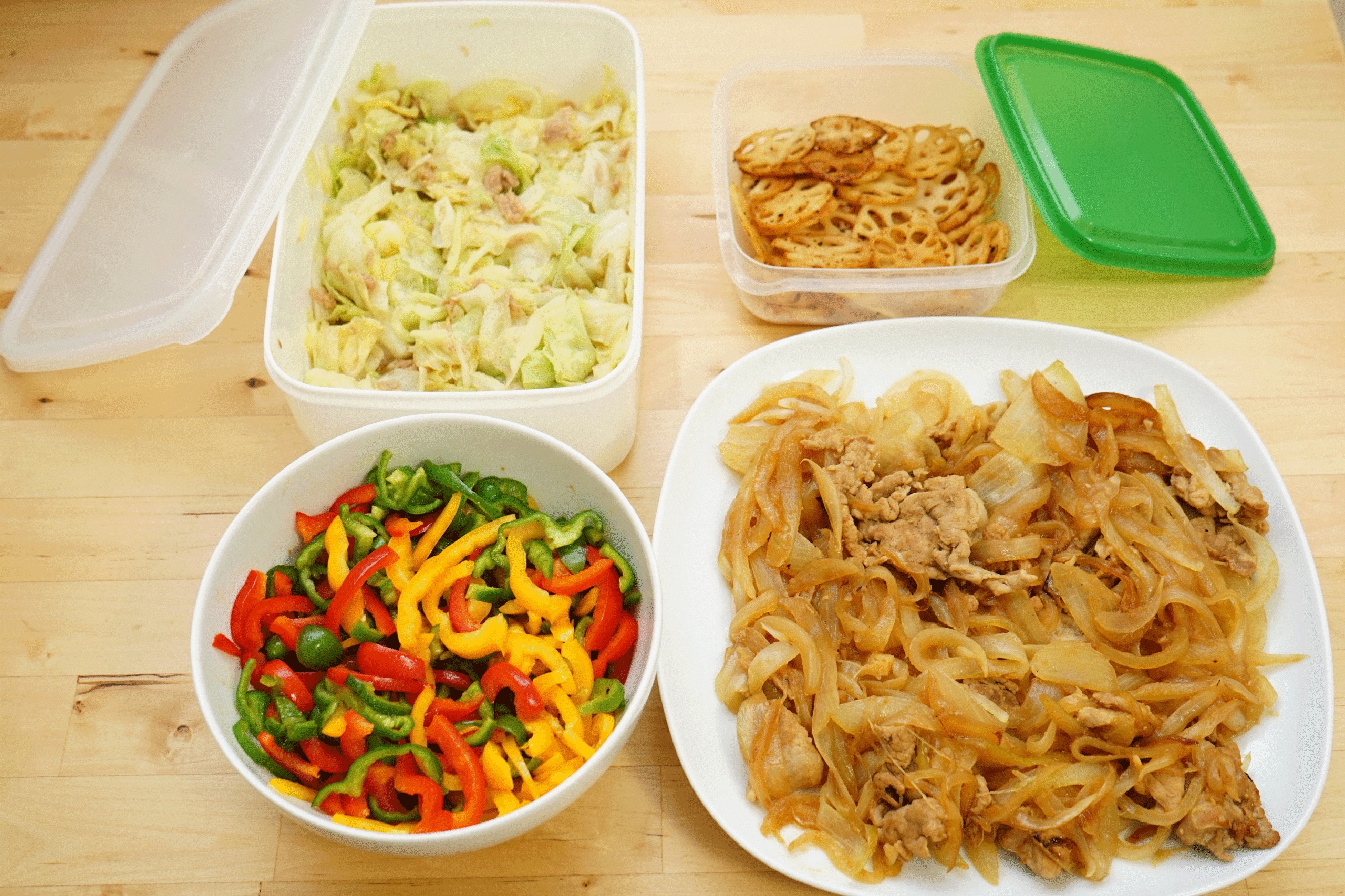
    Freezing Leftovers provides variety without providing additional work.

    >> What Can You Do?

    Individuals and households account for the largest percentage of food waste in the U.S., and most of that food goes into anaerobically processed landfills and result in environmentally damaging methane gas as it breaks down. But, as individuals, the good news is we can truly make a difference, one household decision at a time. Here are some things you can start doing today to reduce food waste:

    • Read up on “best by” labels and what they actually mean.

    • Shop bulk foods and produce for portions that you need.

    • Ask the produce employee if they can sell you half a cabbage instead of a whole head. 

    • Buy ugly produce.

    • If you buy a large bunch, cut up the excess and freeze it for future use. 

    • Find staple recipes that creatively use aging produce, food waste or leftovers, like Max La Manna’s two-ingredient potato tortillas or coffee ground pancakes.

    • Collect produce trimmings in a freezer bag and use to make broth. (See in this issue “The Beauty of a Classic Broth”)

    • Learn how to preserve and dry foods.

    • Store foods properly to maintain freshness.

    • Plan your meals and know what’s in your pantry and fridge.

    • Grow your own food. 

    • Compost your food scraps and coffee grounds with a countertop or outdoor compost bin. This produces carbon dioxide instead of methane and makes your garden grow. N

    Story by Michal Bennett

    Share. Facebook Twitter Pinterest LinkedIn Tumblr Email

    Related Posts

    Wildfire and our forests

    Trees and Disposable Paper Goods

    Water Conservation in North Idaho

    Leave A Reply Cancel Reply

    Follow Us
    Facebook
    Instagram
    Pinterest
    Twitter
    YouTube
    Subscribe to Our Newsletter

    Spokane Indians

    Join the Nspire Magazine Adventures Group

    Pacific Northwest Events
    Popular Articles
    April 25, 202212

    Journey into Darkness – North Idaho’s Secret Cave

    May 2, 20165

    Cristopher Lucas

    September 19, 20204

    Chef Steve’s Pasta

    Subscribe to Nspire Magazine
    Nspire Magazine Office

    P: (208) 930-0114

    4020 N Huetter Rd
    Coeur d'Alene, ID 83814
    Office Hours: M-F, 8-5pm

    • Nspire News
    • Back Issues
    • Advertise With Us
    • Submissions
    • Meet the Team
    • Log In
    View Us On Instagram
    The Whistler Trail
.
"One of the first things to attract attention is a large arched window on the iconic stairwell projection, adjacent to the front door. It’s wrapped in stained shake and is designed to catch the eye and draw it upward. The entryway includes stone and wood pillars and a sitting area on the front porch. The landscaping also complements the natural tones."
.
Builder: Anthem Homes
.
By: Joe Butler
.
Photography by: @joelrinerphotography
    •
    Follow
    The Whistler Trail . "One of the first things to attract attention is a large arched window on the iconic stairwell projection, adjacent to the front door. It’s wrapped in stained shake and is designed to catch the eye and draw it upward. The entryway includes stone and wood pillars and a sitting area on the front porch. The landscaping also complements the natural tones." . Builder: Anthem Homes . By: Joe Butler . Photography by: @joelrinerphotography
    1 day ago
    View on Instagram |
    1/9
    Hiking in Switzerland
.
"The clouds parted on my last day in Urnäsch, and I was able to ride the Säntis cableway to 2,502 meters atop the mountain Säntis, where the views span six countries and reach Lake Constance (Bodensee)."
.
By: Denise Lundy
    •
    Follow
    Hiking in Switzerland . "The clouds parted on my last day in Urnäsch, and I was able to ride the Säntis cableway to 2,502 meters atop the mountain Säntis, where the views span six countries and reach Lake Constance (Bodensee)." . By: Denise Lundy
    2 days ago
    View on Instagram |
    2/9
    Apple Cider Whiskey Warmer
.
2 oz bourbon
1 oz Athol Orchards Apple Cider syrup
1 oz brewed Pu-erh black tea
Dash of orange bitters
1 cinnamon stick
1 dried or fresh orange wheel
.
By: @michalthewriter 
Photography by: @joelrinerphotography
    •
    Follow
    Apple Cider Whiskey Warmer . 2 oz bourbon 1 oz Athol Orchards Apple Cider syrup 1 oz brewed Pu-erh black tea Dash of orange bitters 1 cinnamon stick 1 dried or fresh orange wheel . By: @michalthewriter Photography by: @joelrinerphotography
    1 month ago
    View on Instagram |
    3/9
    Lewis River Trail #31
.
Where to celebrate after:
Around the campfire.
.
Photography by: @joelrinerphotography
    •
    Follow
    Lewis River Trail #31 . Where to celebrate after: Around the campfire. . Photography by: @joelrinerphotography
    1 month ago
    View on Instagram |
    4/9
    Charming Greenstone Farmhouse
.
"The home was featured in North Idaho Building Contractors Association’s Parade of Homes in 2024, where it received Hemlock awards for best kitchen, best interior, and best curb appeal."
.
Builder: @greenstone_homes 
.
By: Joe Butler
.
Photography by: @joelrinerphotography
    •
    Follow
    Charming Greenstone Farmhouse . "The home was featured in North Idaho Building Contractors Association’s Parade of Homes in 2024, where it received Hemlock awards for best kitchen, best interior, and best curb appeal." . Builder: @greenstone_homes . By: Joe Butler . Photography by: @joelrinerphotography
    1 month ago
    View on Instagram |
    5/9
    Finding the Fountain of Youth
.
"We were all lined up on the cat track looking over a small section of trees when Grollmus gave us the intel on this run. “Make your way through this small section of trees and then it opens wide up for about 400 yards. I’ll go first and radio back up to EJ once I get in position.”"
.
By: Bob Legasa
    •
    Follow
    Finding the Fountain of Youth . "We were all lined up on the cat track looking over a small section of trees when Grollmus gave us the intel on this run. “Make your way through this small section of trees and then it opens wide up for about 400 yards. I’ll go first and radio back up to EJ once I get in position.”" . By: Bob Legasa
    2 months ago
    View on Instagram |
    6/9
    Huckleberry Honey Cake
.
1/2 cup butter, softened
1/2 cup organic cane sugar
1/2 cup honey
3 eggs + 1 egg yolk, beaten
3/4 cup whole milk
1 1/2 cups + 1 tbsp masa harina corn flour, divided
2 tsp baking powder
1/8 tsp sea salt
1 cup frozen huckleberries (or sub wild blueberries)
1 cup heavy whipping cream
8 oz mascarpone cheese
1/4 cup powdered sugar
1 tsp lemon juice
1/4 tsp vanilla
.
By: @michalthewriter 
Photography by: @joelrinerphotography
    •
    Follow
    Huckleberry Honey Cake . 1/2 cup butter, softened 1/2 cup organic cane sugar 1/2 cup honey 3 eggs + 1 egg yolk, beaten 3/4 cup whole milk 1 1/2 cups + 1 tbsp masa harina corn flour, divided 2 tsp baking powder 1/8 tsp sea salt 1 cup frozen huckleberries (or sub wild blueberries) 1 cup heavy whipping cream 8 oz mascarpone cheese 1/4 cup powdered sugar 1 tsp lemon juice 1/4 tsp vanilla . By: @michalthewriter Photography by: @joelrinerphotography
    2 months ago
    View on Instagram |
    7/9
    Tamanawas Falls 
.
"After scrambling up through the crux of the hike, an impressive basalt talus field, hikers reach a crest and shortly thereafter are treated to the massive Tamanawas Falls pouring over a sharp edge and free-falling to the rocks below."
.
By: @cdcphotography88
    •
    Follow
    Tamanawas Falls . "After scrambling up through the crux of the hike, an impressive basalt talus field, hikers reach a crest and shortly thereafter are treated to the massive Tamanawas Falls pouring over a sharp edge and free-falling to the rocks below." . By: @cdcphotography88
    2 months ago
    View on Instagram |
    8/9
    Special Touches for 'Forever Home'
.
"The ensuite area includes dual sinks and illuminated mirrors as well as accent windows that provide natural light. It also features a spacious ‘wet room’ with an enclosed bathtub and shower. Johnson said the homeowners, in their 50s, wanted to make sure they would be able to age in place well, so the room was designed not to include any barriers or anything that could lead to mobility challenges in the future."
.
Bulider: @rosenbergerconstruction 
By: Joe Butler
Photography by: @joelrinerphotography
    •
    Follow
    Special Touches for 'Forever Home' . "The ensuite area includes dual sinks and illuminated mirrors as well as accent windows that provide natural light. It also features a spacious ‘wet room’ with an enclosed bathtub and shower. Johnson said the homeowners, in their 50s, wanted to make sure they would be able to age in place well, so the room was designed not to include any barriers or anything that could lead to mobility challenges in the future." . Bulider: @rosenbergerconstruction By: Joe Butler Photography by: @joelrinerphotography
    2 months ago
    View on Instagram |
    9/9
    Copyright © 2025 Nspire Magazine.

    Type above and press Enter to search. Press Esc to cancel.