

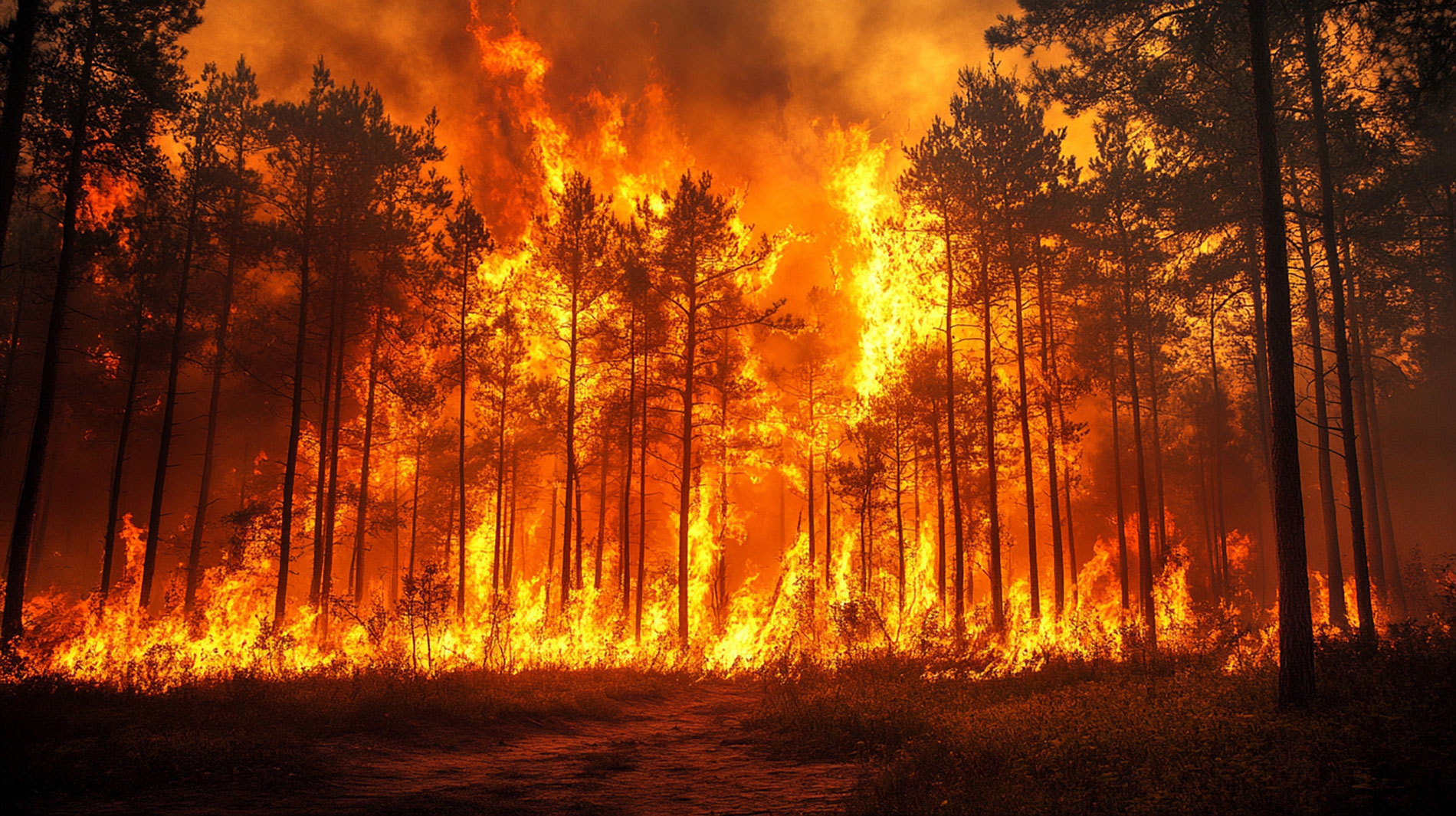
Although my first severe weather-related experience after moving to Idaho almost 20 years ago was a heavy snowstorm followed by very little urban snow removal activity, I also soon discovered that the Northwest United States has a rather definitive fire season.
An average of 42% of the land across Washington, Idaho and Montana is forested, and Idaho has the highest percentage (40%) of national forest land. The designated fire season in Washington and Montana is May through October, with Idaho’s fire season beginning in June, peaking in July and August, and tapering off later in September. Still, the wind sends smoke from all the other states straight up through the Panhandle. The Western Fire Chiefs Association publishes detailed guides to when fire season is, how long it can last, precautions to take, up-to-date fire maps, and what the risk factors are for not only these three states, but also Alaska, Arizona, California, Hawaii, Nevada, Oregon and Utah. (wfca.com)
But first, what does fire season mean? Northwest fire season refers to the driest months in this part of the country that create the right conditions for high risk of wildfires. These conditions are influenced by a combination of climate, environment and the human factor. The amount and length of snow melt in the spring, as well as late spring and early fall rains can mitigate drought and shorten the season on both ends, although wildfires can happen during any time of the year. Seasonal temperatures also play a role, as well as land use, land management, fire suppression policies, recreational activities, fuel availability and frequency of lightning storms.
The Washington Department of Natural Resources fights around 900 wildland fires per year, and 70% of those are in the Eastern part of the state, close to Idaho. Most are small, but with the right conditions, any wildfire can spread to devour hundreds of thousands of acres. Close to 90% of wildfires are started by humans in some capacity, and causes include unattended campfires, fallen power lines and vehicle crashes.
Fires and Forest Ecology
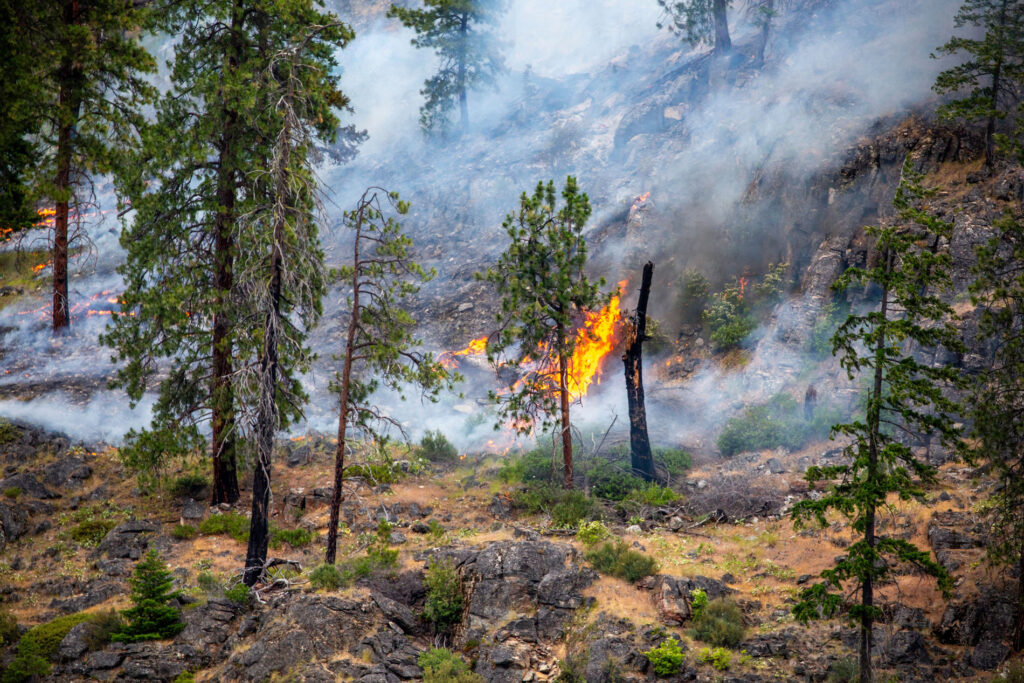
Although wildfires negatively affect wildlife, human health, air quality and water quality, periodic fires have been historically shown to play a vital ecological role in the health of land and forests. Fire is a natural force that creates opportunity for renewal in forests and on prairies by clearing out underbrush, recycling nutrients like carbon and nitrogen back into the soil, and opening up habitats for a greater diversity of animals, insects and plants. It also assists some plants, such as lodgepole pine and jack pine, in dispersing their seeds. These pinecones only open and release their seeds when exposed to the heat of a fire.
Dense forest undergrowth can suppress new growth, inhibit the reproduction of flowering and fruiting plants, and encourage invasive species to thrive. When fire clears out undergrowth, more sunlight reaches the forest floor, and new seedlings as well as plants that sprout from roots can then reach up towards the light. Huckleberries and blackberries thrive after a fire, growing back from their underground root systems. Fireweed and Indian Paintbrush also survive and bloom quickly from underground stems. Yarrow and camas are edible plants that regrow quickly in a post-fire landscape.
Fires also help reduce competition for natural resources, like water and soil nutrients. Reducing the compaction of trees and bushes can allow the soil to retain more moisture after a rain and increase the flow of nutrients to the remaining plants and new growth. This benefits the environmental cycle as well, allowing better flowing streams.
Fire Suppression and “Let It Burn” Policy
Large forest fires plagued the U.S. timber industry during the 1800s, and supplies and watersheds were at risk. In 1891, conservationists influenced the federal government to set aside national forest reservations, and in 1905 the U.S. Forest Service was established to manage these national forests. For five years, this seemed like a wise stewardship of the land. Then the Great Fire of 1910, also known as the “Big Blowup” swept through Montana, Idaho and Washington consuming three million acres in just two days. One of the results was the implementation of policy with the goals of preventing fires and suppressing existing fires as quickly as possible. Ranger stations, communication networks, lookout towers, fire roads, cooperative firefighting, the Civilian Conservation Corps, smokejumpers, and even Smokey Bear all eventually became a part of the U.S. Forest Service’s efforts to prevent, suppress, and manage wildfires.
The benefits of fire in forest ecology became the focus of scientific research during the 1960s and 70s, and the Forest Service began to allow fires caused by natural phenomena to burn in certain wilderness areas. As this “let-burn” policy developed, it included land restoration efforts, forest thinning practices, fuel mitigation clearing, and prescribed burning to manage the risks of wildfires and promote healthier forests.
Story continues after a quick message from our sponsor below
Error, no group ID set! Check your syntax!
Prescribed Burning
There are a few urban hiking areas in Coeur d’Alene, where I live, the most popular being Tubbs Hill in the center of downtown. I walk the Tubbs trails a lot, and this past summer, the Parks Department mobilized a major wildfire fuel mitigation project funded by a federal grant, the city of Coeur d’Alene, and the Tubbs Hill Foundation. The Hill has been pretty fortunate when it comes to wildfire. The last major brush fire occurred in June of 2015, burned about five acres, evacuated hundreds of people from the park and area, and called in helicopters to drop water on the fire. Over the past decade, the city has patrolled the hill and park more frequently, cleaned up the trails, created better signage, organized trash pick up, and now implemented a fuel mitigation clear out in the woods. Tramping the trails in the late summer and fall – the time I was writing this – I noticed not only more openness and cleanliness, but also many slash piles among the trees built up as pyres.
At the time of writing this, the city had planned a prescribed burn in November 2025 to dispose of these piles, weather permitting. “Prescribed fire is the controlled application of fire by a team of experts to restore the health of a forest or grassland ecosystem.” (nationalforests.org) Indigenous tribes commonly managed the health of their lands with similar controlled fires, and still do so today. These types of fires are meant to mimic low to moderate-intensity natural wildfires in a controlled area for the health of the forest and proximate communities.
Private Forest Stewardship
and Action
Over two million forested acres in Idaho are privately owned by families and other landowners. Through education, timber harvesting, resource management, fuel mitigation and other practices, private landowners can play a pivotal role in keeping U.S. forests thriving while also leaving a healthy, productive legacy for future generations. The University of Idaho Extension has a wonderful Forestry department that offers programs on everything from Forest Ecology and Forest Management to Forest Estate and Management Planning. Discover a wealth of information for yourself at uidaho.edu/extension/natural-resources/forestry.
If you’re not a forest landowner, remember to pay attention to burn bans and restrictions, heed the fire risk signage from Smokey Bear at the trailhead, and always double check your campfire before packing out. To find out what fire restrictions are in place in Idaho at any given time, go to idl.idaho.gov/fire-management/fire-restrictions-finder/. N
As seen in the 2026 Winter/Spring Edition
By: S. Michal Bennett