

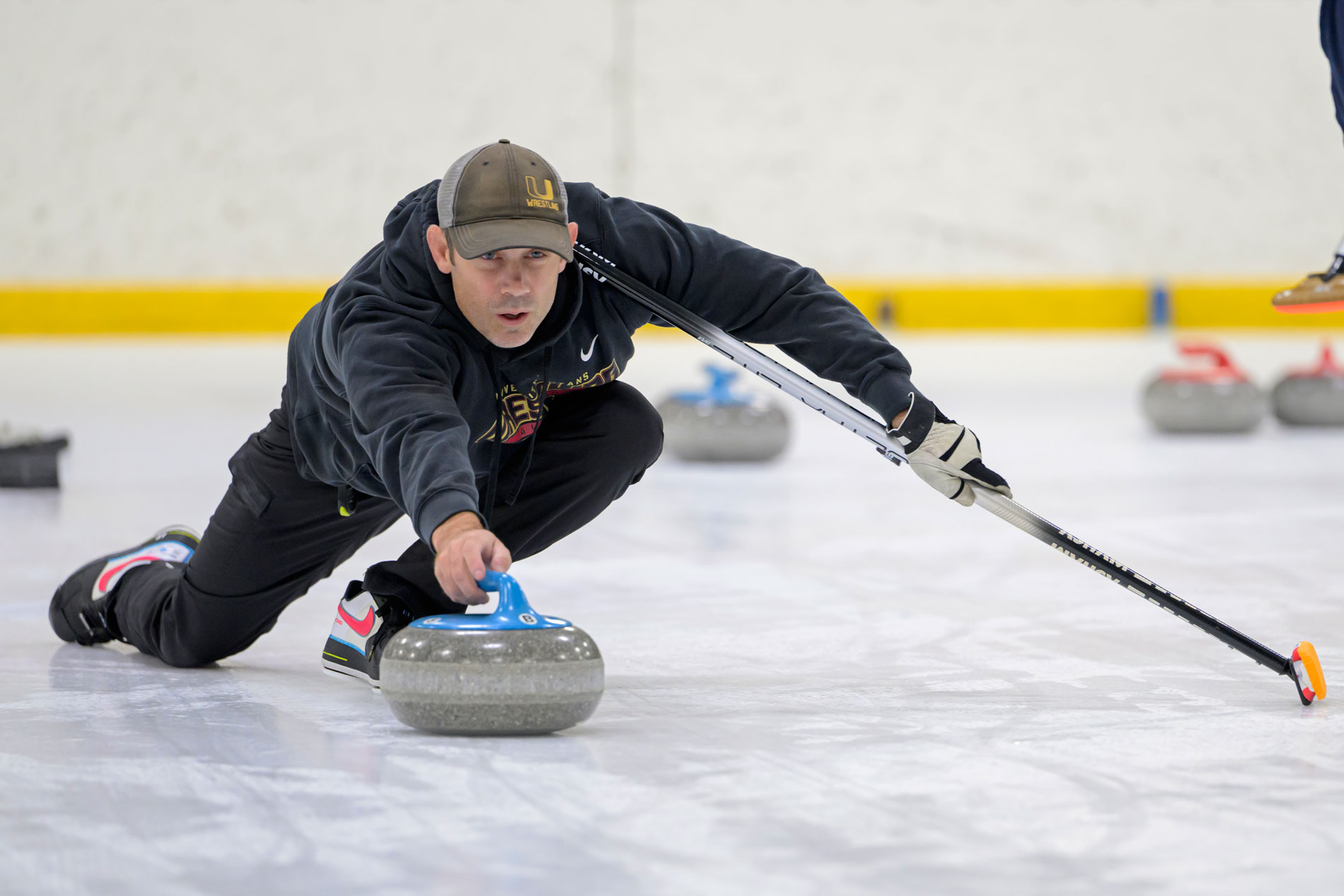
Inside the Frontier Ice Arena, about 40 men and women in sweatshirts and gloves are taking part in what many believe is the world’s oldest team sport: curling.
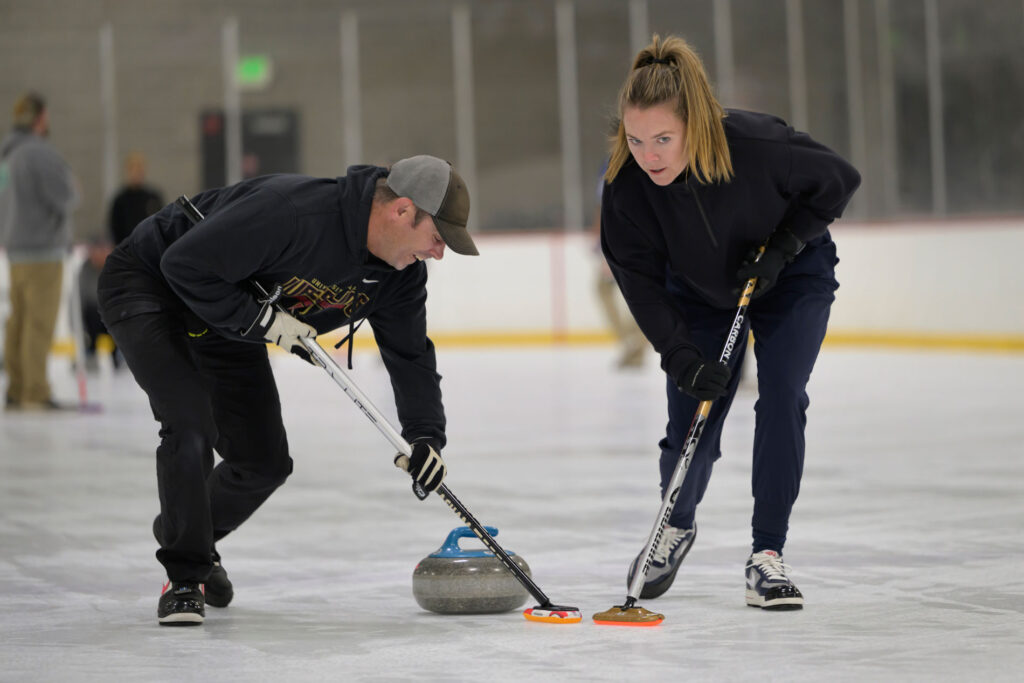
At its most basic, curling is a sport that involves a player sliding a heavy stone across a sheet of ice to hopefully land inside a 12-foot-wide target. Throw too lightly and your stone falls short. Throw too hard, and it goes out of bounds. Drinking is sometimes involved.
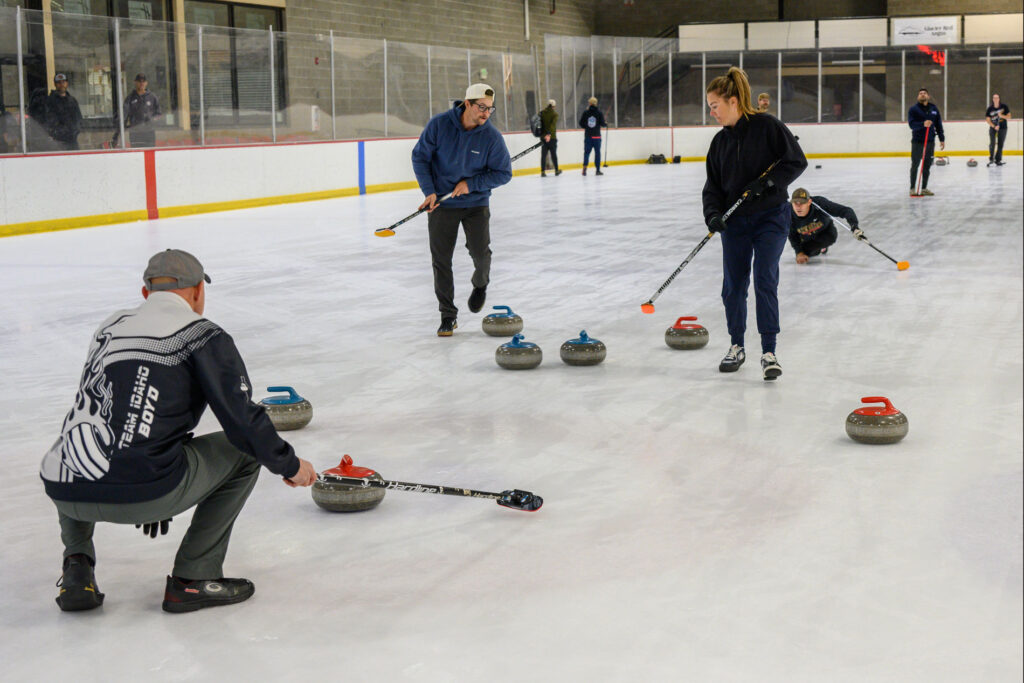
Adding to the challenge are opponents trying to slide their stones onto the same spot while knocking yours out of the way. There are typically four people per team and each person throws twice each turn. Games take eight to 10 rounds, called ends.
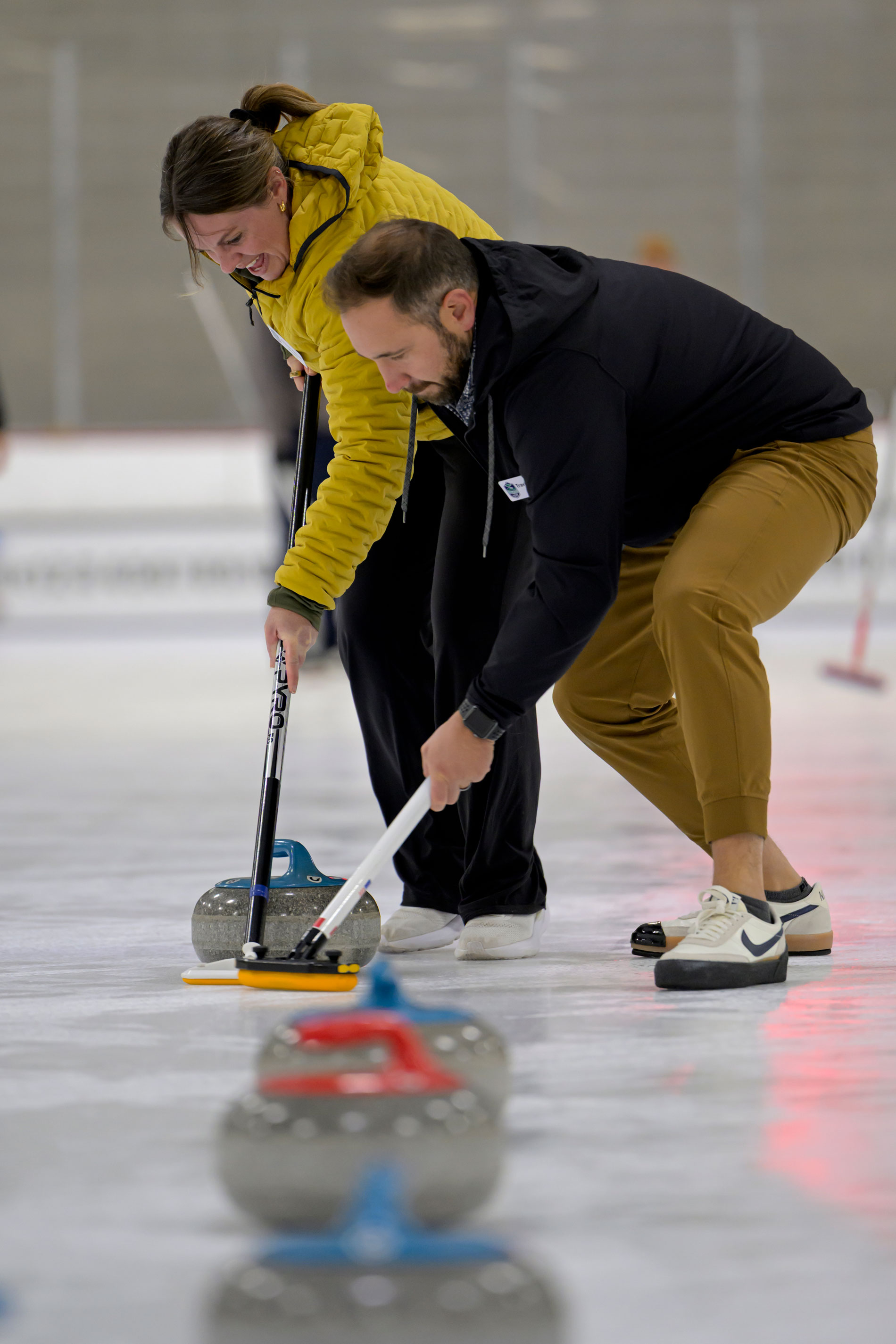
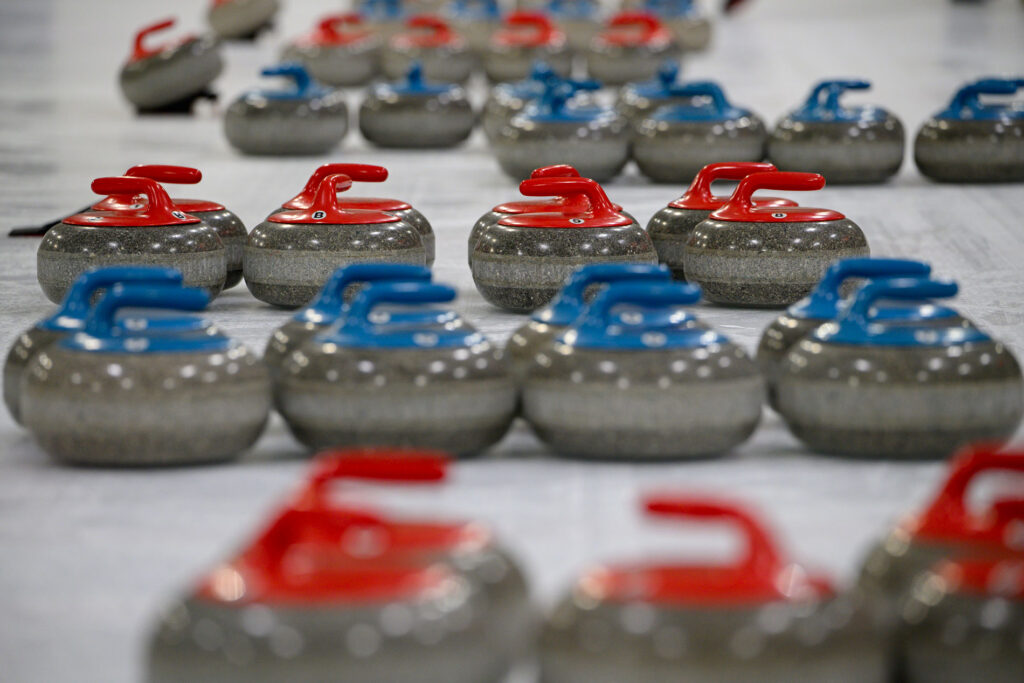
“It’s all low-key, and as serious as you want it to be,” said Matt Almon, president of the Inland Northwest Curling Club, an organization that puts together weekly sessions for all skill levels in the spring and fall. It also supplies the official standard-sized granite stones and the brooms that are swept ahead of stones to help them move smoother and longer.
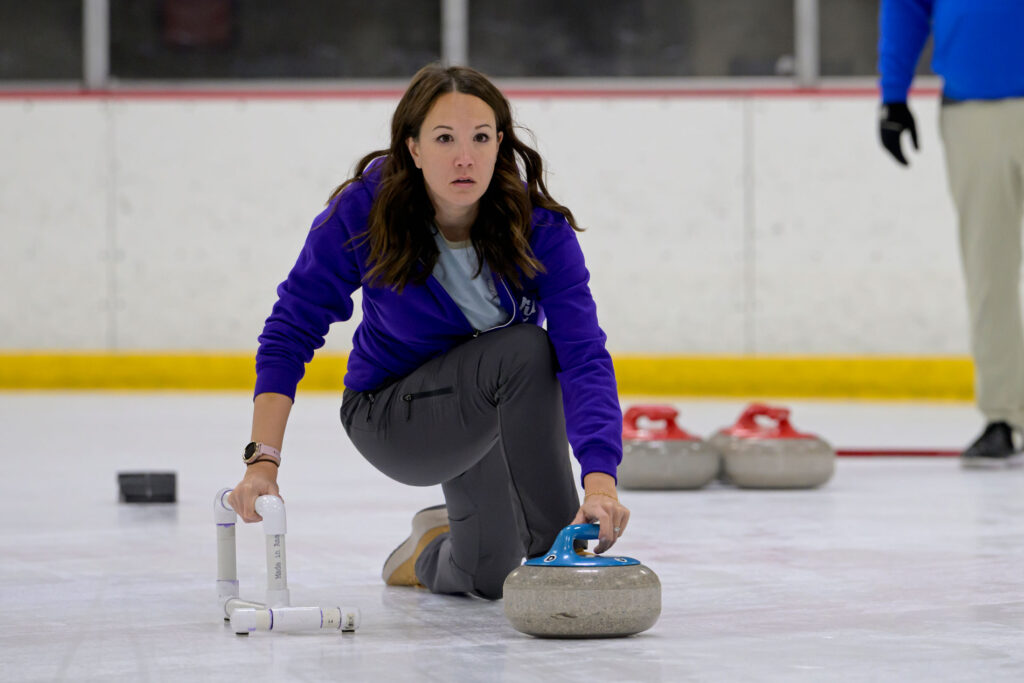
Almon said anyone can come out and learn how to curl — no experience required.
Familiarity with casual team activities like lawn bowling, horseshoes, cornhole or shuffleboard doesn’t hurt, especially since all of these involve taking turns throwing something, waiting for others to take their turns, chatting with teammates and opponents, and possibly drinking.
“Getting comfortable with curling is pretty easy, but getting good consistently takes some effort,” Almon said.
He came out with a few friends three seasons ago knowing nothing other than he liked curling on TV. Now he’s hooked and happy to give pointers to anyone on everything from how to keep from slipping on the ice to building speed to effective sweeping.
“We had no clue what we were doing at first,” he said. “We were the new team, and now there are other new teams and we want to help everyone see success.”
>> Plenty to enjoy
As casual as curling appears, it can be competitive — and it has plenty of history behind it.
According to the World Curling Federation, the game of sliding stones across frozen ponds dates back to at least mid-1500s Scotland, making it slightly older than golf, another sport the Scots originated. Over the years, curling has taken hold in countries where ice abounds such as Canada and Norway.
Curling has been part of the Winter Olympics off and on for more than a century. Next year, curlers from 10 countries will compete at the Olympic games in Italy.
Though the stakes can be high, there’s consistently a sense of camaraderie.
“People are so friendly,” said Randy Boyd, one of the founders of the local club and its first president. “After a game, people are happy to buy each other drinks: it’s tradition to toast the other team.”
He and a few friends started curling 15 years ago, initially playing on Twin Lakes, using metal cooking pots as stones. Then they went up to Creston, BC, to learn from the established Canadian curling community.
“They pretty much adopted us, taught us everything, and gave us equipment,” Boyd said. “We also found stones that the Spokane club had in storage, and we borrowed those.”
The Coeur d’Alene Curling Club started in 2013, and since then, Boyd and other local curlers have taken part in tournaments throughout Canada, Washington and Montana as well as hosting local events. A few years ago, the Lilac City Club and the Coeur d’Alene Club merged into one Inland Northwest organization.
Another longtime area curler is Jer Swigart, who grew up playing hockey and then discovered curling in his 20s.
“It looked like guys in their 40s mostly standing around,” he said. “I figured that since I was good at cornhole, I’d try it. It also meant that maybe my Olympic hopes and dreams could still be alive.”
Originally, he lived in Bend, Ore., but looked for opportunities to curl around the country.
Friends who curled in Spokane kept on telling him about the strong curling community here.
“I told them, ‘If I ever move to the Spokane area, make sure there’s a spot on a team for me,’” Swigart said. He eventually made the move. In 2024, he and his teammates put together a Pacific Northwest team to compete nationally.
>> Opportunities ahead in 2026
Over the years, curling has waxed and waned in the Inland Northwest. Interest usually jumps during Olympic years, but there is always a core group eager to learn and compete, as well as welcome and teach newcomers.
Those interested in checking out curling can visit the club’s website or Facebook page.
The club plans to post information in early 2026 about spring curling. The first session is a chance for anyone to learn the basics, and can be useful for anyone unsure about committing to the full eight-week schedule.
Right now, he said the only limits are capacity and availability. There’s currently space for up to eight four-person curling teams for each two-hour session. The Frontier Ice Arena must accommodate ice time for the curling club as well as the various local hockey and figure skating clubs.
But there’s also word about a new rink being built in Spokane Valley next year, which could potentially increase the availability of all three ice activities.
Swigart said a new place could be a perfect opportunity for hockey, skating, and curling communities to collaborate and further enhance the area’s reputation for ice sports.
He is excited about any opportunity to get more people involved in curling throughout the region.
“It’s a very social activity, and since there’s so much standing around, a lot of camaraderie develops,” he said.
He and his teammates weren’t able to coordinate their schedules to compete nationally in 2025, but he’d enjoy seeing more people interested in doing so in the future.
“We want to see curling grow,” Swigart said. “We’d love to see many arena teams competing to see who gets to represent us at higher levels. And at a lot of these tournaments, no one really cares who wins since everyone is having so much fun.”
Whether for competition or a good time, curling can be appealing.
“I equate it to golf, where it’s easy to pick up, and you need to play a lot to get good, and it’s something you can do your whole life,” Boyd said. “I know people in their 80s who are still curling.”. N
As seen in the 2026 Winter/Spring edition
Go Team USA!
By: Joe Butler
Photography by: Joel Riner