

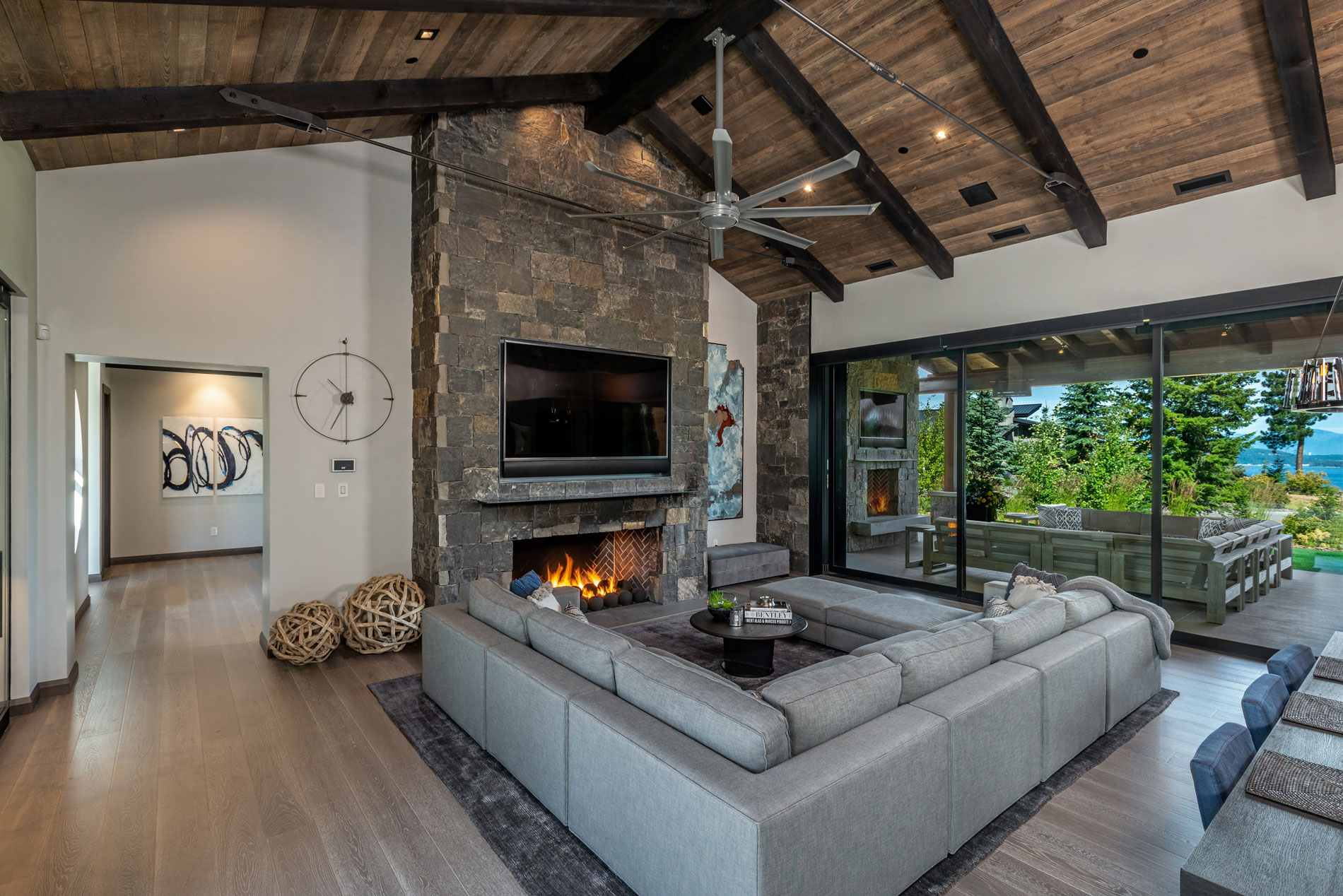
Advice from some of the area’s top designers
Let’s face it. Most of us decorate our own homes. We pick the paint, choose the flooring and decide on the décor. On a rare occasion, we hit the mark, designing something just how we had hoped. When that happens, it’s a beautiful thing. But most often, we miss the mark and end up either living with what we’ve created or redecorating — repeatedly, often spending more time and money than we want. Designing is an art and requires skill. So, we’ve asked some of the area’s talented interior designers for help. Here are some of their tips to inspire beauty in our spaces.
Know first what you want to spend
Lynn: Interior designers and owners can get caught up in creating a personalized environment. With a thousand moving parts — whether a business, home or hotel — a lack of budgeting can be calamitous.
If you are hiring a professional, and even if you aren’t, you need a sense of how much you are willing to spend. When a designer and client form a scope of work the next question should be “what is your budget or what are you willing/able to spend”? The most helpful is the “Not to Exceed Budget.”
Hearing a fixed number leads us to prioritize what warrants a larger investment. (Cabinets, flooring, lighting, appliances etc.). Adding embellishment later makes it more personal. If the budget is tight, then more of a staging approach of low cost, high impact can be formed. Design illusion has its place as stagers well know.
The designer should assist in assembly of budgets whether based on past projects, input from a general contractor or various sub trades. An itemized budget listing all of the interior envelope and intended contents as well as design fees or percentage-based mark ups by decorators should be assembled.
Scheduling and timing also need careful planning as costs fluctuate – wildly of late! Some designers have a brand “look” that you adore and are willingly to pay a premium for that approach. Many designers prefer getting inside the clients psyche and, like a good tailor, will fit the solution to the end users. No two designers are alike in this instance. Budget setting may be a tough discussion but essential to a successful Interior solution.
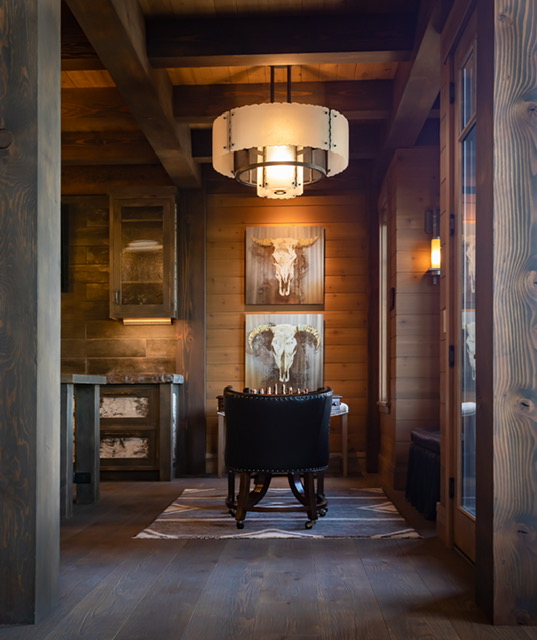
Paint can transform: Choose wisely
Shaleesa: We all know the power of updating walls or cabinetry with paint, and for so long, it was an incredibly cost-effective way to refresh a space. However, with material and labor costs continually on the rise, this once stress-free tool has become one of the biggest stressors for many people with the pressure to make the right decision and avoid costly mistakes. Here are a few of our top tips we share at almost every color consultation:
- Going white or off-white? Pick a single color for everything — the walls, ceiling and even the base trim. Change the sheen on the trim from the walls so there is still visual interest.
- Take your time. The biggest factor in selecting the right color is lighting, and lighting changes hour by hour, day by day. It’s important to look at your paint samples in the morning, afternoon and evening with different light sources varying from natural light to your home’s artificial light.
- Use a thick poster board for samples. Using small paint chips and even some of the square peel-and-stick samples just aren’t big enough for most people to visualize.
If you like color or want to go bold, consider these additional tips:
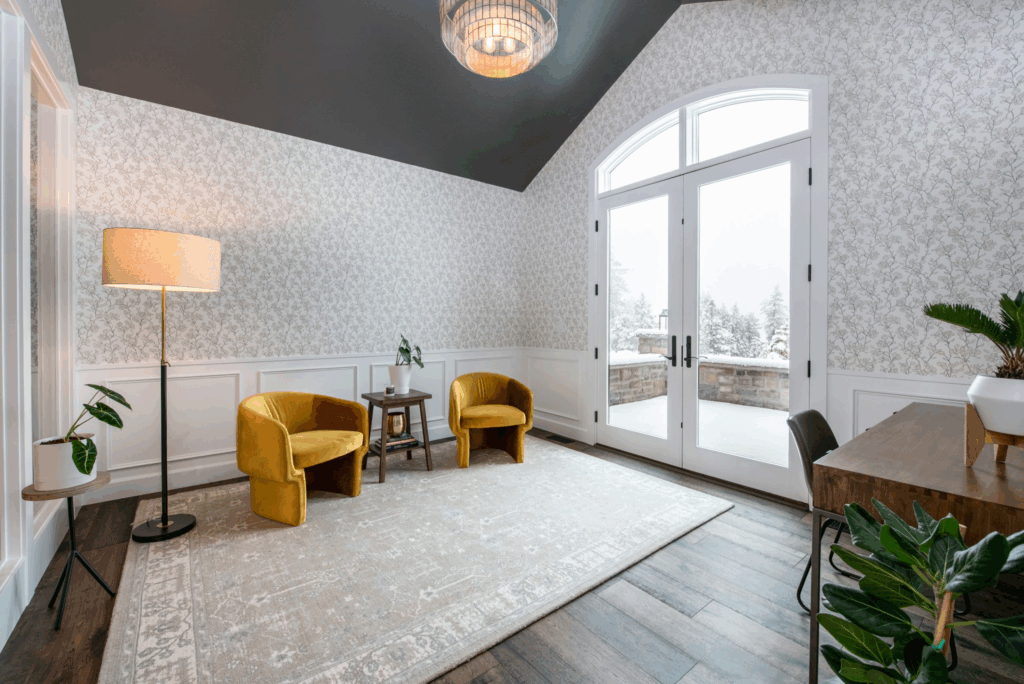
- Paint the ceiling. This isn’t something recommended for lower ceilings, but with a higher ceiling height, this is a great way to do something unexpected and visually lift the height even more.
- Gone are the days of a single focal wall. This is an outdated look, but one that many people still fall into when they want to do something interesting. My typical recommendation is to paint the whole room the same color. The exception would be adding an accent wall through texture. Paneling, planks, stone or other textural materials are great options for adding something unique to a space on a single wall.
Story continues after a quick message from our sponsor below

Incorporating found objects in your design
Janene: Of all the adjectives that describe my work, my favorite is hunter/gatherer. There is
nothing more exhilarating that setting out with a client to find themselves amongst the
rehabilitated, repurposed, reimagined pieces that tell a story of another time and place.
From Roundtop Texas to the Pasadena Flea Market, the Braderie in Lille to the street
vendors in Villeneuve, there is never a shortage of extraordinary finds unloaded from
well-traveled containers and rural villagers’ trucks.
If you’ve ever been to a serious vintage market you have, more than likely, become completely overwhelmed. The process of “choosing” can be daunting because it’s just so hard to leave all those captivating pieces behind. But don’t let that overwhelm stop you! Not visiting one of these markets (at least once in your life) would be such a shame.
To help relieve the pressure, and to make the process more fun (because it should be), here’s a little guide to keep with you, as a must-have reference for the “How to do a vintage market right:”
- Tell your story: know in advance what resonates with who you really are.
- Exercise restraint: as with all of life, the secret to achieving that “wow” you crave is taking the les-is-more approach, so that the special pieces you select aren’t competing for attention.
- Know what you’re looking for: A beautiful desk for the window nook, a rusty/crusty urn as a centerpiece on the table. A collection of confit jars. Whimsical iron garden chairs.
- Leave room for the wow: there’s always room in heart and trailer to bring home that certain piece that speaks to your soul. NOTE: If you are shopping overseas have your shipping and sherpa plan ready.
- Go with a guide: this can be a trusted friend who is not afraid to give honest advice. Even better, find someone who 1) knows where to find the “good stuff” 2) sees what captures your attention from a different point of view 3) notices the pieces you may miss 4) understands the inherent value of what is being sold.
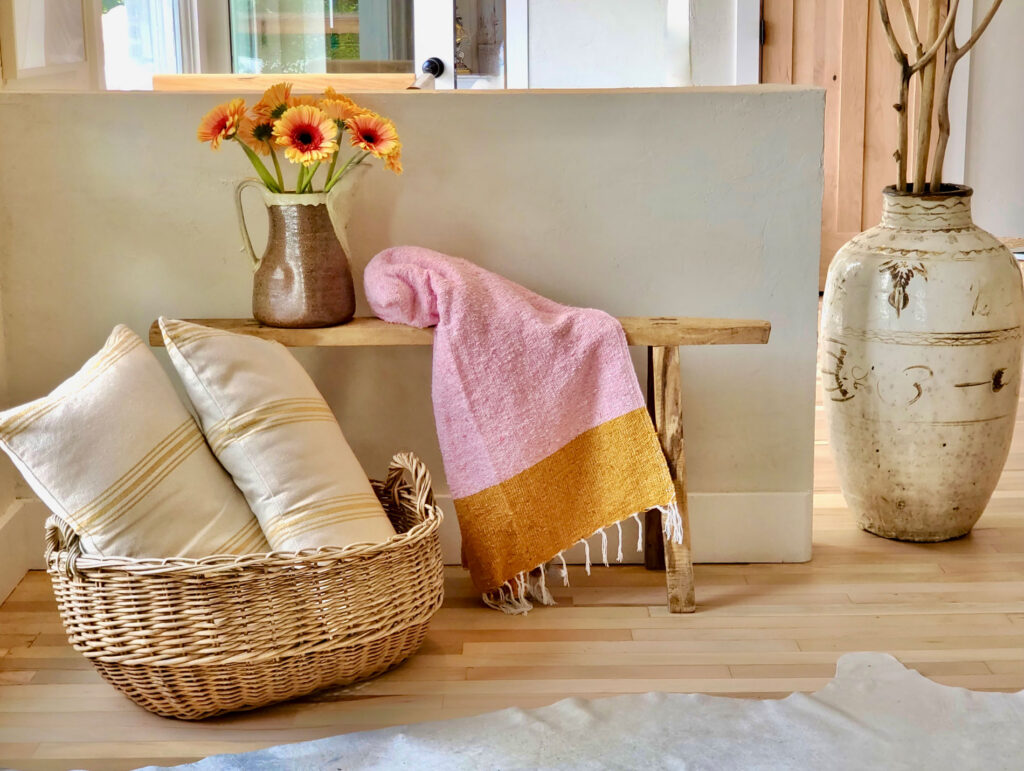
Achieve a “comfortably grand” style
Amy: Comfortably, as an adverb “in a physically relaxed way that is free from constraint.”
That is only part of our design philosophy. Grand, as an adjective is defined as “magnificent and imposing in appearance, size, or style.” When these ingredients are paired, we feel the ideal space is created for our clients who love the magnificent North Idaho lifestyle!
There seems to be an appreciation, from our clients, for spaces that are conducive to gatherings at a simple and casual pace. Getting away from the city life is the goal for most of them and we aim to have an oasis for them that is unlike anything they “normally” reside in. Not only in the furnishings but the elements that surround them; the stone, woods and lighting are all key to achieving a unique space.
Designing a space for another person or family has its challenges. We, as designers, know what we like and would love to implement into a project, but we must always consider we are not the one living there.
Here are ways to achieve comfortable grand:
- Layering of textures; fabric, leather, wood, metal, glass
- Large rugs on hardwood in all spaces over installed carpet
- Cozy seating around fireplace
- Firepits outside for cool summer evenings
- Wallpaper in powder bath and primary bath
- Neutral and peaceful material palette for timeless look
- Splashes of color in furniture that can be changed over time
- Lighting as jewelry in a space to add glamour and grandness
- Accessories to personalize the spaces
- Throw blankets and pillows
- Keep it casual
- A few stand-out commissioned art pieces from local artists
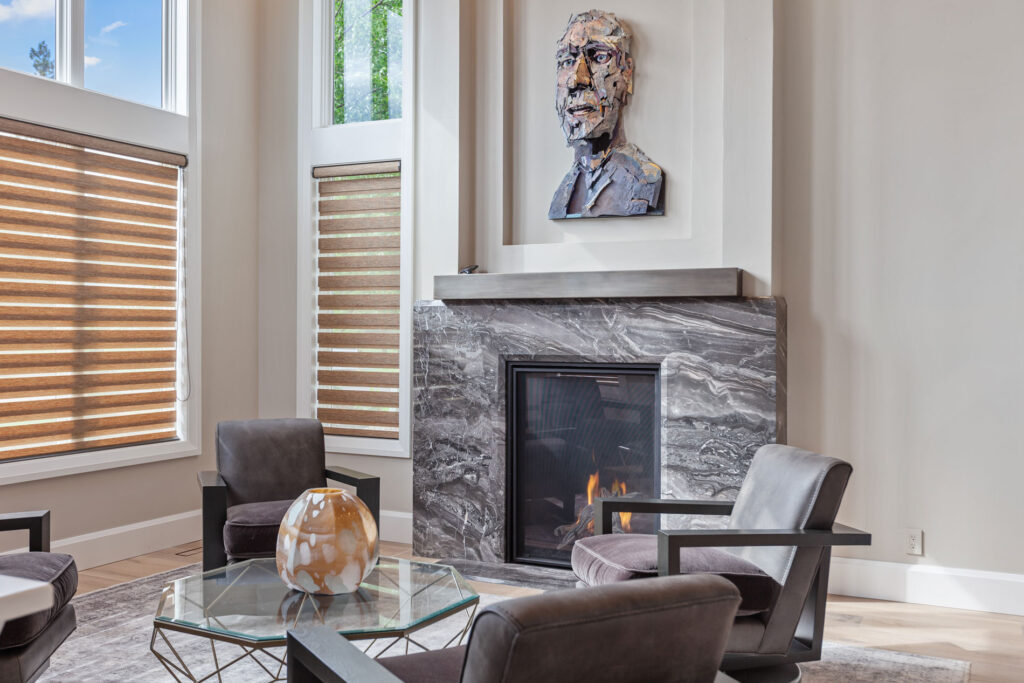
Making choices
Annette: I love shopping at the design centers and showroom’s full of the latest, beautiful fabrics, furniture, rugs, mirrors and art. I also love searching the consignment, stores and antique stores for gently used or unique pieces sometimes at bargain prices. E-commerce and online design firms offer easy shopping from home.
One of the reasons people choose to work with an interior designer is because they get frustrated and overwhelmed with all the choices.
There are so many options. Furniture stores, catalogs, websites like Pinterest and Houzz. Swivel or stationary, bronze or chrome.
How can you ever decide? You will get a different opinion from everyone. It’s very confusing.
A skilled and experience designer will guide you through the maze and get you on the right path. Yet, some people are naturals. They know what they want, and they enjoy the experience.
If you venture out on your own to start a design project, here are some tips:
- Map out the entire room. This will help you focus on your needs and not get too distracted.
- When faced with multiple options (color, size, finish, trim application) pull all the components together to make sure they complement each other. Bring photos of your room and keep all your samples like paint, color fabric swatches, carpet, stone, etc.
- I learned this from a wise and successful client: When you can’t make up your mind, ask yourself “what is the objective?”
- Note that buying local will offer you the best service and peace of mind.
- Splurge on some pieces. Most people don’t regret buying something they love, or buying a quality piece of furniture.
- Don’t rule out pre-owned furniture. There are beautiful pieces out there and bargains. A gorgeous bench with an ugly fabric can be easily reupholstered with a designer fabric, leather or hide.
- Quality, beauty, authenticity and functionality are key elements in creating beautiful, interesting rooms that will stand the test of time. N
As seen in the 2025 Home and Garden edition