

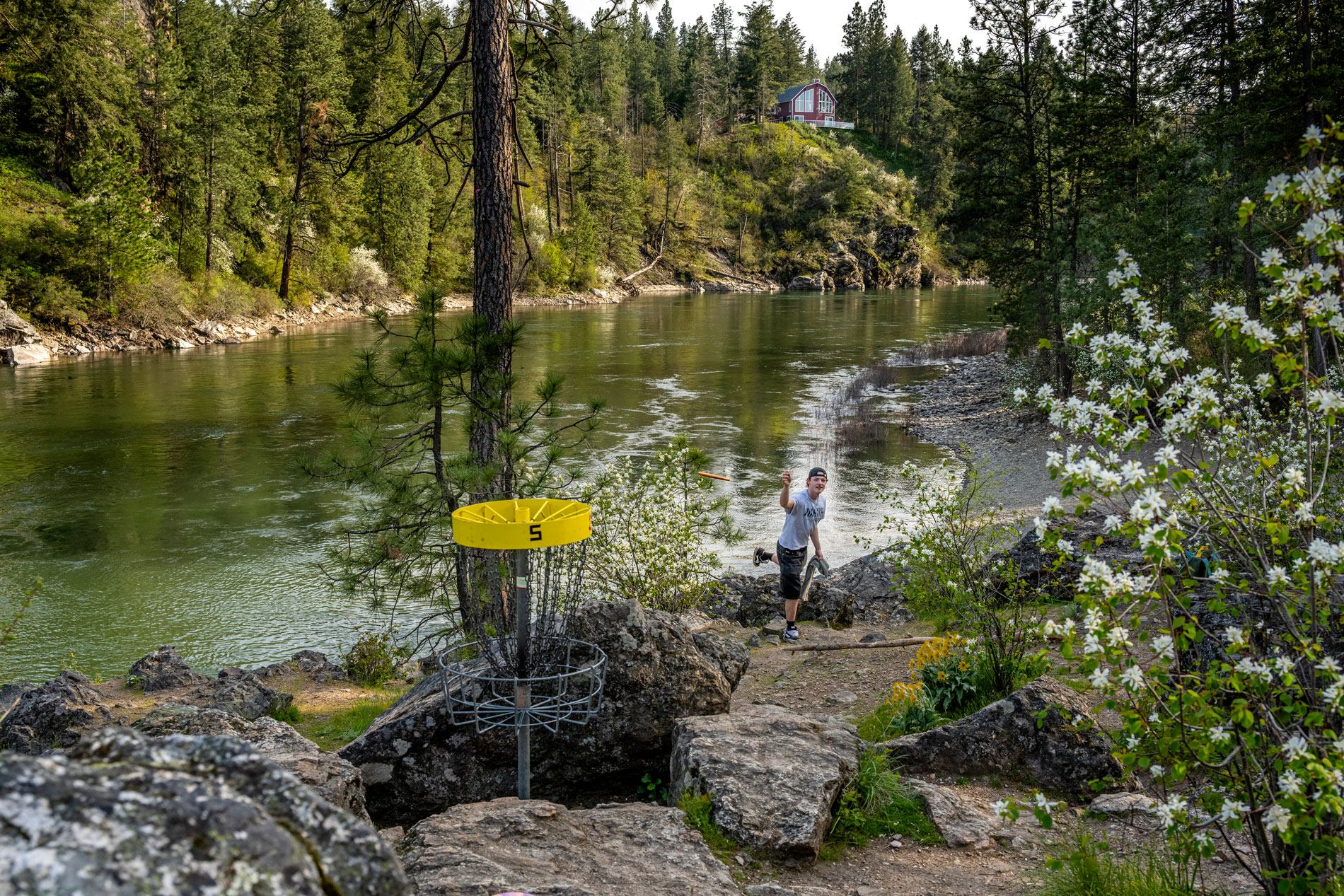
Imagine walking in an evergreen forest, a soft wind whistling through the pine needles. Rays of sunshine dance among fluffy clouds and warm your face as the smell of dirt drifts up from the earth. In the distance, you hear the jingle of chains and muffled laughter. A bright-colored disc whirrs through the air, ‘thunks’ against a tree trunk, and falls abruptly to the ground. Most likely, you’ve stumbled into a game of disc golf, so grab a disc and join the fun.
Disc golf has a long and winding history with several starts and stops. Often called the Father of Disc Golf, Ed Headrick, then an employee of the Wham-O toy company, invented the Frisbee in 1966, the Disc Golf Pole Hole in 1975, and in 1976 founded the Professional Disc Golf Association (PDGA). Disc golf was established as an organized sport in 1974, although it was being played as a competitive sport in the early 1970s. Today, the PDGA maintains a website ( https://www.pdga.com/) that is easy to navigate and packed full of guidance on all things disc golf, including an extensive directory of disc golf courses around the world.
I discovered disc golf in the early 90s while living in Missoula. The game was experiencing a wave of popularity along with hacky sack, paintball and rollerblading. Disc golf was a perfect pastime for the strapped-for-cash college days when every penny and pack of Ramen was cherished. It was a regular occurrence to meet friends at the trailhead and take off with a bag of brightly colored discs slung over one shoulder.

The game is casual, easy to learn, physically low-key and inexpensive. Way back then, we called it ‘FOLF’ (the love child of frisbee and golf) and would take to the woods near town to fling discs at ‘designated targets.’ often just a specified tree in the distance.
Disc golf is like golf, but players use a flying disc or frisbee instead of clubs and a ball. The disc is thrown from a tee area toward a ‘hole,’ which is typically a metal basket with catch chains elevated off the ground on a pole, but can be as simple as a 5-gallon bucket upside down over a fence post. As the turn is played, each player throws their disc from the location where it landed on the previous throw. Players can make it through a game with one disc, but there are different types of discs to suit various types of throws, the same as having a selection of clubs for various golf shots. You might be able to sink a putt with a driver, but you know there’s a club better suited to the task. Discs are made to go (or fade) in different directions and have flight numbers. Matching the variables of the disc to the technique and power of the player will ensure the right equipment. A driver, a mid-range disc, and one putter are a simple and adequate collection to start with.
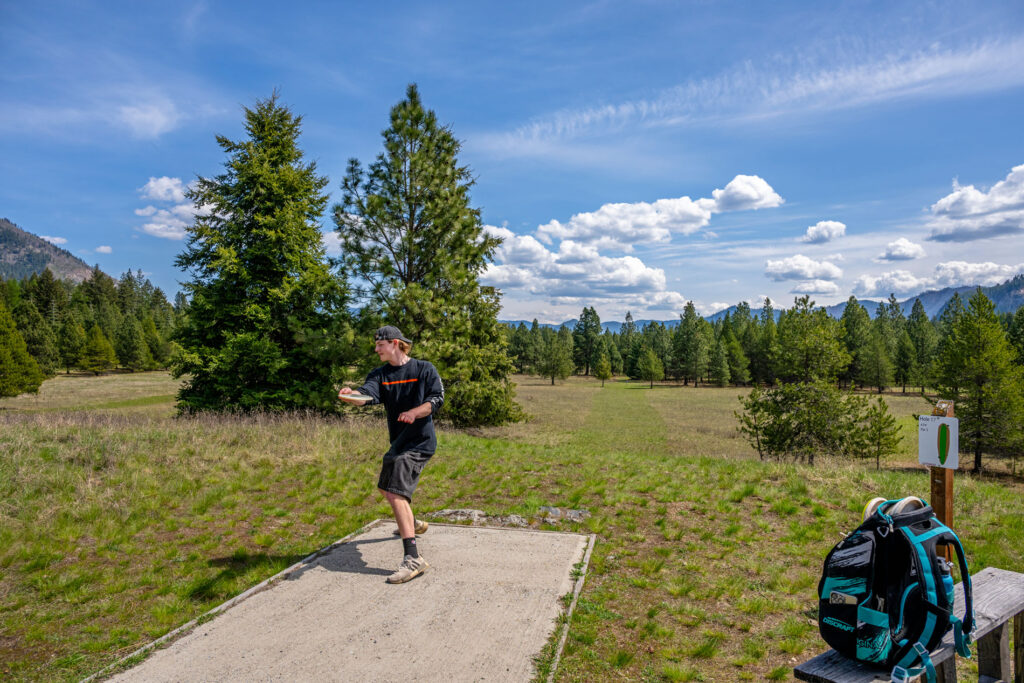
Nature is the biggest obstacle during a game, and adaptability suits players well. Every course is unique, with a range of hurdles including anything from shrubs to playground equipment. If you are the do-it-yourself type, there is extensive information available on course design, development, par guidelines and sample courses. You can create a personalized course at home or in the woods. Or, if you prefer a more refined course with water features, narrow fairways and fancy dog legs, the PDGA website is a perfect place to start. There are a handful of throws players can utilize to maneuver the course, including: the backhand for distance, sidearm for throwing around obstacles, a roller for distance under a low canopy of tree branches, and the tomahawk or a thumber for more technical shots. Discs also vary in weight, and the general rule of thumb is, stronger throwers need heavier discs.
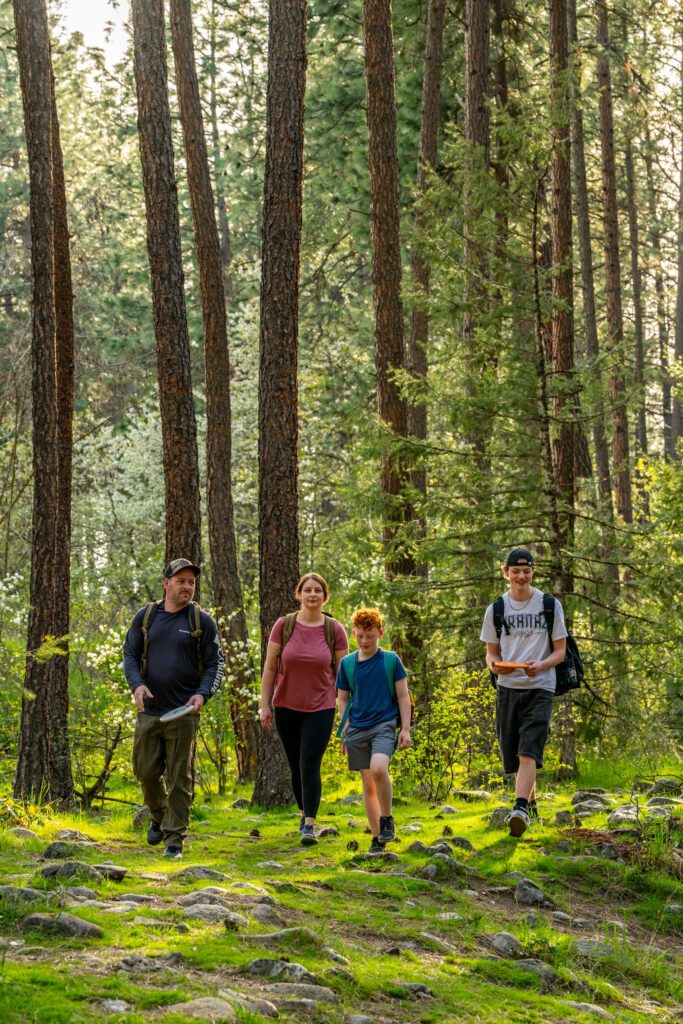
Even though hacky sack clubs are rare, rollerblading has declined in popularity, and I don’t know anyone still having paintball wars – disc golf has survived the decades and continues to be a relaxing sport enjoyed by many. There are currently over 250,000 registered members of the PDGA, and over 16,000 disc golf courses listed in their Course Directory that are easily searched by name or location. Locally, disc golf courses can be found in Farragut State Park, Corbin Park in Post Falls, Westwood at Rathdrum Mountain recreation area, and Cherry Hill Park in Coeur d’Alene.
If you’re looking for equipment, information on league play, or would like to connect with the local disc golf scene, Rapid Fire Disc Golf is the perfect place to start. Located in Post Falls, Rapid Fire was opened in 2008 by Jack Wardian (a local legend of all things disc golf) and his son, Marc. At the time, Jack owned a laundromat, bought the disc inventory from a man who was selling discs out of a van, and the rest is, as they say, history. What was once a collection of discs in the corner of the laundromat has now evolved into its own retail space. Jack, along with his son, Scott, also founded the North Idaho Disc Golf Club, which started with 27 members but has grown to over 150 and hosts weekly league play at three local courses. The club also hosts tournaments, which have age-protected groups for juniors (starting at 6 years old) through a senior division for ages 70+.
No matter if you are a beginner, intermediate, advanced, or just want to keep it casual, tournaments accommodate all types of players. The club has a presence on Facebook, where you can connect with other players and find updates on league nights and other group activities. N
By: Jill Buckland
1 Comment
I read this for the first time today and really enjoyed it !