

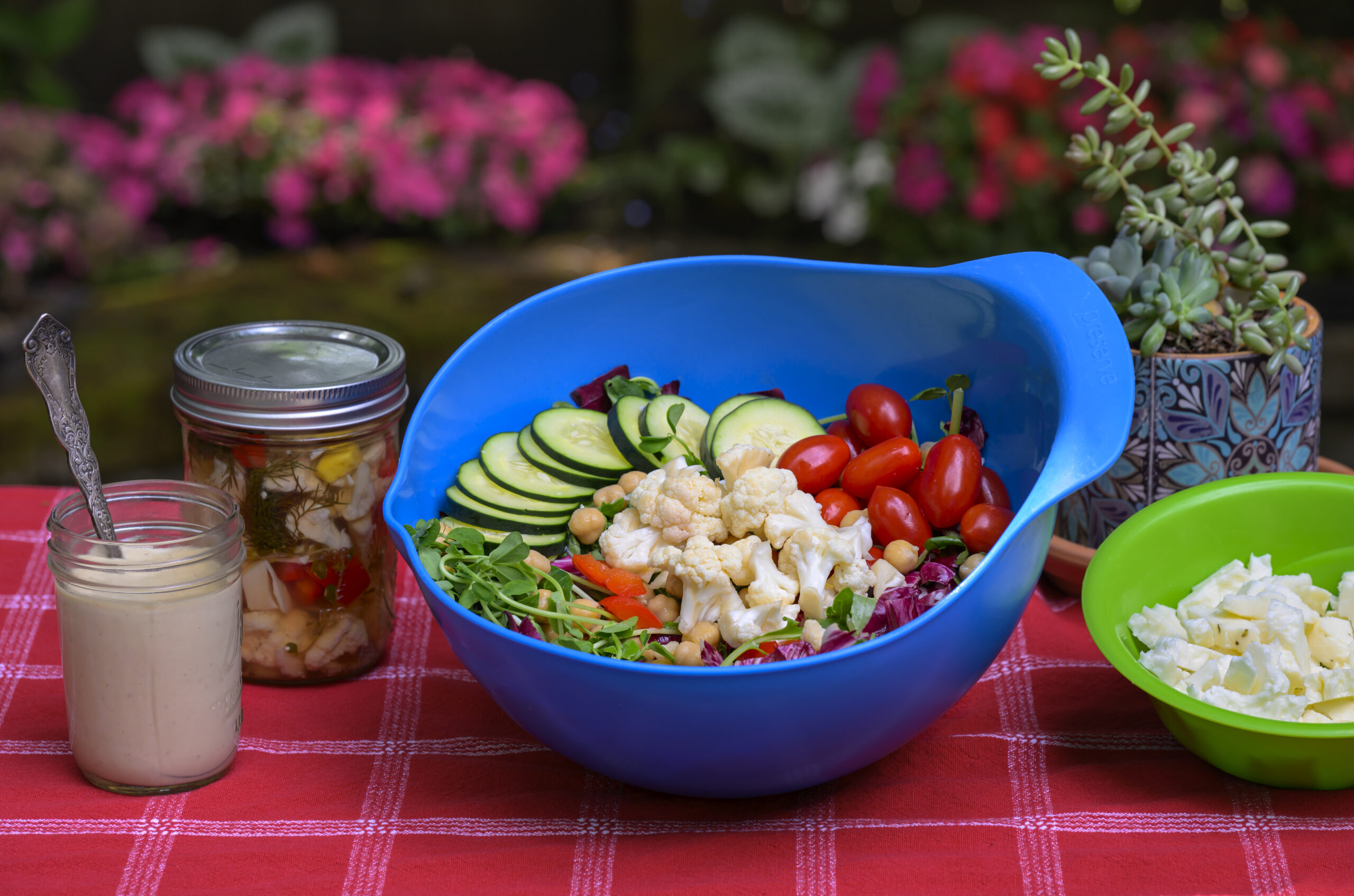
At the height of the summer growing season, regardless of your climate, you might find yourself with an overabundance of fruits and vegetables. While you can offer this abundance to neighbors and family, they may also get tired of finding ways to incorporate all those fresh zucchini, tomatoes, peppers, cucumbers and beans into their daily menus. Don’t be discouraged. Using vinegar to preserve your harvest is an easy way to augment flavors and textures, as well as extend the life and use of your veggies.
Pickling is the process of preserving or extending the life of foods through one of two processes: anaerobic fermented brining or vinegar immersion. For this Garden to Table, I’ll focus on vinegar pickling and preserving. Before refrigeration, using salt, acid or alcohol to preserve foods was a vital necessity, especially as empires expanded and the transportation of foods became more widespread and covered long distances. Shipping also increased the need for food preservation, not only to sustain sailors and travelers on the high seas, but also to bring food, seeds and supplies to settlers on the American continents. Acids and vinegar in foods preserves and intensifies flavors, makes it more digestible, adds nutritional value and makes it easier to get through large batches of garden veggies over time.
While canning pickled vegetables is fairly simple and low-risk on the canning risk assessment scale, my favorite fast and easy method of pickling veggies is the quick pickle or refrigerator pickle. The process: pack your jar or jars with your veggie or veggies to be pickled, combine and heat your vinegar brine in a saucepan, pour over the veggies in the jar until covered, seal, shake and refrigerate for 1-24 hours. Quick pickled vegetables will keep for three weeks or maybe even more, as opposed to a year or more with water bath or pressure canned pickles. They also are lighter and brighter in flavor than fermented or canned products. Yet, 15 minutes active and 1-24 hours passive time to make something this delicious is well worth it.

While cucumbers are the most commonly considered “pickle,” you can absolutely pickle almost any fresh vegetable: green beans, carrots, zucchini, cauliflower, cherry tomatoes, squash, onion, beets, peppers and more. Make sure your veggies are firm and very fresh. Soft produce will disintegrate in the brine. Basic vinegars are best for pickling, while aged, flavored or concentrated vinegars, like balsamic or malt, don’t work as well. Flavor your own with herbs and spices from your garden, like garlic, dill, red pepper flakes, thyme, or oregano. Hard spices like peppercorns, mustard, and coriander are also great for pickling. Check out my recipe for my Summer Salad with Quick Pickled Cauliflower.
If you do have soft or thin-skinned fruits or vegetables that you need to use up, consider using vinegar to turn them into shrub syrups. Strawberries, raspberries, and blackberries are popular fruits to grow in the Northwest, and they can be found growing wild too! Traditional shrub syrup recipes were developed to use up an abundance of fruit that had the possibility of going to waste, and it makes a tasty addition to marinades, vinaigrettes, sodas and cocktails. A basic shrub syrup recipe incorporates one pound of fruit to 1 cup sugar and ½-1 cup vinegar. Try making a strawberry shrub syrup and add it to some vodka. Enjoy with a splash of lemon on the rocks! N
As seen in the 2025 Home and Garden edition
By: S. Michal Bennett